
MLBB Events and Secondary Currencies Guide: Missives, Bait and Recharge Tasks

Status check: Reviewed July 27, 2026: this article was checked for freshness. Availability, rewards, prices, tasks, and shop labels can change after publication, so confirm the current in-game screen before acting on the details below.
MLBB events are easy to misread because they do not always spend Diamonds directly. One event may sell a fixed package, another may use a temporary currency, and another may reward recharge progress before the player buys anything inside the event shop.
This guide explains how to read event currencies before topping up. It covers Missives, Bait, recharge tasks, event shops, limited-time modules and the difference between buying Diamonds, buying event currency and claiming task rewards.
The examples below come from a June 2026 in-game event review. Event pages rotate quickly, so use the method more than the exact event name: identify the reward, identify the currency, check the task source, then decide whether a top-up is actually needed.
MLBB events often use Diamonds indirectly. In the June 2026 event review, Pharsa's Seasworn Oracle used Missives priced at 349 and 599 Diamonds, Tidal Fishing used Bait and attempt rules, and Lucky Bowknot connected rewards to recharge progress and Weekly Diamond Pass purchases. That means the smartest event spend is not always "buy Diamonds, then spend"; sometimes it is "recharge the right product, claim the right task, then spend the event currency."
Use this guide with the main MLBB Diamonds value guide and Recharge guide before paying for limited-time rewards.
Event currency decision tree
| First question | If yes | If no |
|---|---|---|
| Does the event sell a fixed item? | Compare its Diamond/event-currency price with Shop prices | Read draw or chance rules |
| Does recharge progress matter? | Check pass purchases before raw Diamond packs | Buy only the currency you need |
| Does the event use a secondary currency? | Learn how that currency is earned and spent | Treat it like a normal Shop offer |
| Is there a daily discount or free attempt? | Time the purchase around the reset | Set a fixed budget ceiling |
| Is the reward likely to return? | Less urgency | More reason to plan, not more reason to overspend |
Missives: direct event-price example
The Pharsa Seasworn Oracle event is useful because it used direct event item prices. Missives appeared in 349 and 599 Diamond options with large discount badges. This is the kind of event where players should ask whether the reward is worth the fixed currency price, not whether the discount badge looks high.
| Missive option | Reviewed Diamond price | What to check |
|---|---|---|
| Smaller Missive offer | 349 Diamonds | Reward pool and whether it completes a milestone |
| Larger Missive offer | 599 Diamonds | Total value versus a 599 Diamond Shop skin |
If the event reward is your target, the fixed Missive package may be reasonable. If you are only tempted by the discount percentage, compare it with a permanent Shop skin first.
Lucky Bowknot: recharge progress matters
Lucky Bowknot is a good example of an event where spending and recharging are not the same thing. The event task connected Weekly Diamond Pass with recharge progress, which means the best move can be buying a pass rather than buying a larger raw Diamond pack.
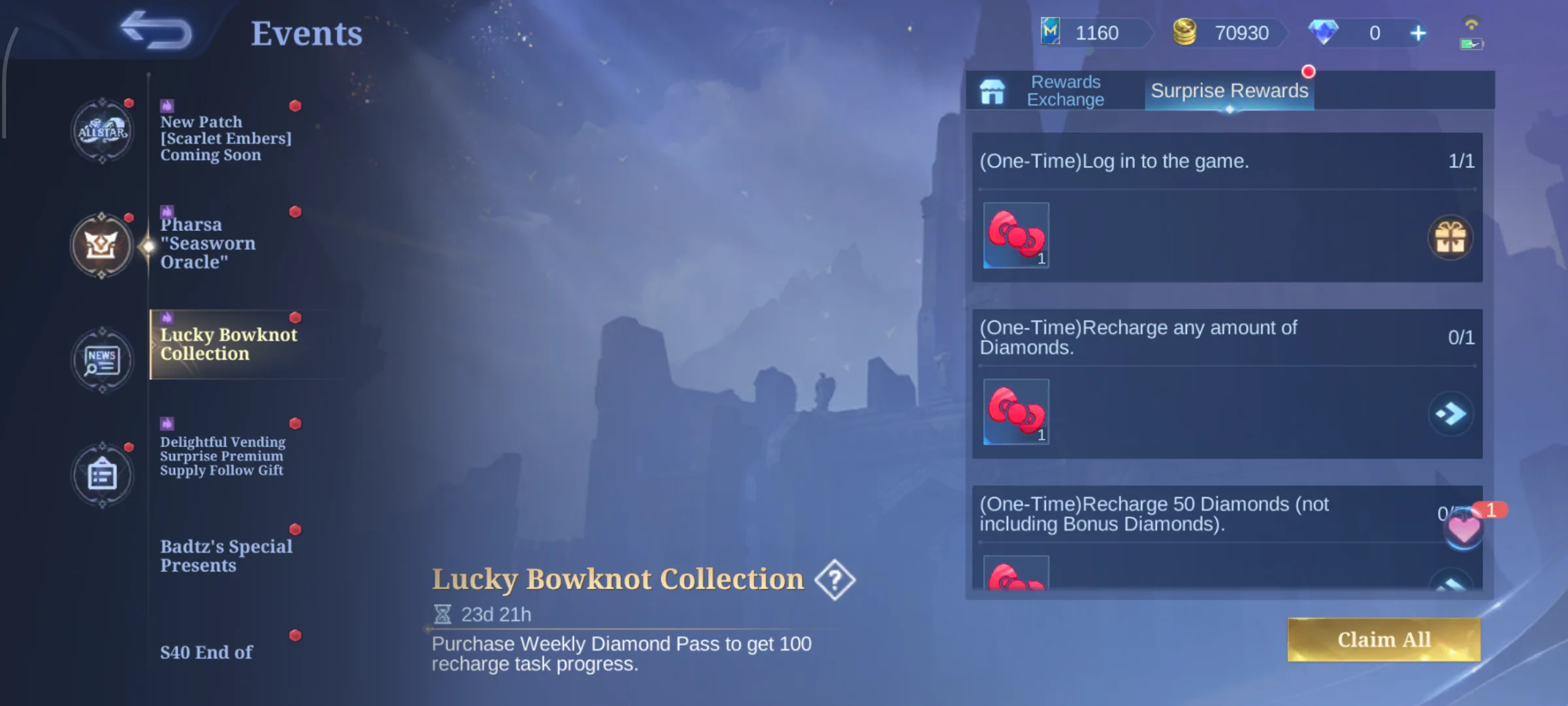
Before topping up for a recharge event:
- Check whether pass purchases count.
- Check whether the event counts cash value, Diamonds received or specific product purchases.
- Check whether the reward requires spending Diamonds after recharge.
- Confirm the event end date before choosing a delayed claim product.
Tidal Fishing: event attempts and Bait
Tidal Fishing used Bait and attempt rules rather than a simple Diamond shop listing. The rules referenced attempt behavior and a 5x unlock after enough attempts. This kind of system should be treated like a mini draw economy.
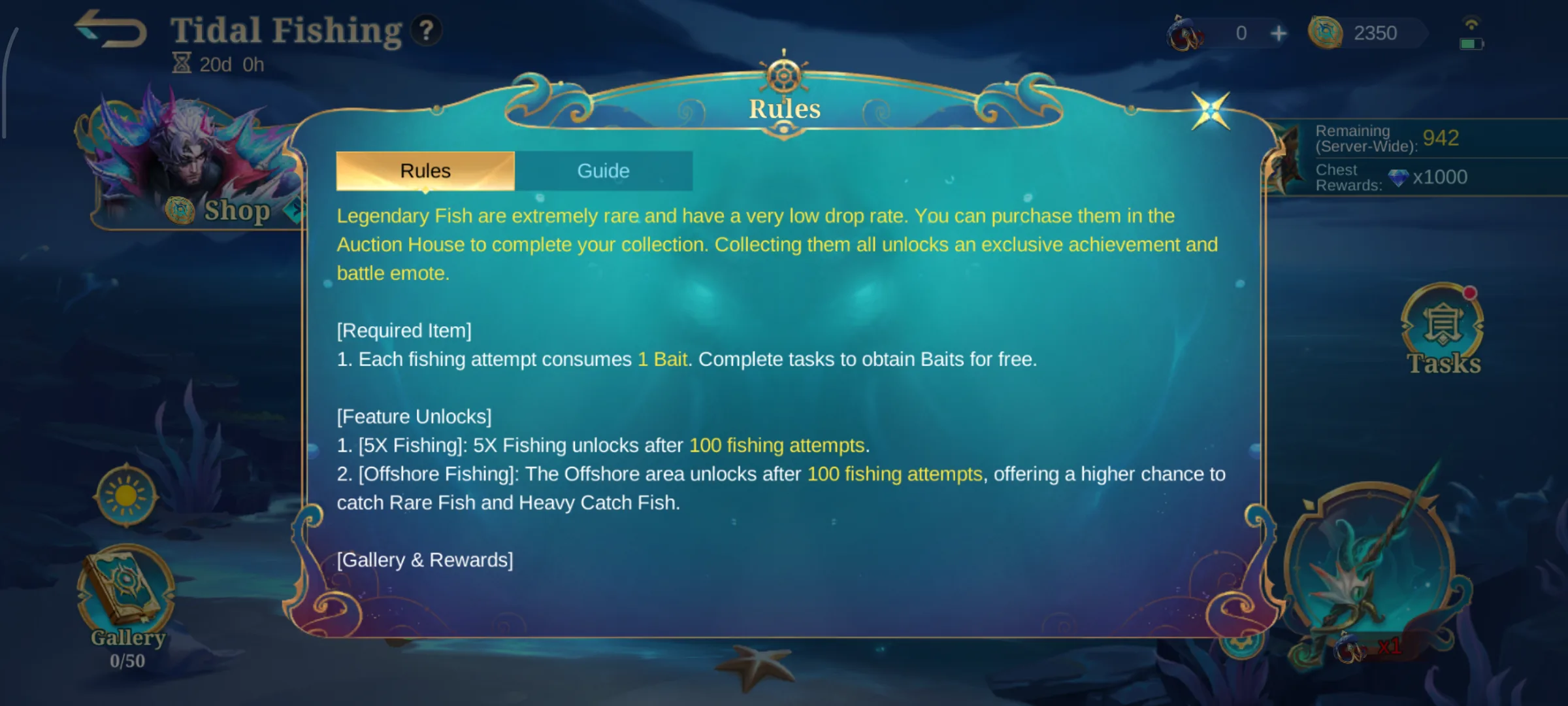
The right question is not "How many Diamonds does one attempt cost?" The right question is:
| Planning question | Reason |
|---|---|
| How do I earn or buy Bait? | Determines real entry cost |
| What happens after repeated attempts? | Unlocks and milestones can change value |
| Is the main reward fixed or random? | Fixed rewards are easier to justify |
| Are there free tasks? | Complete them before spending |
Other visible event modules
The June 2026 event area also showed modules such as Tidal Gold Rush, Badtz Special Presents and S40 Rush. These modules are important because they can change what "best value" means on a given day. A recharge that looks normal on the Recharge page may become better if it also clears an event task.
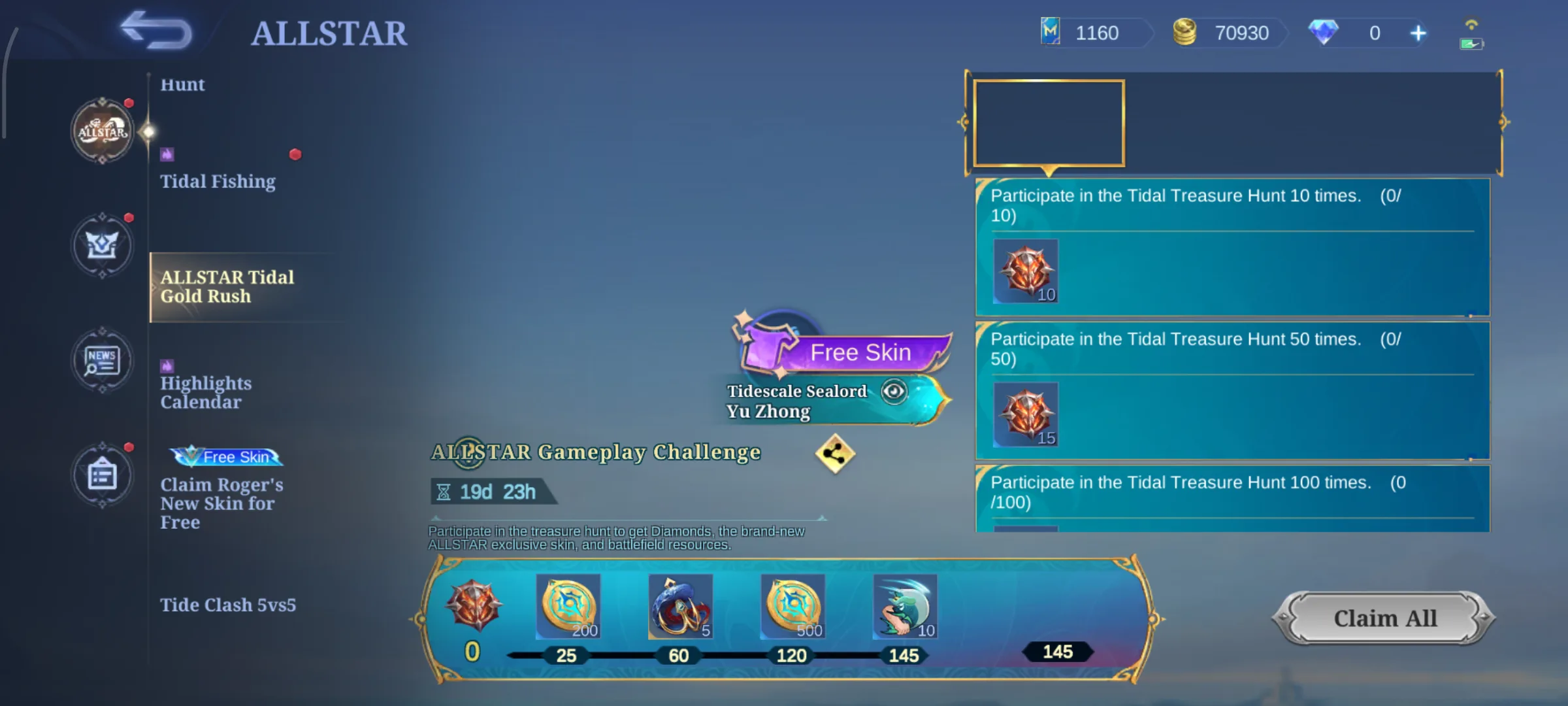
Event pages should be checked before any medium or large purchase, especially if you are already planning to buy Diamonds.
Visual Event Currency Checks
Events are easiest to misunderstand when the currency path is hidden. The same event tab can mix direct Diamond packages, Bait, recharge progress, vending-style supplies and season tasks.
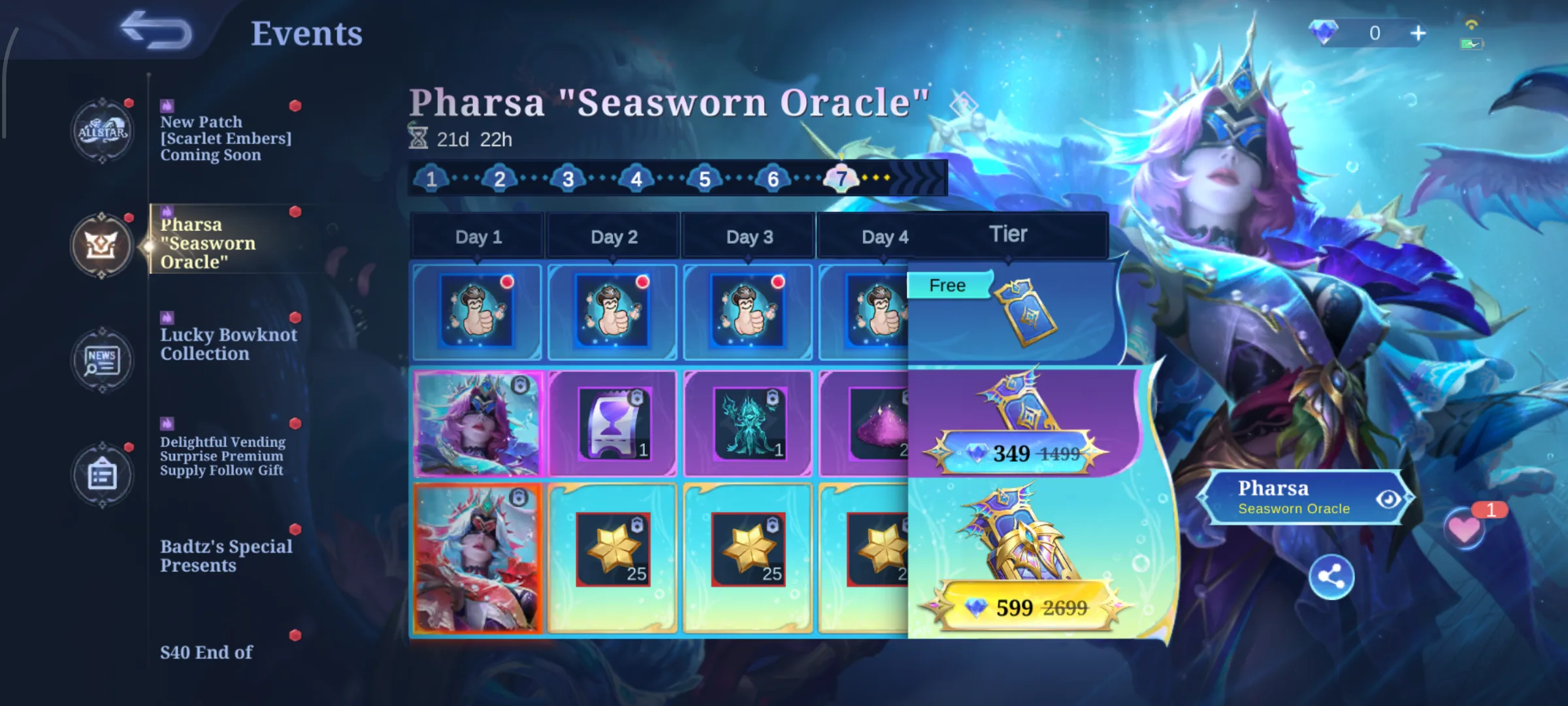
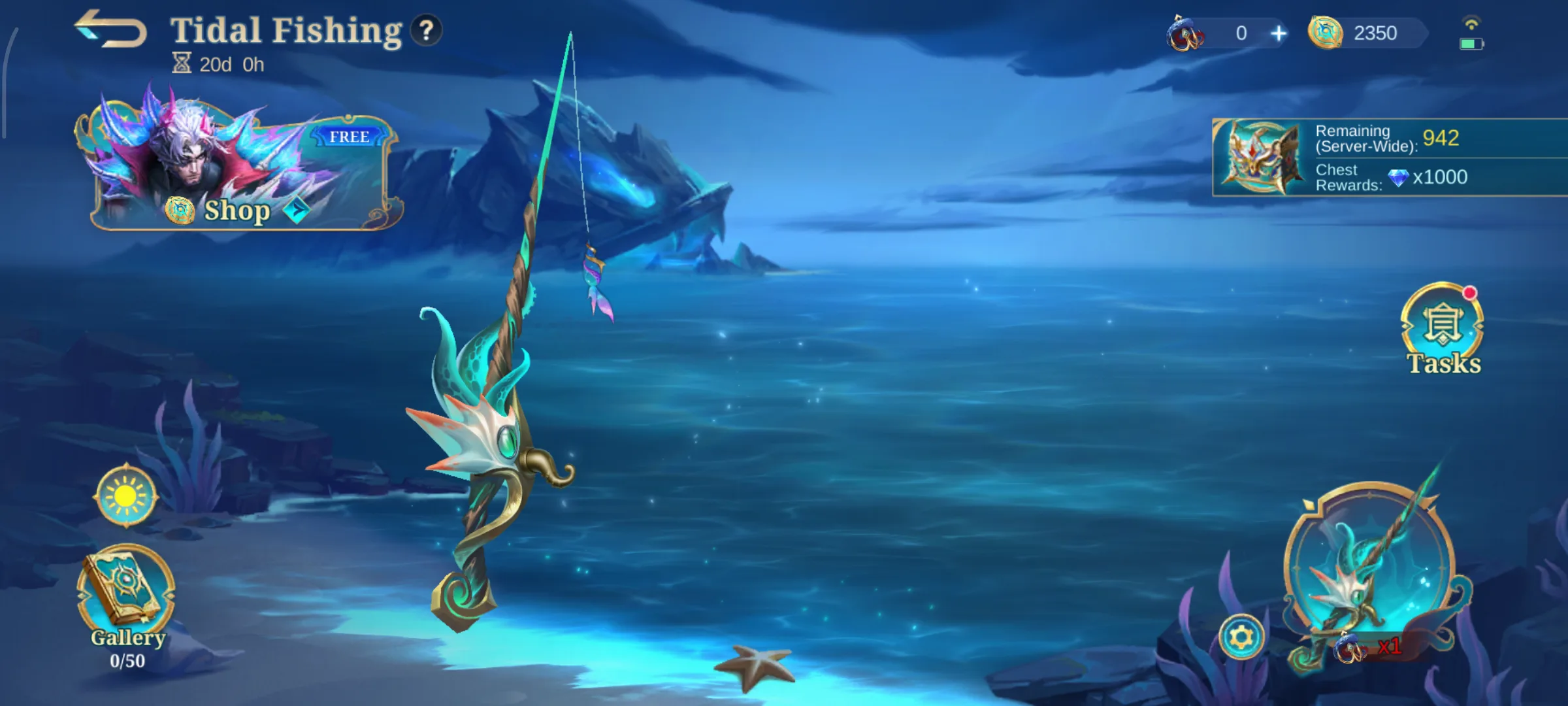
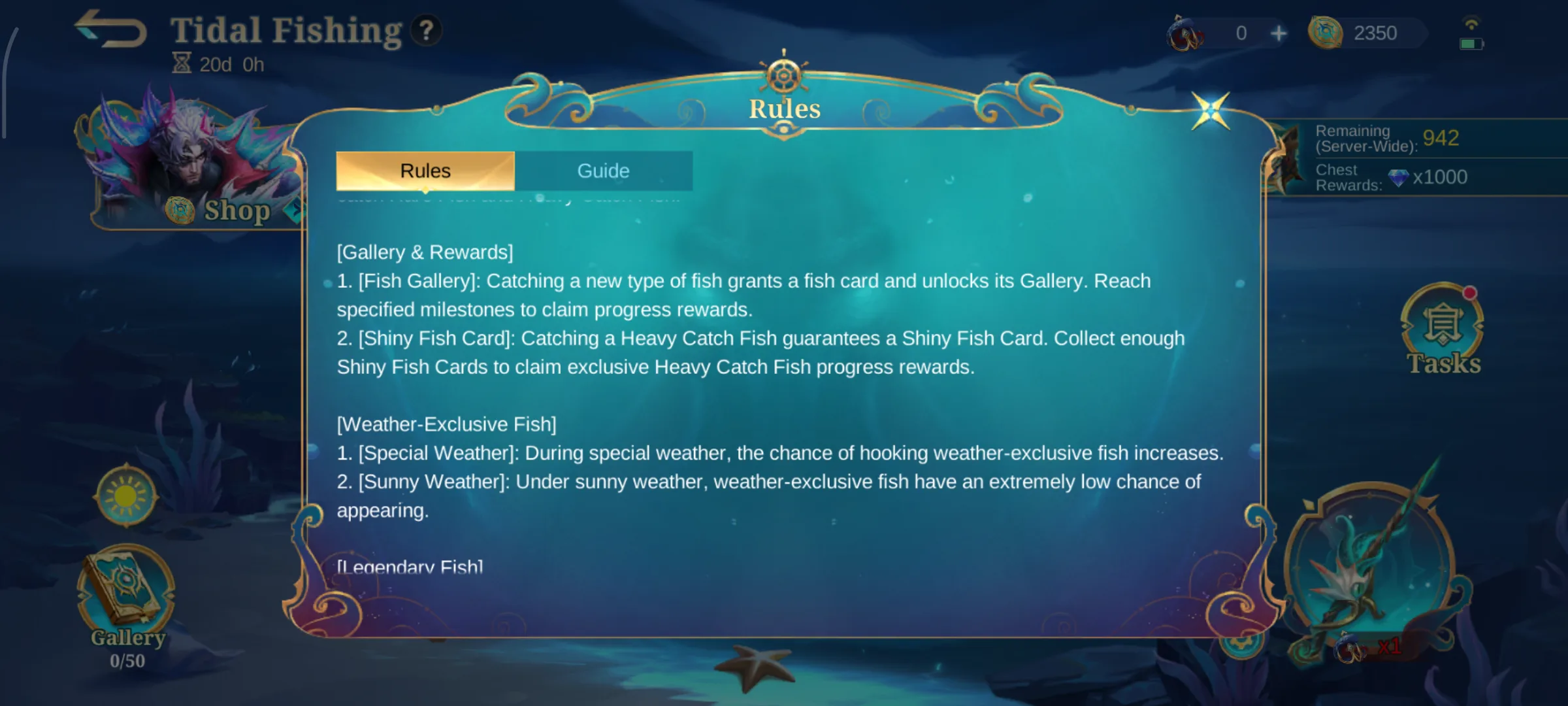
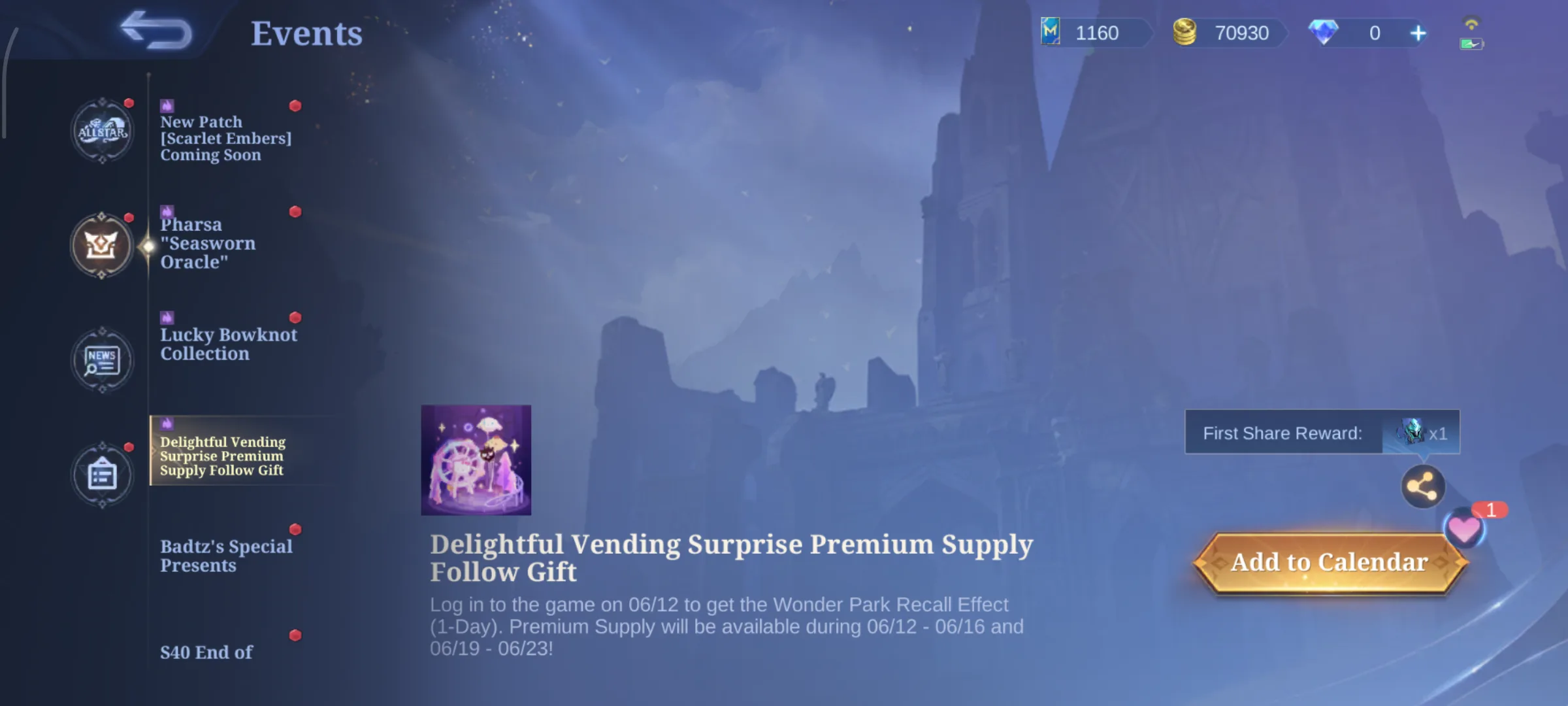
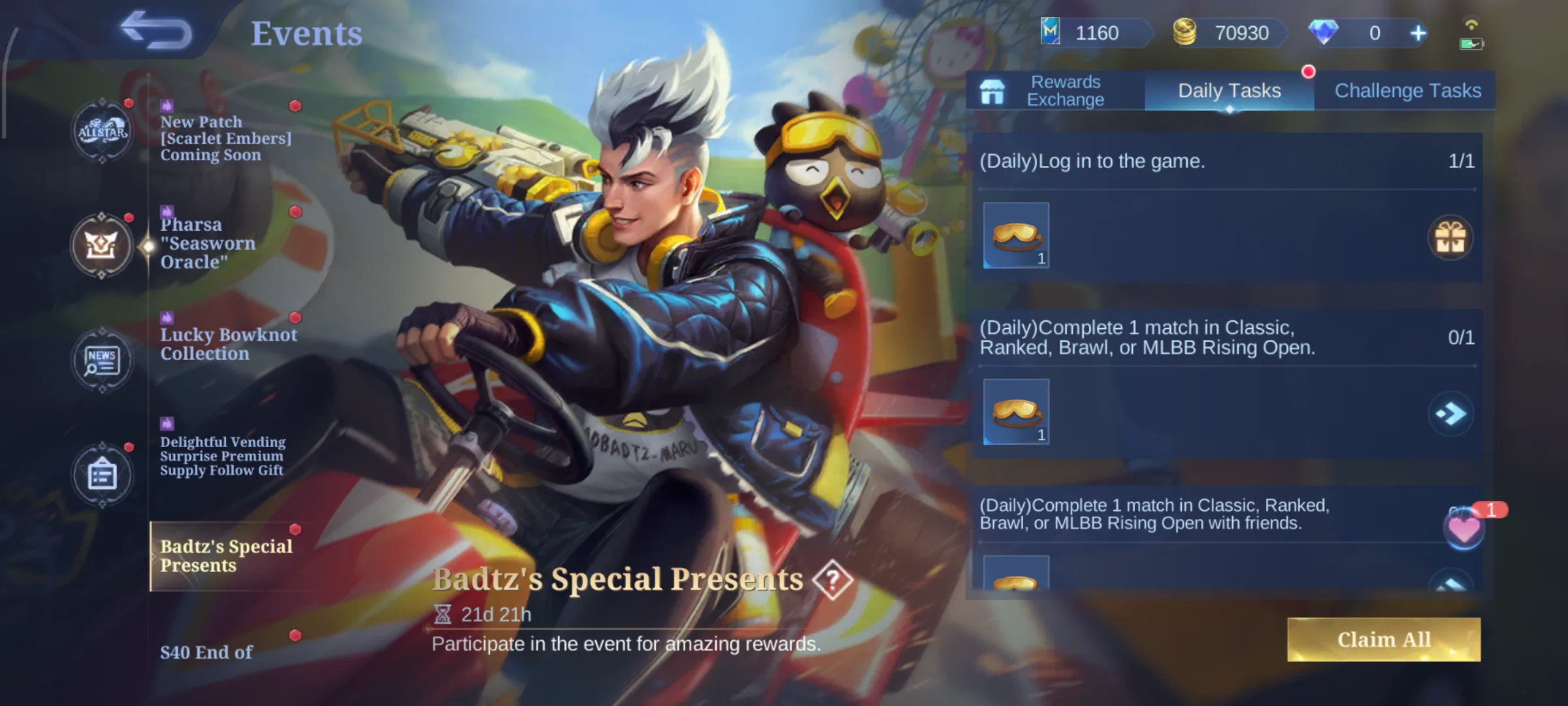
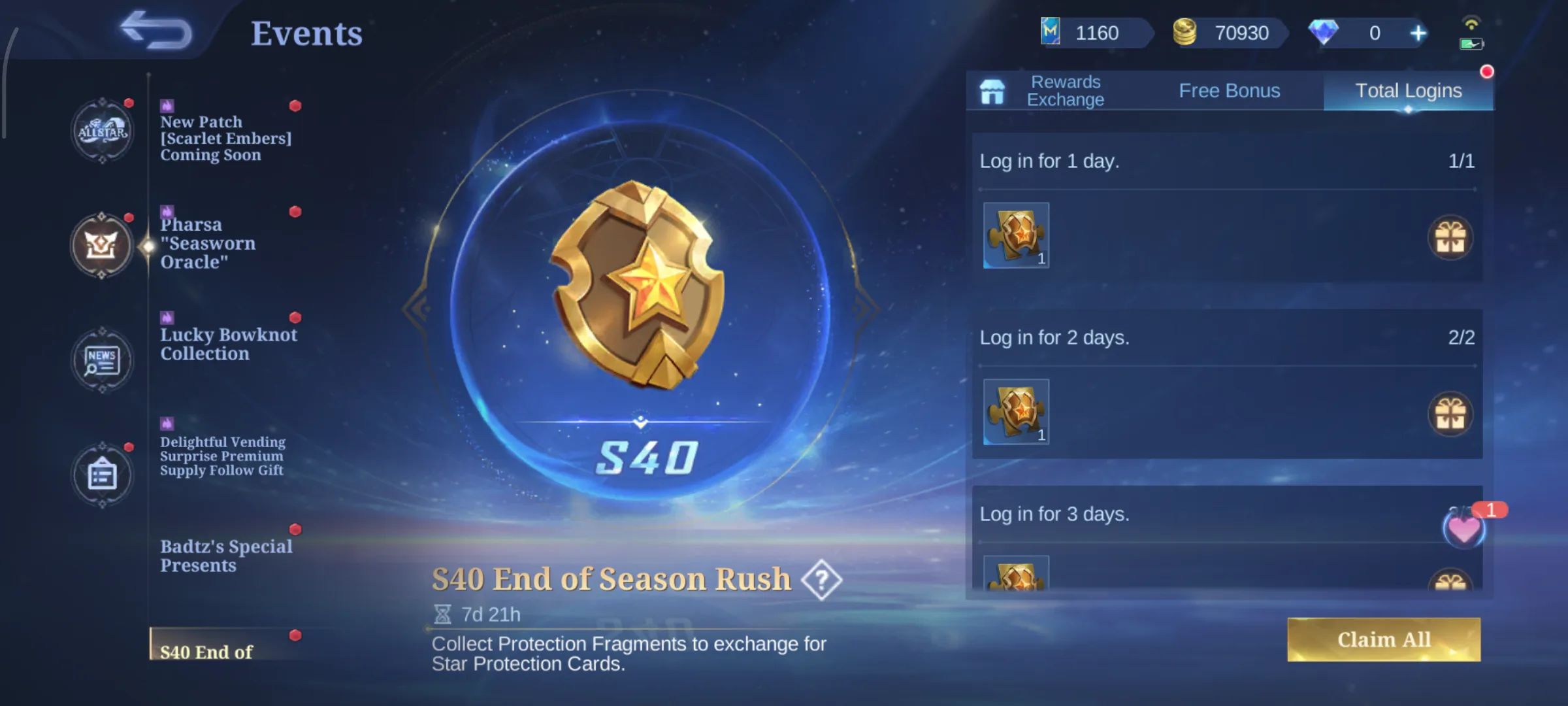
Value note: events should be read as small economies. Identify the reward, currency, task source and expiry timer before choosing a top-up route.
How to stack events, recharge and shop value
The strongest MLBB spending moments usually stack multiple benefits:
| Stack | Example logic |
|---|---|
| Recharge + event progress | Buy a qualifying pass or small pack during a recharge task |
| Recharge + Shop target | Buy only enough Diamonds to reach a fixed skin price |
| Pass + event task | Use Weekly Diamond Pass when the event counts it |
| Event currency + free tasks | Complete free attempts before buying event packs |
| Shop discount + existing balance | Avoid over-recharging when a discount closes the gap |
The weak version is buying a large pack first and deciding what to do later. The strong version is choosing the reward first, then choosing the smallest purchase path that reaches it.
Event Spending Levels
Event spending should be grouped by cost level before the player tops up. This prevents a free-task event from being treated like a Collector chase, and it prevents a premium event from being judged by one small package.
| Spending level | Example signal | Best decision |
|---|---|---|
| Free/task only | Login, attempt or claim rewards | Clear the free layer and stop unless the reward is a real target |
| Small paid event | Around 349 Diamonds | Compare with low Shop targets and current balance |
| Mid paid event | Around 599 Diamonds | Compare with 599 Diamond fixed Shop skins |
| Draw-style event | Attempts, progress, Bingo or guarantee | Use a draw ceiling before the first paid attempt |
| Collector-scale event | Premium skin target | Separate it from normal monthly spending |
For the player-facing "is this event worth Diamonds?" decision, use the spending levels above together with the currency decoder below. This page now covers both the event-spending decision and the deeper Missives, Bait, recharge progress and event task wording.
Collector Advice For Event Spending
Collector-style events need a separate budget because they can compete with several fixed Shop skins, Starlight months or weekly pass purchases. Treat them as premium targets instead of normal event packages.
| Collector question | Why it matters |
|---|---|
| Is this the exact hero skin you want? | Premium spending needs a precise target |
| Are fixed Shop alternatives enough? | 599/749/899 Diamond skins may be cleaner |
| What is the maximum Diamond ceiling? | Prevents panic top-up mid-event |
| Are discounts or free attempts available? | Timing changes the paid route |
| Will this affect other monthly spending? | Collector budgets should not swallow routine plans |
If the target is Collector-scale, compare it with the MLBB Collector Skin Cost Guide before choosing a top-up route.
What changes over time
Events are the least evergreen part of the MLBB Diamond economy. Names, rules, reward pools and discount structures can rotate quickly. The stable lesson is the reading method:
- Identify the reward.
- Identify the currency.
- Identify how the currency is earned.
- Check whether recharge, spending or claiming is required.
- Compare the total cost with Shop and draw alternatives.
For permanent or semi-permanent spending choices, use the Shop catalog and Draw systems guide.
Advanced event currency model
Events are the part of the MLBB economy most likely to make a shallow Diamond plan wrong. The reason is that events do not always spend Diamonds directly. They can use event currencies, recharge tasks, daily attempts, tokens, exchange shops and limited reward tracks. A safer event plan starts by drawing the currency map before buying anything.
Missives as a direct Diamond event package
Pharsa's Seasworn Oracle is the cleanest event example because the Missive packages had visible Diamond prices. The smaller package appeared at 349 Diamonds and the larger anchor at 599 Diamonds. Those two numbers should be compared against fixed Shop prices, not treated as abstract event spending.
| Region | Lowest practical ManaBuy route to at least 349 Diamonds | Cost | Diamonds received | Leftover |
|---|---|---|---|---|
| Global | 86 Diamonds + 2 x 172 Diamonds | $6.20 | 430 | 81 |
| Philippines | 2 x 11 Diamonds + 336 Diamonds | $5.19 | 358 | 9 |
| Indonesia | 59 Diamonds + 296 Diamonds | $5.82 | 355 | 6 |
| Malaysia | 70 Diamonds + 2 x 140 Diamonds | $5.56 | 350 | 1 |
| Singapore | 569 Diamonds | $9.42 | 569 | 220 |
| Turkey | 44 Diamonds + 88 Diamonds + 221 Diamonds | $5.50 | 353 | 4 |
The 599 Diamond event anchor overlaps with the common 599 Diamond shop-skin price. That creates a natural reader question: would I rather buy a fixed 599 Diamond skin, or spend the same Diamond amount inside a temporary event system? The answer depends on the reward pool and milestone structure, not on the discount badge alone.
Lucky Bowknot and recharge-progress stacking
Lucky Bowknot proves that event value can start before the Diamonds are spent. The event connected Weekly Diamond Pass purchase behavior with recharge progress. That means the best action may be buying a qualifying pass rather than buying a larger raw Diamond pack. A guide that only lists Diamond prices misses this.
Tidal Fishing, Bait and attempt systems
Tidal Fishing used Bait and attempt rules. That makes it closer to a mini draw economy than a normal shop item. The player should ask how Bait is earned, whether free tasks exist, whether attempts unlock multipliers, and whether the reward is fixed or random. Buying Diamonds first is backwards if the event has free task value waiting to be claimed.
Event spending checklist
| Step | Question | Why it matters |
|---|---|---|
| 1 | What is the target reward? | Prevents buying currency without a goal |
| 2 | What currency buys it? | Diamonds, Missives, Bait and task progress are different |
| 3 | How is the currency earned? | Free tasks can change the cash requirement |
| 4 | Does recharge progress count? | Pass products may beat raw top-up |
| 5 | Is the reward fixed or random? | Fixed rewards compare to Shop, random rewards compare to Draw |
| 6 | What expires first? | Delayed pass claims can fail an event deadline |
The event page works best as a decoding guide rather than a calendar post. Events rotate, but the reading method remains useful.
Two event planning examples
For a Missive event, the reader should start with the 349 or 599 Diamond package and ask what milestone that package actually unlocks. If 599 Diamonds buys a fixed event milestone that the player wants more than a normal 599 Diamond shop skin, the event can be sensible. If 599 Diamonds only buys a chance to move toward a reward, the reader should compare it to draw logic instead of shop logic. The same Diamond number can belong to two different decision categories.
For Tidal Fishing, the reader should not start by buying Diamonds at all. The first move is to count free tasks, Bait income, attempt rules and whether a multi-attempt option unlocks later. If the event gives free Bait or task-based Bait fragments, those should be consumed before converting cash into Diamonds. Only after the free layer is exhausted should the player decide whether the remaining reward is worth paid attempts.
Why event guides should avoid fake certainty
Events are temporary by design. A guide that pretends one event's prices are permanent will age badly. The stronger approach is to use named event examples, then teach a repeatable method. Missives show direct Diamond event packages. Lucky Bowknot shows recharge-progress stacking. Tidal Fishing shows secondary-currency attempts. Together they support the core rule: every MLBB event should be read as a small economy before the player recharges.
Related MLBB Guides
Event value depends on how the event connects to the rest of MLBB's Diamond economy:
| Guide | What you will learn |
|---|---|
| MLBB Diamonds Value Guide | How to place Missives, Bait and recharge tasks inside the full spending map. |
| MLBB Recharge, Passes and Bundles | When Weekly Diamond Pass or direct recharge can help an event progress task. |
| MLBB Weekly Diamond Pass Guide | How pass price, rewards and stacking rules affect recharge-task events. |
| MLBB Shop Prices Catalog | How to compare a 349/599 Diamond event package with fixed Shop skins. |
| MLBB Draw Systems Cost Guide | When an event behaves more like a draw system than a fixed Shop purchase. |
| MLBB Collector Skin Cost Guide | How to separate premium Collector events from ordinary event packages. |
FAQ
Are MLBB event currencies the same as Diamonds?
No. Diamonds may buy or unlock event currencies, but event currencies can have their own rules, tasks and expiration dates.
Are Missives worth buying?
Missives are worth considering only if the event reward or milestone is your target. Compare the 349/599 Diamond options with fixed Shop skins before buying.
Should I recharge before checking event pages?
No. Check event pages first. A pass or smaller pack may count toward a recharge task, and that can change the best purchase.
Are event discounts always good value?
Not automatically. A large discount badge is only useful if the reward matters to you and the final cost beats the alternatives you would actually buy.

MLBB Diamond Spending Guide: What to Buy and How to Top Up for Less
2026-06-11 15:13:11
MLBB Diamonds Top Up Complete Guide: User ID, Zone ID, Payment and Delivery
2026-06-08 10:54:35
MLBB Draw Systems Cost Guide: Magic Wheel, Zodiac, Aurora and Pity Math
2026-06-11 15:13:14
MLBB Recharge, Passes and Bundles Guide: Prices, Bonuses and ROI
2026-06-11 15:13:13
Copyright © FUTURE OUTLOOK TECHNOLOGY LIMITED.Company Registration No.: 77374965 All rights reserved.UNIT 135,1/F.,143 WAI YIP STREET,KWUN TONG HK