
MLBB Diamonds Value Guide: Prices, Best Uses, and Spending Map

Status check: Reviewed July 27, 2026: this article was checked for freshness. Availability, rewards, prices, tasks, and shop labels can change after publication, so confirm the current in-game screen before acting on the details below.
MLBB Diamonds are simple on the surface: buy Diamonds, then spend them on skins, passes, draws or events. The hard part is that those choices do not behave the same way. A direct Shop skin has a fixed Diamond price, a pass spreads value over time, a draw can hide its real cost behind pity or exchange rules, and an event may reward recharge progress before you spend any Diamonds at all.
This guide is meant to be the main spending map for those decisions. It covers direct recharge packs, Weekly Diamond Pass and bundle products, Shop skin price anchors, draw-system ceilings, event currencies and regional ManaBuy top-up routes. Use it to decide the reward first, then choose the purchase route that fits that reward.
The prices below come from a June 2026 MLBB in-game price review and a ManaBuy MLBB package review. They are useful planning references, but live offers can still vary by account, server, region and event timing.
MLBB Diamonds are most useful when you treat them as a budget tool, not as a single price tag. The clearest June 2026 anchors are $0.99-$99.99 direct recharge packs, a $1.99 Weekly Diamond Pass, 188 Diamond Painted Skins, 254 Diamond discount skins, many 599/749/899 Diamond shop skins, Magic Wheel draws at 60 Diamonds for 1 draw or 270 for 5 draws, and event items such as Missives at 349/599 Diamonds.
The best value usually comes from matching the purchase path to the reward type:
| Goal | Best first check | Why |
|---|---|---|
| Need flexible Diamonds now | Recharge page | Simple baseline and predictable pack sizes |
| Need gradual Diamonds | Weekly Diamond Pass | Lower cash entry, but requires logging in to claim |
| Want a specific permanent shop skin | Shop catalog | Fixed Diamond price avoids draw randomness |
| Want a Legend, Zodiac or featured draw reward | Draw system rules | Pity and exchange rules matter more than sticker price |
| Want event-limited rewards | Event rules page | The currency may be Missives, Bait, tokens or recharge progress |
How to read this guide
This guide is the map for the full MLBB spending system. It gives the decision logic first, then sends you to focused pages when you need the exact tables:
| Deep dive | Use it when you need |
|---|---|
| Recharge, passes and bundles | USD prices, pack bonuses, first recharge, Weekly Diamond Pass and subscription bundles |
| Weekly Diamond Pass Guide | Price, rewards, stacking rules and when delayed pass value beats direct Diamonds |
| Cheap MLBB Diamonds Guide | Budget routes, small first tests, payment safety and risk boundaries |
| Shop prices catalog | Skin, hero, fragment, emote, pack and customization price ladders |
| Draw systems cost guide | Magic Wheel, Zodiac, Aurora, New Arrival, Lucky Spin and featured draw math |
| Collector Skin Cost Guide | Premium skin draw planning, cost ranges, stop rules and worth-it checks |
| Events, currencies and event spending guide | Missives, Bait, recharge tasks, event shops, cost levels and whether an event is worth paid Diamonds |
| Starlight Pass Guide | Monthly rewards, featured skin value, archive context and pass comparisons |
| MLBB Diamonds top-up guide | External top-up flow and account safety checks before purchase |
Prices and rules can rotate in MLBB. Treat the figures here as a June 2026 reference point, then confirm the live in-game page for your server, account region and active event before spending.
The four Diamond spending lanes
1. Recharge is the cash-to-Diamonds baseline
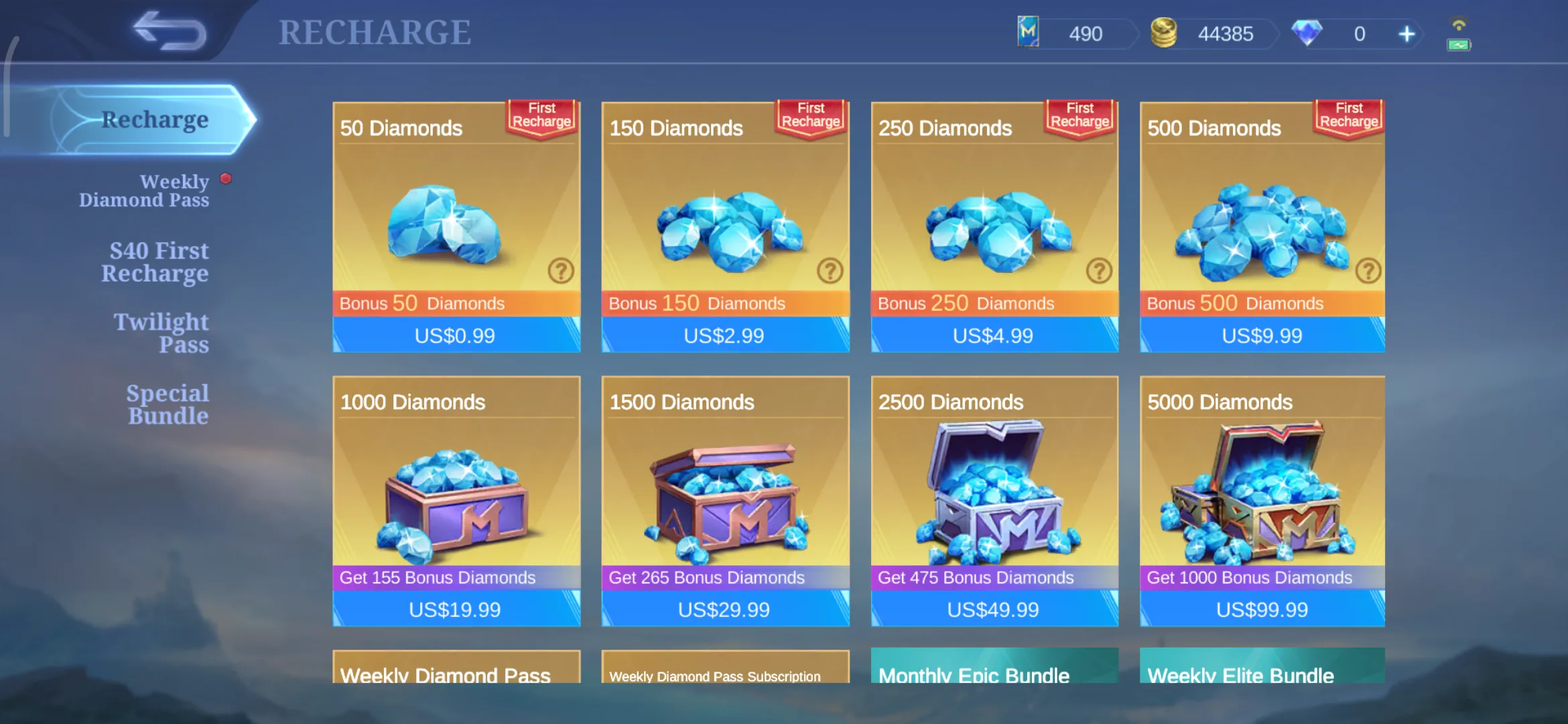
Recharge is the cleanest way to understand what a Diamond budget means. The June 2026 in-game price page included eight direct Diamond packs from $0.99 to $99.99. The first four visible packs used a first-recharge-style doubled bonus, while the larger packs used fixed bonus Diamonds.
| Cash price | Base Diamonds | Bonus Diamonds | Visible total | Planning meaning |
|---|---|---|---|---|
| $0.99 | 50 | 50 | 100 | Tiny gap fill, first recharge trigger or event progress |
| $2.99 | 150 | 150 | 300 | Covers 188/254 targets with leftover Diamonds |
| $4.99 | 250 | 250 | 500 | Covers a Magic Wheel 5x button or 349-Diamond event item |
| $9.99 | 500 | 500 | 1000 | Clean mid-budget anchor; can cover a 899-Diamond skin if the bonus is active |
| $19.99 | 1000 | 155 | 1155 | First regular high pack after doubled starter-style tiers |
| $29.99 | 1500 | 265 | 1765 | Multiple Shop targets or a bigger event budget |
| $49.99 | 2500 | 475 | 2975 | Heavy event or draw planning |
| $99.99 | 5000 | 1000 | 6000 | Collector-scale budget, not casual spending |
Recharge is best when you need flexibility. It is not always the best value if your target reward is already available through a pass, a fixed-price shop listing, a fragment exchange or an event shop.
2. Passes trade speed for value
Pass products can be better than instant recharge when you can claim rewards over time. The Weekly Diamond Pass is the most obvious example because it has a low cash price and a daily-claim structure. The same Recharge area also included subscriptions and bundles that should be evaluated differently from raw Diamond packs.
| Pass or bundle product | In-game price point | How to judge it |
|---|---|---|
| Weekly Diamond Pass | $1.99 | Strong only if you can claim the full schedule |
| Weekly Pass Subscription | $1.99 | Check renewal behavior and claim timing |
| Weekly Elite Bundle | $0.99 | Buy only if the included items match your account needs |
| Ticket Weekly Subscription | $0.99 | Useful only if you actually use ticket-based systems |
| Ticket Monthly Subscription | $2.99 | Longer claim schedule; compare total ticket value |
| Monthly Epic Bundle | $4.99 | Open the live Details panel before assigning value to every item |
| Twilight Pass | $9.99 | Better for reward-track goals than instant Diamond needs |
Passes are most useful for players who already know they will play across the claim period. If you only need Diamonds for an offer that expires today, the time delay can turn a good pass into the wrong purchase.
3. Shop prices are the cleanest fixed-cost path
The Shop gives the most straightforward Diamond decisions because many items have direct prices. The June 2026 price review included Painted Skins at 188 Diamonds, discount skin listings around 254 Diamonds, lower and mid-tier listings around 269/399 Diamonds, and many premium skin listings at 599, 749 or 899 Diamonds.
| Shop price anchor | Example use | Why it matters |
|---|---|---|
| 188 Diamonds | Painted Skin variants | Low-cost cosmetic anchor and useful leftover-Diamond target |
| 254 Diamonds | Discount skin listing | Check timer and original price before treating it as value |
| 269/399 Diamonds | Lower or discounted skins | Middle ground between Painted Skins and premium skins |
| 599 Diamonds | Major fixed Shop skin | Direct comparison point for 599-Diamond event packages |
| 749 Diamonds | Higher Shop tier | Needs cleaner top-up planning to avoid awkward leftovers |
| 899 Diamonds | Premium Shop anchor | Main fixed-price baseline against draw systems |
If a player wants one specific shop item, the Shop often beats a draw because there is no randomness. The question becomes whether the exact item is permanently available, discounted, or tied to a time-limited event tab.
4. Draws and events are rule systems, not simple prices
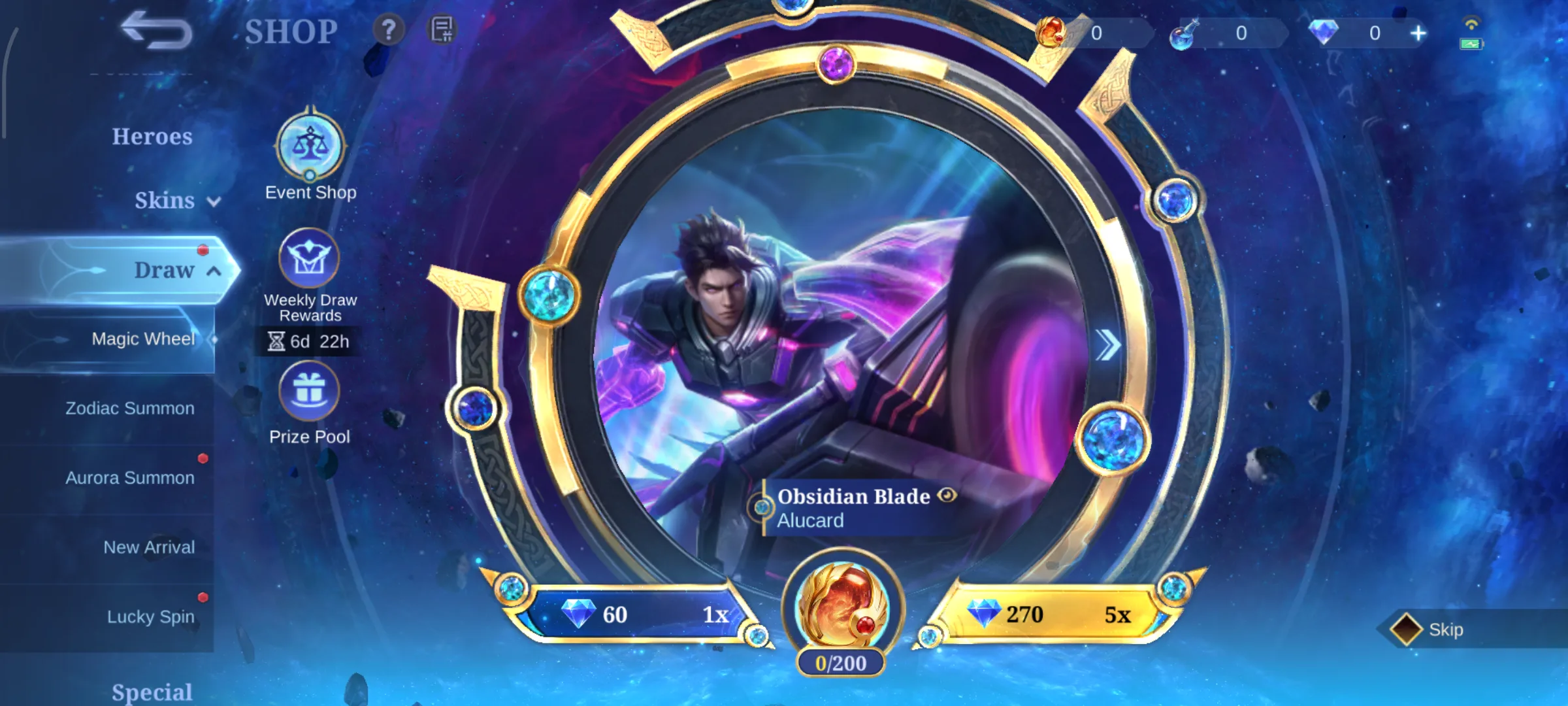
Draw systems look cheap at the button level, but the real cost depends on pity, exchange currencies and duplicate conversion. Magic Wheel, for example, priced 1 draw at 60 Diamonds and 5 draws at 270 Diamonds, with a 200-draw progress guarantee. Zodiac and Aurora have their own progress systems. New Arrival has a 160-draw guarantee for the target reward.
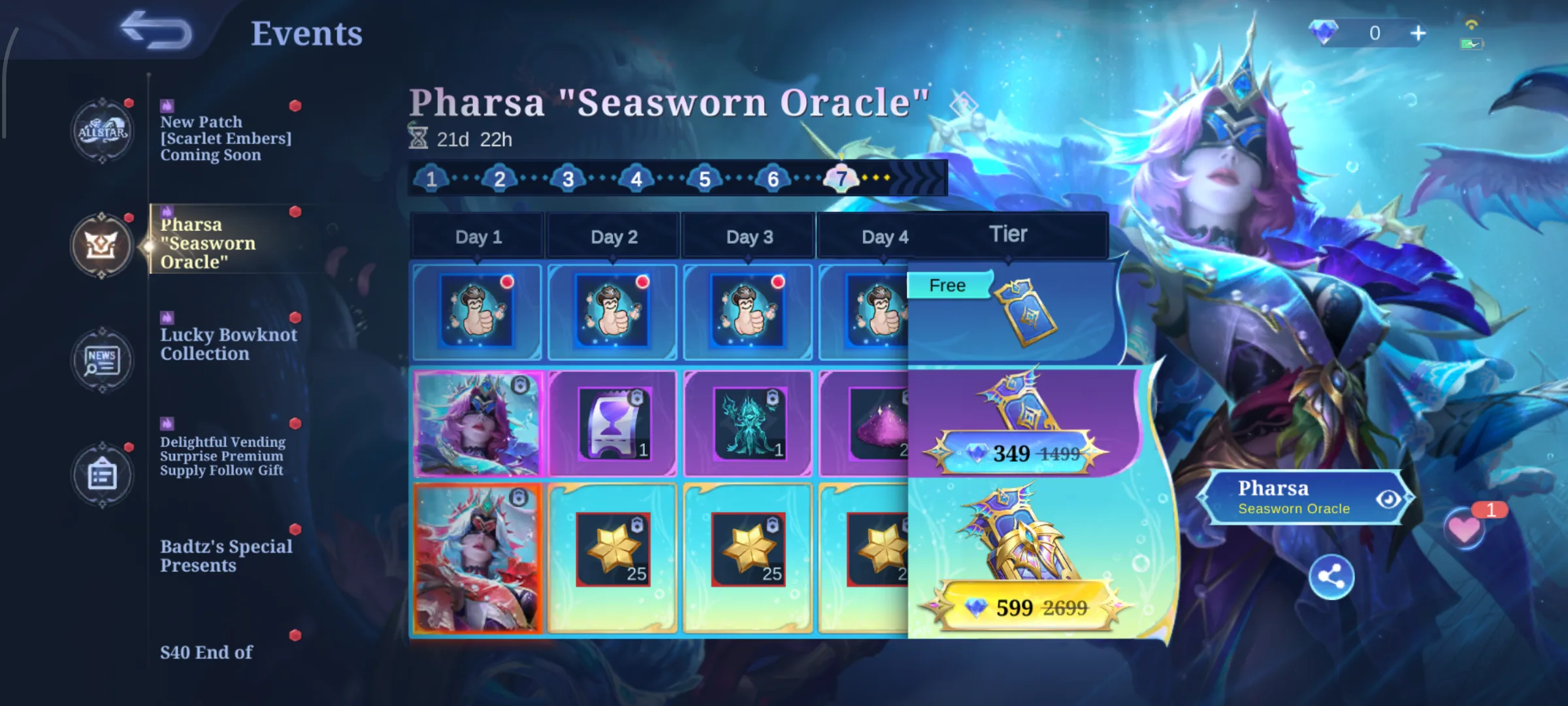
Events add another layer because the main currency may not be Diamonds directly. Pharsa's Seasworn Oracle event used Missives at 349/599 Diamonds. Tidal Fishing used Bait and attempt rules. Lucky Bowknot linked recharge progress with the Weekly Diamond Pass. This is why event rules should be checked before topping up.
Practical budget examples
| Player budget | Better starting point | Reason |
|---|---|---|
| Under $2 | Weekly Diamond Pass or entry recharge | Pass value is strong if you can claim daily; recharge is better for instant needs |
| Around $5 | Monthly Epic Bundle, Ticket Monthly Subscription or small recharge | Compare the reward bundle to the exact shop item you want |
| Around $10 | 500 + 500 recharge, Twilight Pass or event item | Check whether the reward is fixed, delayed or event-limited |
| 599-899 Diamonds available | Shop first | Many permanent skins sit in this range and avoid draw risk |
| Chasing Legend/Zodiac/featured rewards | Draw guide first | Pity and exchange rules drive the real cost |
Best-value checklist before spending
- Identify the target reward first.
- Check whether it has a fixed Shop price.
- Check whether an event shop or fragment exchange can unlock it cheaper.
- Check pass timing if you do not need the Diamonds instantly.
- Read draw rules before starting any pity-based system.
- Confirm your account, server and UID before topping up.
Diamond value model by region and channel
The deeper question behind MLBB spending is not only "how many Diamonds does this skin cost?" A better question is "what route gives me those Diamonds, how many extra Diamonds will I hold afterward, and does that leftover balance have a planned use?" A 899 Diamond skin is a fixed in-game target. The cash cost behind it changes by region, package ladder, active sale, payment route, and whether the player is using the in-game Recharge page or a top-up platform such as ManaBuy.
This guide uses three price layers. First, MLBB's in-game pages define the economy itself: Recharge tiers, Shop prices, draw buttons, pity rules, event currencies and pass rules. Second, the ManaBuy MLBB page records the current package ladders available by region option. Third, public external top-up pages and MLBB community references help prevent overclaiming that every country uses the same cash package ladder. The careful conclusion is this: Diamond-denominated price anchors can be stable as game economy units, but the cash cost of buying those Diamonds is regional and channel-dependent.
ManaBuy region price index
The ManaBuy MLBB product page showed separate purchase options for Global, Philippines, Indonesia, Malaysia, Singapore and Turkey. The price ladder is not identical across those options. Some regions have very small starter packs, some have better large-pack unit economics, and some show Weekly Diamond Pass while others do not. That means "899 Diamonds costs X dollars" is only useful when the region and channel are named.
| Region option on ManaBuy | Cheapest Diamond pack | Best unit-cost pack | Weekly Diamond Pass | Best unit cost |
|---|---|---|---|---|
| Global | 86 Diamonds at USD $1.24 | 3688 Diamonds at USD $49.69 | USD $1.59 | $1.347/100D |
| Philippines | 11 Diamonds at USD $0.17 | 6042 Diamonds at USD $80.70 | USD $1.60 | $1.336/100D |
| Indonesia | 59 Diamonds at USD $0.94 | 6257 Diamonds at USD $92.13 | USD $1.80 | $1.472/100D |
| Malaysia | 28 Diamonds at USD $0.42 | 28 Diamonds at USD $0.42 | Not shown | $1.5/100D |
| Singapore | 28 Diamonds at USD $0.48 | 2976 Diamonds at USD $46.29 | USD $2.02 | $1.555/100D |
| Turkey | 24 Diamonds at USD $0.37 | 6146 Diamonds at USD $87.48 | Not shown | $1.423/100D |
The table has one quiet but important lesson: the cheapest entry pack is not always the best value. A Philippines player can start at 11 Diamonds, but the best unit cost in that snapshot came from the 6042 Diamond package. Global had a strong large-pack unit cost around the 3688/5532 range. Singapore had a higher unit cost in the visible snapshot. That does not mean players should choose a different region; they must buy the route that matches their account eligibility. It does mean the same Diamond target can feel very different in cash terms.
Game target cost table
Below is the practical version of the value model. The script chooses a low-cost, readable ManaBuy pack route that reaches or exceeds the target Diamond amount, then shows leftover Diamonds. Leftover Diamonds are not automatically waste. They become good value only if the player already has a second planned use, such as a future Painted Skin, a Magic Wheel single draw, or an event currency package.
| Goal | Diamonds needed | Global | Philippines | Indonesia | Singapore | Turkey |
|---|---|---|---|---|---|---|
| Painted Skin | 188 | $3.72 | $2.77 | $3.29 | $3.54 | $3.11 |
| Discount skin anchor | 254 | $3.72 | $4.03 | $4.23 | $9.42 | $4.11 |
| Magic Wheel 5x draw | 270 | $4.96 | $4.03 | $4.70 | $9.42 | $4.50 |
| Missive small pack | 349 | $6.20 | $5.19 | $5.82 | $9.42 | $5.50 |
| 599 Diamond shop skin | 599 | $8.69 | $8.87 | $10.10 | $10.13 | $9.41 |
| 749 Diamond shop skin | 749 | $11.17 | $10.68 | $12.53 | $12.40 | $11.80 |
| 899 Diamond shop skin | 899 | $13.65 | $12.92 | $14.80 | $17.63 | $14.55 |
For a 188 Diamond Painted Skin, the cash route can be very tight in some regions and awkward in others. For a 899 Diamond skin, the difference becomes more visible because the player is no longer buying one small pack. The smartest value framing is not "this region is cheaper" as a broad statement. The smarter framing is "for this account region and this exact Diamond target, here is the practical route, the cash cost, and the leftover Diamond balance."
In-game Recharge page versus ManaBuy package route
The in-game Recharge page used a USD payment environment with eight direct Diamond tiers. The first four visible packs had first-recharge-style doubled rewards: 50 + 50 for $0.99, 150 + 150 for $2.99, 250 + 250 for $4.99 and 500 + 500 for $9.99. Higher packs used fixed bonuses: 1000 + 155 for $19.99, 1500 + 265 for $29.99, 2500 + 475 for $49.99 and 5000 + 1000 for $99.99.
Those packs are useful for building a baseline. The $9.99 first-recharge 500 + 500 pack is a clean 1000-Diamond planning point. If the first-recharge bonus is active, it can cover a 899 Diamond shop skin with 101 Diamonds left. But after that first-recharge condition changes, the same pack logic may not hold. ManaBuy package ladders solve a different problem: they let the player choose a route by region and target amount, sometimes with lower visible cash cost for a specific Diamond goal. Compare both routes instead of assuming one route is always better.
Same skin price, different cash pressure
MLBB's shop UI speaks in Diamonds. The player experience speaks in cash pressure. This is why a 188 Diamond Painted Skin, a 599 Diamond shop skin and a 899 Diamond premium skin should not be discussed only as "cheap" or "expensive." They should be framed as budget tiers:
| In-game target | Diamond meaning | Budget meaning |
|---|---|---|
| 188 Diamonds | Painted Skin or low-cost cosmetic anchor | Good for leftover Diamonds after a pass or mid-pack |
| 254-269 Diamonds | Discount or lower skin tier | Best when the discount is for a skin the player already wanted |
| 599 Diamonds | Major direct shop purchase | Strong alternative to a small draw chase |
| 749 Diamonds | Higher direct shop purchase | Needs a planned top-up route to avoid awkward leftovers |
| 899 Diamonds | Premium shop anchor | Should be compared against draw pity and event costs |
| 270 Diamonds | Magic Wheel 5x button | Looks small, but repeated use changes the budget category |
| 349/599 Diamonds | Event currency packages | Must be judged by event milestones, not just the package price |
When the Diamond price is stable but the cash route varies, use two numbers side by side: Diamond cost and practical cash route. That is the level of detail a reader actually needs before spending.
How the price pages connect
The useful part of a full Diamond review is that it connects the paid ecosystem instead of treating one tab as the whole story. Recharge gives the cash-to-Diamond baseline and pass products. Shop gives direct price anchors and the density of 899-Diamond skin listings. Draw pages explain why button price is not the same thing as expected cost. Event pages show that some spending is mediated by Missives, Bait, recharge progress or other temporary currencies.
Shop price distribution, not item-by-item dumping
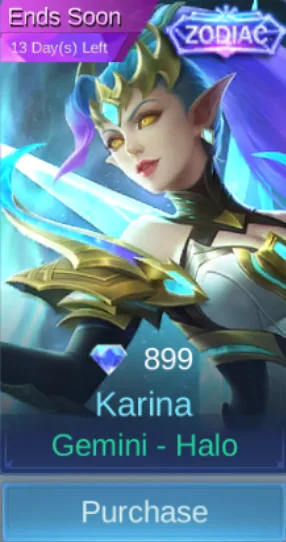
The Shop price list is most useful as a distribution layer. Listing every card would make the guide unreadable, but the price pattern is too important to ignore. The right middle ground is to summarize the distribution and show representative price examples.
| Diamond price observed in reviewed Shop cards | Count in reviewed Shop cards | How to interpret it |
|---|---|---|
| 188 | 9 | Painted Skin anchor and low-cost cosmetic tier |
| 254 | 2 | Discounted skin anchor, usually meaningful only while the sale is live |
| 269 | 10 | Lower shop skin tier or discounted standard listing |
| 399 | 4 | Mid-low cosmetic tier, useful as a gap-fill benchmark |
| 599 | 15 | Major direct-purchase skin anchor |
| 749 | 30 | Higher direct-purchase skin anchor |
| 899 | 53 | Dominant premium shop skin anchor in the reviewed Shop set |
This distribution explains why 899 Diamonds deserves real space in the spending map. It is not just one example; it dominates the reviewed premium skin cards. It also explains why 188 Painted Skins are important even though they are cheaper. They create the low-end reference point that helps readers understand what a leftover balance can still buy.
Draw price logic: button price, pity and exchange value
Magic Wheel showed 60 Diamonds for 1 draw and 270 Diamonds for 5 draws, but a serious draw budget must think in repeated pulls. At the 5x button rate, 200 draws corresponds to 40 groups of 5, or 10,800 Diamonds before considering any discounts, free attempts or currency substitutions. That number is not a promise that every player must spend 10,800 Diamonds. It is a stress test that shows why pity systems belong in a separate budget category from shop skins.
| Region | Lowest practical ManaBuy route to at least 10800 Diamonds | Cost | Diamonds received | Leftover |
|---|---|---|---|---|
| Global | 172 Diamonds + 706 Diamonds + 2 x 2195 Diamonds + 5532 Diamonds | $146.52 | 10800 | 0 |
| Philippines | 2 x 2398 Diamonds + 6042 Diamonds | $145.26 | 10838 | 38 |
| Indonesia | 2 x 59 Diamonds + 408 Diamonds + 2 x 2010 Diamonds + 6257 Diamonds | $161.82 | 10803 | 3 |
| Singapore | 2 x 42 Diamonds + 716 Diamonds + 1084 Diamonds + 3 x 2976 Diamonds | $169.61 | 10812 | 12 |
| Turkey | 88 Diamonds + 4 x 221 Diamonds + 1041 Diamonds + 2645 Diamonds + 6146 Diamonds | $156.29 | 10804 | 4 |
The key reader takeaway is simple: draw systems can be good when the target reward is exclusive and the player understands the ceiling. They are dangerous when the player treats each 270-Diamond 5x button as a small independent purchase. Use a ceiling-first method: decide the maximum Diamond amount before the first draw, then stop at that limit even if the progress bar is emotionally tempting.
Event price logic: Diamonds are only one layer
Events such as Pharsa's Seasworn Oracle and Tidal Fishing show why "Diamond guide" is a bigger topic than recharge tiers. Missives had 349 and 599 Diamond options. Tidal Fishing used Bait and attempt rules. Lucky Bowknot connected Weekly Diamond Pass purchase behavior to recharge progress. In other words, the economy is a graph: cash can become Diamonds, Diamonds can become event currency, recharge can become task progress, and event currency can become rewards.
The best approach is to trace that graph before buying. If the reward is fixed, compare the event currency package to a Shop skin. If the reward is random, compare it to draw pity. If the reward is tied to recharge progress, check whether Weekly Diamond Pass counts before buying a large raw Diamond pack.
Visual Price Anchors Behind the Diamond Map
The Diamond map is easier to use when the major price points are visible, not only described. These examples show recharge and pass context, several fixed Shop prices, one draw rules screen and one event currency screen.
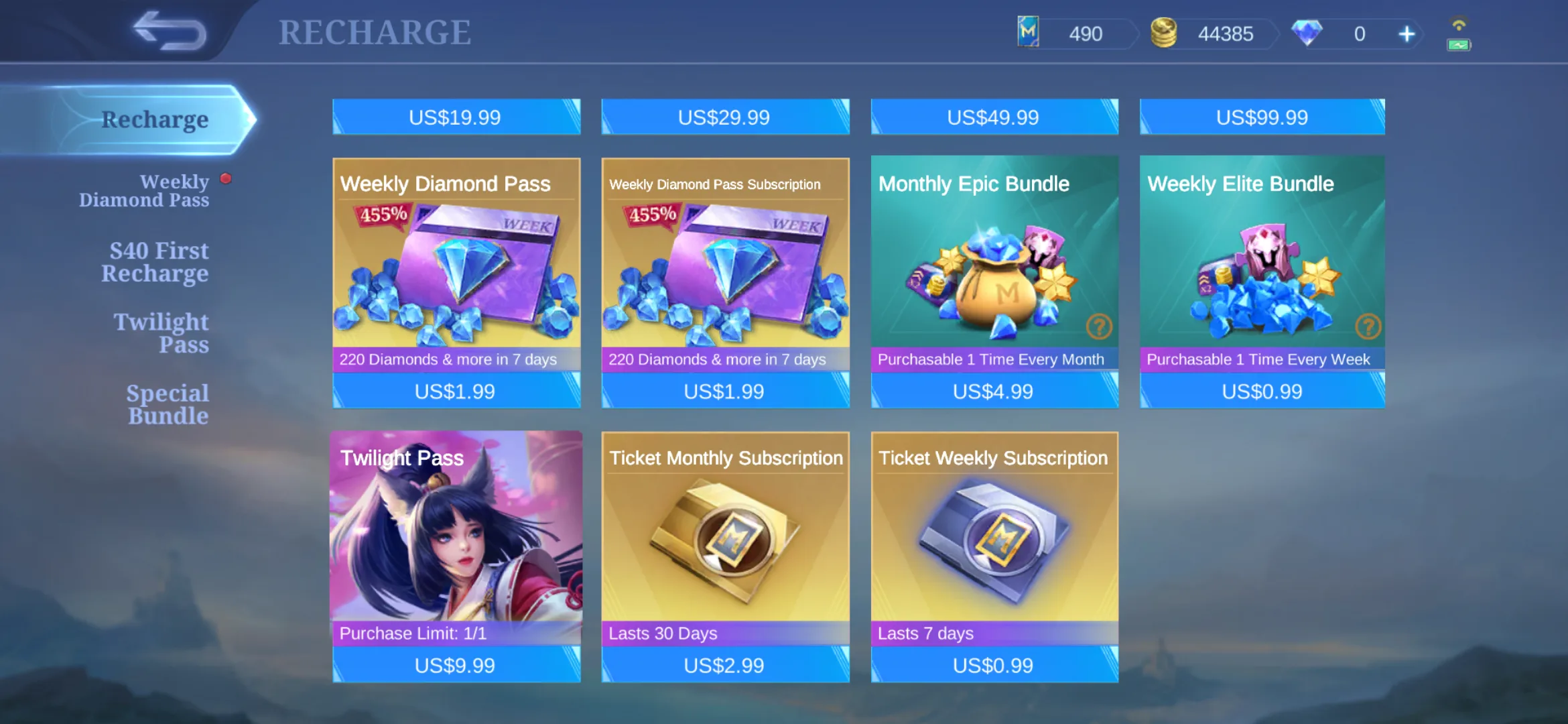

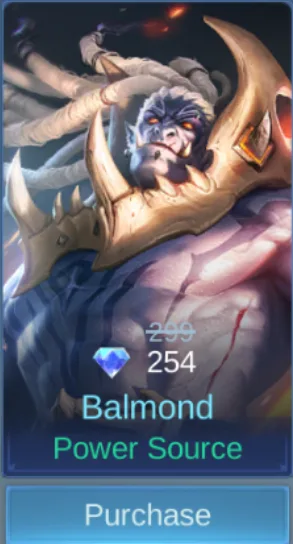
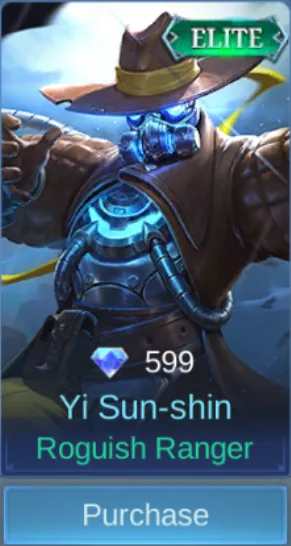

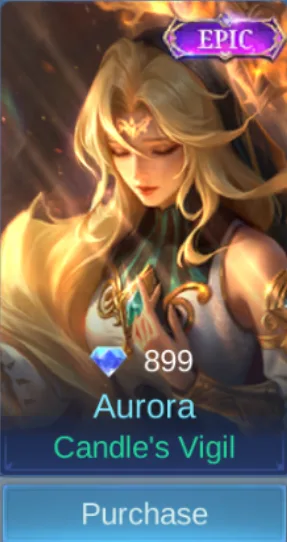
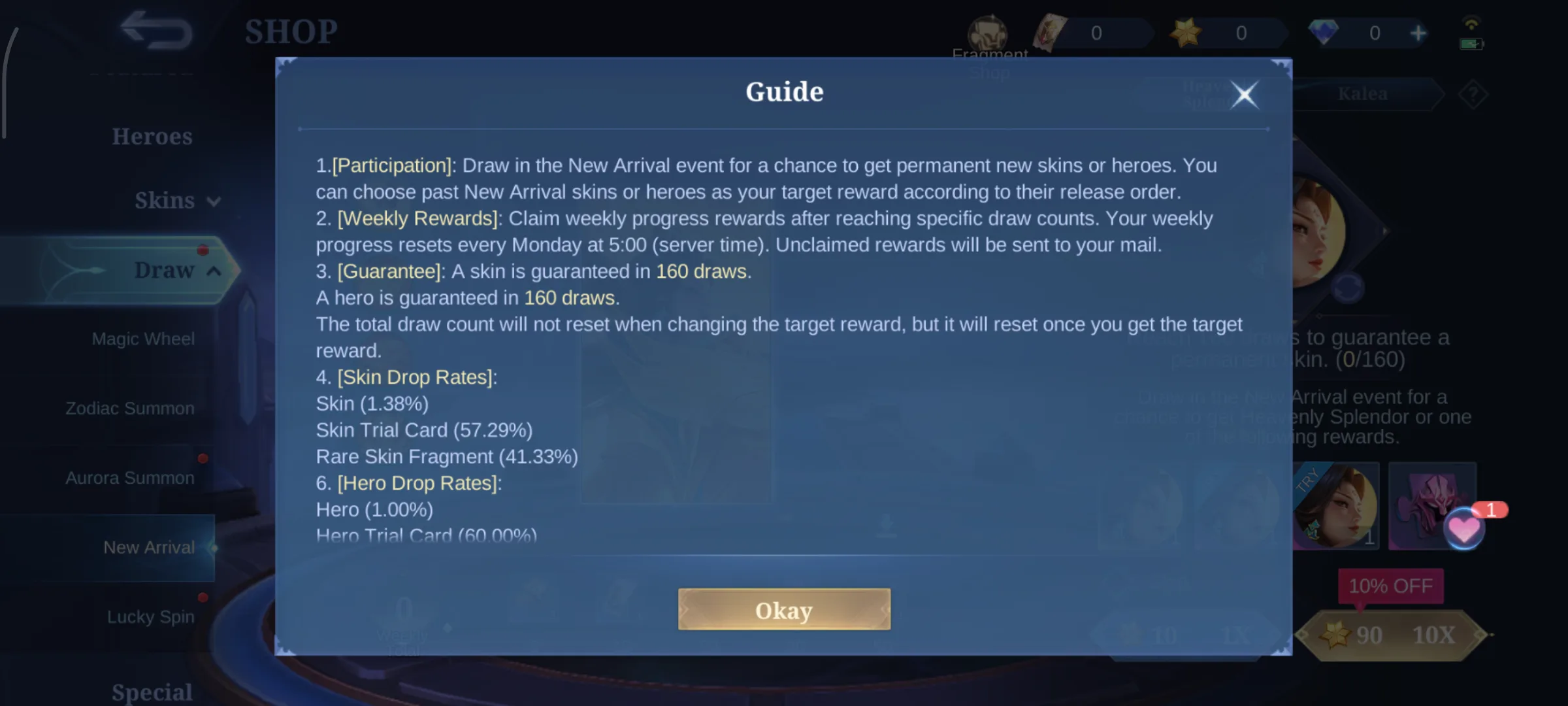
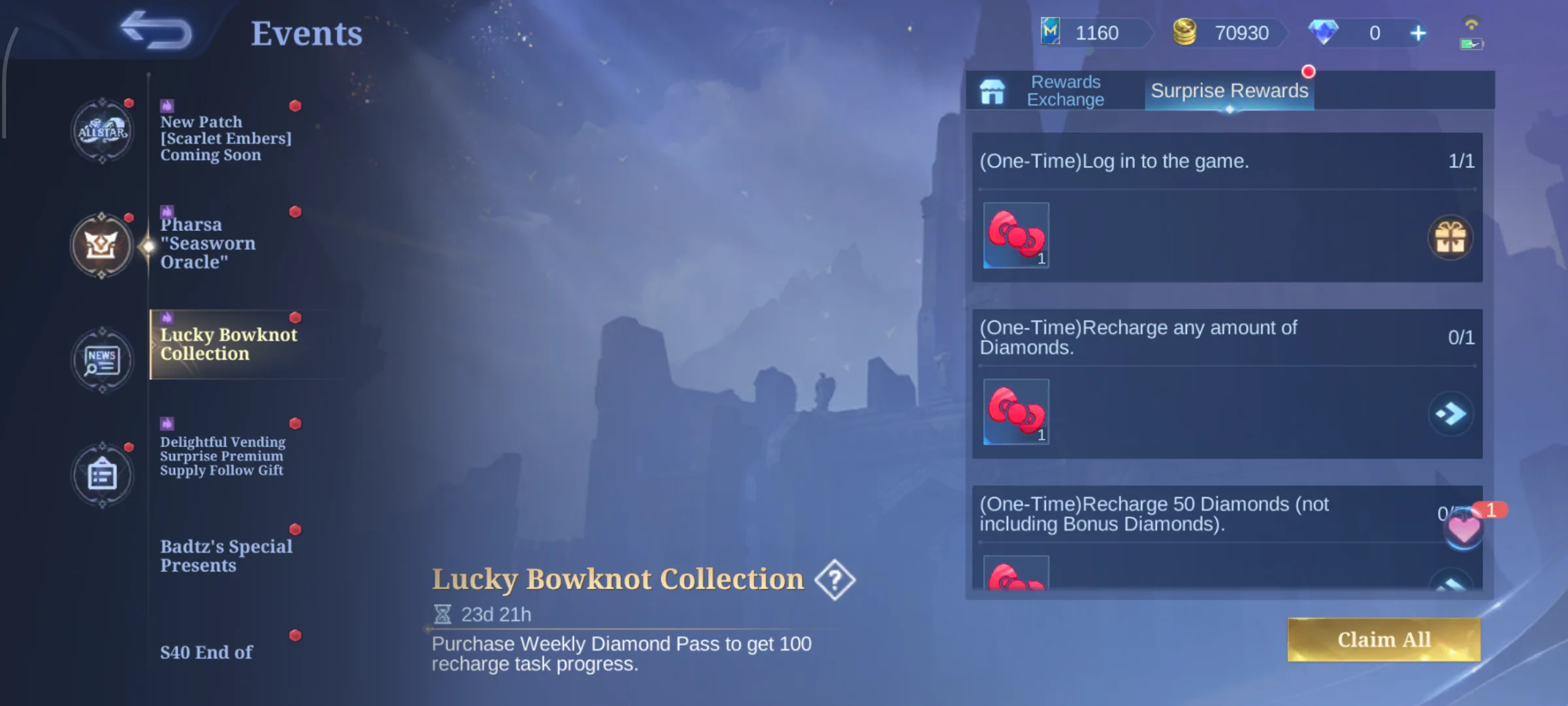
Value note: fixed Shop prices are easiest to budget, draw systems need ceilings, and event pages should be checked before any recharge that might count toward tasks.
Budget archetypes
The small spender
The small spender is deciding between an entry package, Weekly Diamond Pass and a cheap cosmetic. For this player, the biggest mistake is buying a random draw because the button price looks harmless. A better path is to identify a low-cost fixed reward, such as a 188 Diamond Painted Skin, or use a pass only if they can claim it fully.
The skin buyer
The skin buyer should treat 599, 749 and 899 as the main decision anchors. If the target skin is in the Shop, direct purchase is usually easier to justify than random draw spending. The model should show not only the cost to reach the skin price, but also the leftover Diamonds. A route with a few extra Diamonds is cleaner than a route that overshoots by hundreds unless the player has another target.
The event participant
The event participant should start with rules, not recharge. They need to know whether the event currency is bought directly, earned through tasks, tied to recharge, or tied to daily attempts. Missives, Bait and recharge progress are different systems. One guide that treats them all as "spend Diamonds" will be too shallow.
The collector
The collector cares about pity, exchange shops and long-term unit cost. They should compare large-pack ManaBuy unit economics with in-game recharge conditions, then set separate budgets for Shop, Draw and Events. The collector is also the reader most likely to benefit from the full price map because they need to understand not only one purchase, but the whole economy.
How to use external data carefully
External data is useful for checking whether the guide's assumptions are too narrow. Public top-up pages in different countries show different cash package ladders. MLBB community references help identify common Diamond price tiers for skins and events. But external data should not be used to claim that a specific skin is identical in every region unless the same skin is verified across region accounts or reliable patch/event documentation.
The safest public wording is: MLBB uses Diamond-denominated price anchors for many shop items, and the reviewed account showed 188, 254, 599, 749 and 899 Diamond anchors. The cash cost to acquire those Diamonds varies by eligible region and top-up route. This is more accurate than saying "skins are cheaper in one region" because players cannot always buy every region's packages, and region eligibility matters for delivery.
Update protocol for a living Diamond guide
A deep Diamond value page needs to be refreshable. MLBB prices, event rules and platform package ladders can change faster than a normal evergreen guide, so the maintenance method matters almost as much as the first draft. The page should keep a visible reviewed date, and each update should refresh three layers.
First, refresh the in-game price layer. Check whether the Recharge tab still uses the same first-recharge bonuses, whether Weekly Diamond Pass still carries the same claim structure, whether the 188/599/749/899 Shop anchors are still visible, and whether Magic Wheel, Zodiac, Aurora, New Arrival and active events still use the same button prices or guarantees. If one system changed, update that system instead of flattening the whole guide.
Second, refresh the ManaBuy package layer. The region table should be regenerated from the product page snapshot. If a region adds or removes Weekly Diamond Pass, if a new large pack appears, or if the best unit-cost pack changes, the target-cost tables should be regenerated. That keeps the page from becoming a static price list.
Third, refresh the interpretation layer. The core advice should remain stable: choose the reward first, compare fixed Shop prices against draw risk, check event rules before recharge, and match the region to the player's account eligibility. That advice is harder to break than any single price. The best version of this page is therefore a living value index, not a one-time price post.
Related MLBB Guides
Use these guides when you need to move from the big-picture Diamond map to one exact decision:
| Guide | What you will learn |
|---|---|
| MLBB Recharge, Passes and Bundles | How the USD recharge packs, Weekly Diamond Pass, Twilight Pass and bundle products compare when you need Diamonds or delayed value. |
| MLBB Weekly Diamond Pass Guide | How Weekly Diamond Pass price, rewards and stacking limits compare with direct Diamonds. |
| Cheap MLBB Diamonds Guide | How to keep a budget top-up safe with small tests, payment checks and clear risk filters. |
| MLBB Shop Prices Catalog | How to read the 188/254/599/749/899 Diamond skin ladder and decide whether a fixed Shop item is better than a draw. |
| MLBB Draw Systems Cost Guide | How Magic Wheel, Zodiac, Aurora, New Arrival and featured draws change the real budget through pity, progress and guarantees. |
| MLBB Collector Skin Cost Guide | How to set cost ranges, stop rules and alternatives for premium Collector skins. |
| MLBB Events, Currencies and Spending Guide | How Missives, Bait, recharge tasks and free layers change event spending before you top up. |
| MLBB Starlight Pass Guide | How to compare monthly Starlight rewards with weekly pass and fixed Shop value. |
| MLBB Diamonds Top-Up Guide | How to check UID/Zone ID and choose the correct top-up path before buying on ManaBuy. |
FAQ
What is the best use of MLBB Diamonds?
For most players, the best use is a fixed reward you actually want: a specific shop skin, a pass you will claim fully, or an event reward with clear rules. Random draws can be worth it for exclusive rewards, but they should be treated as a separate budget.
Are 899 Diamond skins expensive?
They are one of the major shop anchors in the June 2026 price review. They are expensive compared with 188 Diamond Painted Skins, but they can be more predictable than chasing a draw-only reward.
Is the Weekly Diamond Pass better than recharge?
It can be better if you will log in during the claim period. If you need Diamonds immediately, a direct recharge pack is easier to plan around.
Should I use Diamonds on events?
Only after reading the event rules. Some events use Diamonds directly, some use event currencies, and some reward recharge progress rather than direct purchases.


MLBB Diamonds Top Up Complete Guide: User ID, Zone ID, Payment and Delivery
2026-06-08 10:54:35
MLBB Draw Systems Cost Guide: Magic Wheel, Zodiac, Aurora and Pity Math
2026-06-11 15:13:14
MLBB Events and Secondary Currencies Guide: Missives, Bait and Recharge Tasks
2026-06-11 15:13:16
MLBB Recharge, Passes and Bundles Guide: Prices, Bonuses and ROI
2026-06-11 15:13:13


Copyright © FUTURE OUTLOOK TECHNOLOGY LIMITED.Company Registration No.: 77374965 All rights reserved.UNIT 135,1/F.,143 WAI YIP STREET,KWUN TONG HK