
PUBG MOBILE CQC Guide: Close-Range Weapons, Peeking and Room Fights

CQC in PUBG MOBILE means the fight is close enough that movement, crosshair placement, sound, peeking and trade timing matter more than long-range recoil. It usually happens inside rooms, staircases, compounds, warehouses, final-circle rocks and smoke lines. A player with a strong close-range weapon can still lose if they sprint through a doorway, expose both shoulders, reload at the wrong time or enter a building without a teammate ready to trade.
The safest way to improve close-range fights is to build a repeatable process. Choose a weapon that fits the distance, keep your crosshair at chest or head height, peek with a reason, use utility before crossing a door, and push with a teammate instead of turning every room into a solo duel. CQC is fast, but it should not be random. Good players make the enemy react first, then finish the fight with a short spray, shotgun burst or trade entry.
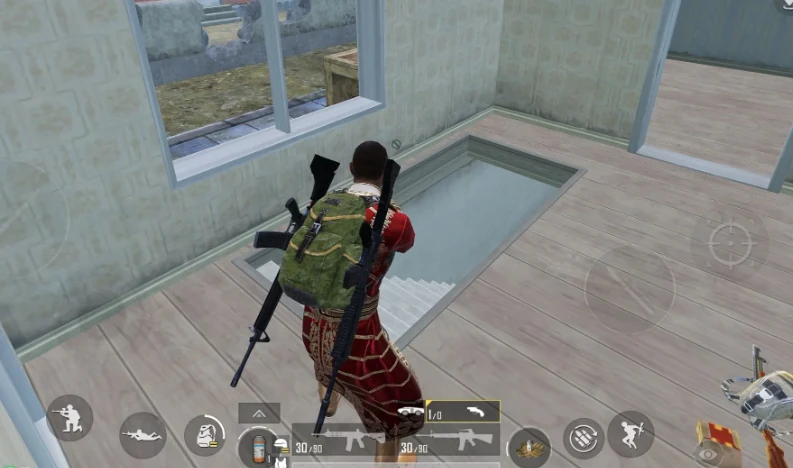
Quick answer: For PUBG MOBILE CQC, use a close-range weapon you can control, keep a Red Dot or Holo ready, and enter rooms with information instead of panic. UMP45, UZI, Vector, MP5K, DBS, M762 and Groza are strong close-range choices depending on availability and attachments. Win rooms by pre-aiming common head lines, using lean only when it reduces exposure, clearing one angle at a time, and pushing as a trade pair. If you are not sure where the enemy is, use sound, grenades, Molotovs, door bait or a shoulder peek before committing.
What CQC Means in PUBG MOBILE
CQC is not only "standing very close." It is any fight where the opponent can swing, jump, drop, shotgun you, hip-fire, pre-fire a door or trade your knock before you can reset. That includes classic room fights, but also the last few meters of a compound crash, the bottom of a staircase, a warehouse beam, a tree in final zone or a smoke wall that both teams are about to cross.
Think of CQC in three ranges:
Shotguns, hip-fire, shoulder peeks and instant trades matter most. ADS can be too slow if the enemy is already crossing your screen.
SMGs and 7.62 ARs become more reliable. Red Dot sprays, crouch timing and short bursts are usually cleaner than blind hip-fire.
This is still close enough for fast peeks, but recoil control starts to matter. ARs and stable SMGs become safer than shotguns.
The main difference from mid-range fighting is reset time. At 100 meters, you can miss a burst, hide, heal and re-peek. At 8 meters, one bad reload or one wide swing can end the fight immediately. Your CQC setup should therefore prioritize first-shot readiness, magazine safety, fast target pickup and trade timing.
Best Close-Range Weapons and When to Pick Them
The best close-range gun is the one that matches your comfort and the building you are fighting in. A shotgun can delete a player in a doorway, but it becomes risky if you miss. A Vector can melt in a room, but it needs a magazine. UMP45 is forgiving, while M762 and Groza reward players who can control stronger recoil.
| Weapon group | Best picks | Best CQC use | How to play it |
|---|---|---|---|
| Easy SMG | 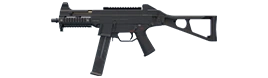 UMP45 UMP45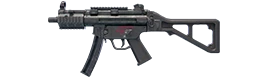 MP5K MP5K |
Ranked-safe room fights | Use these when you want controllable close-range sprays, forgiving recoil and good movement fights. They are strong for players who lose duels because their AR spray jumps too much. |
| Fast SMG |  UZI UZI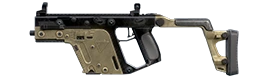 Vector Vector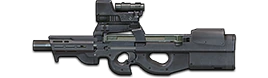 P90 P90 |
Door swings and instant melts | Great inside rooms and staircases. Respect magazine size, especially on Vector before it has an extended mag. Do not overextend into 40-meter fights where ARs become more comfortable. |
| Shotgun burst | 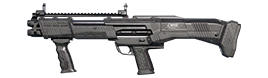 DBS DBS Shotguns Shotguns |
Doorway punish and stair holds | Best when the enemy must enter a narrow lane. Hold tight cover, aim before the swing and avoid chasing across open rooms after a missed shot. |
| 7.62 AR | 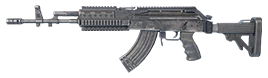 M762 M762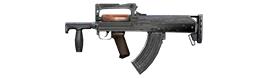 Groza Groza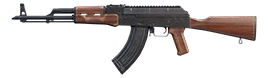 AKM AKM |
High damage close spray | Use when you can handle recoil and need stronger damage than an SMG. Keep bursts short, crouch only when it does not trap you, and avoid panic spraying the whole mag. |
| All-round AR | 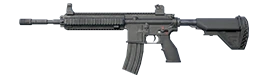 M416 M416 |
Flexible squad loadout | Not the scariest room gun, but very reliable if your second weapon must also cover mid-range. Pair with a shotgun or SMG if the next fights are mostly compounds. |
For a broader weapon ranking, use the PUBG MOBILE Weapon Tier List. For CQC specifically, the question is narrower: can you get the first useful bullets on target before the enemy resets, jumps, drops or trades?
CQC Attachment Priority
Close-range attachments are about speed and control. You do not need a long scope for a stair fight. You need a sight that lets you snap to the target, enough bullets to finish a knock, and a muzzle or grip that keeps the spray from drifting off the enemy's chest.
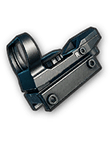
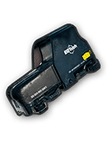
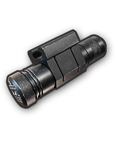
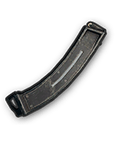
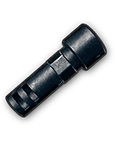
If you want full weapon compatibility and attachment details, use the PUBG MOBILE Attachments Guide. For this CQC page, the practical rule is simple: do not enter a building with a tiny magazine, a long scope you cannot see through, or an attachment setup built for ridge sprays instead of room fights.
Peeking, Pre-Aim and Crosshair Placement
Most close-range duels are decided by what your crosshair is doing before the enemy appears. If the crosshair starts on the floor, you must drag up during the fight. If it starts near chest or head height, the first bullets are already dangerous. In rooms, keep your aim at the height where a standing or crouched enemy is likely to swing.
Doors, windows, staircase landings, corners beside crates and roof drops are common first-contact angles. Aim there before exposing your body.
Peek to collect information, bait a shot, throw utility or take a timed duel. Random lean spam makes your rhythm predictable.
Use lean, door frames, stairs and wall edges so the enemy sees only a small part of you. Wide swings are useful only when you commit to a trade.
Do not dump the whole magazine unless the target is trapped. A short spray, micro-reset and second burst are often cleaner.
Peek settings are personal, but consistency matters. If you use Tap, Hold or Mixed lean, keep the same setup long enough to build muscle memory. If gyroscope is enabled, practice the same short-range drag every day. The PUBG MOBILE Sensitivity and Recoil Guide is the better place to tune values; CQC practice is where you prove those values work under pressure.
How to Push a Room or Building
A room push should have a reason. Do not rush because the enemy made noise once. Push when you have a knock, damage, grenade pressure, zone pressure, teammate support or a clear read on the enemy's position. If none of those is true, gather more information before entering.
Do not stand directly in the doorway while deciding. Hold cover, listen and identify whether the enemy is above, below, left or right.
Use a shoulder peek, door bait, grenade pin, Molotov, sound cue or teammate angle. Make the defender reveal timing before you cross.
Do not expose the whole room. Check the corner that can kill you first, then move your crosshair to the next angle.
The first player creates pressure. The second player follows close enough to trade the knock before the defender reloads or resets.
After the first knock, expect the teammate. Reload behind cover, swap weapons or reposition instead of standing in the room with an empty mag.
Close doors, heal, reload, pick new angles and listen for third parties. A won room can become a lost squad fight if everyone loots instantly.
Utility is the difference between a coin-flip push and a controlled push. A frag can move a defender away from a corner. A Molotov can block a staircase or force a player out of a bathroom. A smoke can cover a revive or crossing, but it can also hide an enemy's counter-push. Use utility to change the room, not just to make noise.
Team Entry: Who Goes First?
In squad CQC, the first player is not always the "best aimer." The first player should be the one with the best position, health, armor, weapon and information for that exact entry. A low-health teammate with no helmet should not be the first body through a known angle unless the team has no other choice.
| Role | Job in the push | Good habit |
|---|---|---|
| Info player | Listens, shoulder peeks, watches windows and identifies the first defender. | Call exact information: "one left room," "one stairs," "two second floor," not vague panic calls. |
| Utility player | Throws frag, Molotov, stun or smoke before the entry crosses the dangerous line. | Do not block your own push with bad smoke unless the plan is revive, reset or cross. |
| Entry player | Swings first when the enemy is pressured or forced away from cover. | Enter decisively. Half-entering a room gives the defender a free isolated duel. |
| Trade player | Follows the entry close enough to finish the defender if the first player is knocked. | Stay close, but not stacked in the same bullet line. You need a second angle, not the same body position. |
| Anchor | Watches exits, third parties, stairs, roof drops or the outside angle. | Do not abandon the anchor angle just because the first knock happens. Many wipes come from the unheld flank. |
This team logic also applies to ranked pushes and late-game compounds. The PUBG MOBILE Ranked Push Guide covers placement and risk control; CQC is the micro-fight that decides whether those rotations turn into wins.
Training CQC Aim, Gyro and Movement
Close-range improvement needs repetition. You cannot learn every timing only from classic matches because real CQC fights are too spread out. Use TDM, training grounds, hot drops and custom room practice to repeat the same close-range situations: door swing, stair hold, hip-fire into ADS, crouch spray, lean peek and immediate weapon swap after a dry magazine.
Use this video as a practical CQC training reference for gyro control and close-range hand movement. After watching, copy the idea into TDM or training drills before relying on it in ranked.
Warm up with 10 short sprays. Use Red Dot or Holo, pull only as much as needed, then stop firing before the crosshair drifts.
Practice hip-fire to ADS. Start very close, hip-fire the first bullets, then ADS only when the target moves beyond shotgun range.
Repeat one doorway drill. Stand outside cover, pre-aim, lean, fire a short burst, reset behind cover, then repeat from the other side.
Train reload discipline. Fire half a mag, move behind cover, reload, then re-peek. Do not reload while standing in the doorway.
Use real match review. After a death, ask whether you lost because of aim, information, utility, weapon choice, magazine timing or no trade.
Keep one change at a time. Do not change sensitivity, layout, gyro and weapon choice all on the same day. You will not know what helped.
Common CQC Mistakes
CQC mistakes feel sudden, but they usually have a clear cause. If you die instantly, check the decision before the duel, not only the spray. The enemy may have heard your sprint, watched the door, held a tighter angle or waited for your reload.
Sprinting tells defenders exactly when to pre-aim. Walk, crouch-walk or pause before entry when sound matters more than speed.
A wide swing can beat a single defender, but it becomes a free knock if no teammate is ready to trade.
If your aim starts at the floor, the duel is already late. Pre-aim where the enemy's chest or head will appear.
Reload only when you have cover or time. Weapon swap is often safer than reloading in the open.
A 3x or 4x can feel awful in a room. Keep a close sight ready or switch before pushing.
After a knock or wipe, reload, heal and cover third-party angles before opening crates.
Map knowledge reduces many of these mistakes. If you know which buildings have dangerous staircases, double doors, roof drops and window exits, you can pre-aim before the defender appears. Use the PUBG MOBILE Maps and Landing Spots Guide to connect CQC practice with compounds and hot-drop areas.
Related PUBG MOBILE Guides
PUBG MOBILE CQC FAQ
What is the best CQC weapon in PUBG MOBILE?
There is no single best weapon for every player. UMP45 is one of the safest close-range choices because it is easy to control. UZI, Vector and MP5K are strong in rooms when built correctly. DBS can dominate doorways if you hit the shot. Groza and M762 are dangerous if you can control recoil.
Should I hip-fire or ADS in close range?
Use hip-fire when the enemy is extremely close and moving across your screen. Use ADS when the enemy is slightly farther away, holding a doorway or crossing a predictable line. Many good CQC sprays start with fast hip-fire and become ADS as the target moves away.
Is peeking always good in room fights?
No. Peeking is good when it reduces exposure or gathers information. It is bad when you repeat the same rhythm, lean into a pre-aimed angle or expose yourself without a trade player. Peek to force a response, then change timing or position.
How do I push a staircase safely?
Do not run straight up the stairs without information. Listen first, pre-aim the landing, use utility if the defender is fixed, and have a teammate ready to trade. If the defender holds a shotgun angle, pressure with a grenade or Molotov before crossing the final step.
Does gyroscope help in PUBG MOBILE CQC?
Gyro can help with small recoil corrections and fast close-range tracking, but only if your sensitivity is stable and practiced. If your gyro is too high, your crosshair may shake during panic fights. Train one gyro setting before changing it again.
Can UC or skins improve CQC performance?
No. UC, skins and Royale Pass rewards are cosmetic or account-progression purchases. They do not improve recoil, damage, peeking or room clearing. Spend only for cosmetics or events you actually want, and keep gameplay improvement separate from top-up decisions.
Final Advice
Good PUBG MOBILE CQC is controlled aggression. You need the confidence to enter when the timing is right, but the discipline to wait when the enemy has the better angle. Choose a weapon that fits the room, keep your sight and magazine ready, pre-aim before exposing yourself, use utility to change hard angles, and push with a teammate who can trade. The best close-range players do not win because every spray is perfect. They win because the fight starts on their terms.


Copyright © FUTURE OUTLOOK TECHNOLOGY LIMITED.Company Registration No.: 77374965 All rights reserved.UNIT 135,1/F.,143 WAI YIP STREET,KWUN TONG HK