
Wuthering Waves Combat Guide: Forte, Concerto, Parry & Rotations

Wuthering Waves combat becomes much easier to read once you stop treating every glowing gauge as the same kind of resource. Resonance Energy prepares a character's Resonance Liberation. Forte Circuit controls that character's unique mechanic. Concerto Energy prepares the handoff from the active Resonator to the next one. The enemy adds a second set of decisions: dodge an unsafe attack, parry a marked opening when your move can reach it, and use the stagger or Tune Break window instead of continuing a memorized combo blindly.
This guide teaches that shared decision loop rather than one character's fixed rotation. You will learn what to check before attacking, when to finish a Forte action, why some swaps do not trigger Intro and Outro Skills, and how to build a repeatable three-character rotation that still works when a boss interrupts your plan.
Quick answer: read combat in this order: watch the enemy, complete the active Resonator's important Forte action, spend Resonance Energy only in a useful opening, reach full Concerto Energy, then swap to the teammate who benefits from the outgoing Outro Skill. Dodge when the attack is unsafe or cannot be parried; parry an eligible golden-ring attack only when your timing and attack reach are reliable. Against enemies using the newer Off-Tune system, build Off-Tune, force Mistune, then use Tune Break when the fight enables it.

The Wuthering Waves Combat Loop in One Minute
A rotation is not a long input string that must survive every interruption. It is a sequence of small jobs. Each active turn should prepare a character-specific payoff and a useful handoff, while every enemy attack can change the timing.
The order can bend. A boss may present a parry before your Forte gauge is ready, or a stagger may create a better Liberation window than the one you planned. A good rotation gives you priorities; it does not tell you to ignore the fight.
First, Separate the Three Resources
The most common beginner mistake is calling all three systems “energy.” They do not unlock the same action, they do not share one gauge, and one being full does not make the others ready.
Resonance Energy
Question: Can I use my ultimate?
Payoff: Resonance Liberation
Readiness and good timing are separate decisions.
Forte Circuit
Question: What is unique about this Resonator's turn?
Payoff: kit-specific
It may enable an enhanced attack, special state or different action.
Concerto Energy
Question: Is the handoff ready?
Payoff: Outro + Intro
Full energy prepares the effect; switching activates it.
| Resource | What fills or controls it | What it enables | Common mistake |
|---|---|---|---|
| Resonance Energy | Combat actions and any kit-specific energy effects described by the character | Resonance Liberation | Assuming full Concerto also means the Liberation is ready. |
| Forte Circuit | The individual conditions written in that Resonator's kit | A character-specific action, resource conversion or empowered state | Filling the Forte gauge and swapping out before using its intended payoff. |
| Concerto Energy | Combat actions including attacks, skills, Echo use and successful defensive play; exact gains vary | The outgoing Outro Skill and incoming Intro Skill when you switch at full Concerto | Swapping early, then wondering why the two skills did not trigger. |
What Forte Circuit Actually Means
Forte Circuit is where the universal combat framework becomes character-specific. The term causes extra confusion because it appears in two places: it is the name of an upgrade branch on the Forte screen, and it is also used for the Resonator's signature combat mechanic. In a rotation guide, “use the Forte” usually means performing the important action enabled by that character's unique mechanic—not simply upgrading the node.
Do not transfer one character's Forte rules to another. Some Resonators fill a bar, some store named stacks, some enter a different state, and some replace a normal attack or skill after meeting a condition. The reliable way to learn any new kit is to answer four questions.
Find the named resource, state or altered action in the Forte Circuit description.
List only the attacks or skills the kit actually names. Do not assume every hit contributes equally.
Identify the exact input that creates the enhanced attack, conversion or empowered state.
Compare the Forte payoff with the current Concerto state and the intended recipient of the handoff.
If you cannot explain the Forte mechanic in one sentence—“I build X with these actions, then spend it on Y before handing off”—the rotation is not ready to be memorized. Read the character's in-game description and test that one interaction first.
How Concerto Energy Turns a Swap into a Rotation
You may switch Resonators at any time, but an ordinary switch is not the same as a full-Concerto handoff. When the active Resonator reaches full Concerto Energy, the other character portraits gain a visible ready cue. Switching then triggers the outgoing character's Outro Skill and the incoming character's Intro Skill.
The order of ownership matters. The Resonator leaving the field provides the Outro effect. The Resonator entering uses the Intro Skill. Before you switch, decide who should receive the outgoing effect and what that incoming character will do first. If you wait until the new Resonator is already on field to make that decision, part of the buff or opening may be wasted.
Ordinary switch
You change the active Resonator without a full Concerto handoff.
Useful for: avoiding danger, repositioning, accessing another cooldown or making a quick tactical change.
Full-Concerto handoff
The outgoing Resonator has full Concerto Energy, so Outro and Intro activate with the switch.
Useful for: passing a buff, heal or other effect into the next planned damage or utility turn.
A simple three-character structure is support or sustain into a secondary damage/utility turn, then into the main damage window. That is a learning framework, not a universal team order. Read each Outro Skill: some effects benefit only the next Resonator, some end when that character leaves, and some kits want a different sequence.
Dodge Counter or Parry? Choose by the Attack
Dodge and parry are not competing style points. They answer different attacks. A correctly timed dodge gives invulnerability frames; a Perfect Dodge briefly slows the action and allows a Dodge Counter through the following Basic Attack. A parry requires an eligible enemy cue—commonly the converging golden rings—and an attack that can actually meet the timing and reach.
| What you see | Safer decision | Why |
|---|---|---|
| No clear parry cue, a grab, large area attack or unfamiliar pattern | Dodge | You preserve safety without betting the fight on a cue or hitbox you have not learned. |
| Clear parryable ring and a suitable attack already in range | Parry | A successful parry cancels the attack and removes a significant amount of Vibration Strength. |
| You Perfect Dodge and remain in a safe position | Dodge Counter | The counter converts defense back into offense, but it is still optional if the follow-up position is unsafe. |
| Multi-hit sequence that you cannot read consistently | Learn with dodge first | Surviving the pattern teaches more than forcing one parry and being hit by the remaining sequence. |
What Vibration Strength Does
Larger enemies and bosses can have a Vibration Strength bar. Parrying, Heavy Attacks and certain skills reduce it. When the bar is depleted, the enemy enters a staggered state and gives you a safer damage window. This is where defensive execution becomes part of offense: a successful parry does more than avoid damage; it brings the next stagger closer.
A stagger is a reason to reassess your resources, not a command to press every available ability. Check whether the active character still has a Forte payoff, whether Resonance Liberation is ready, and whether a full-Concerto handoff would place the correct teammate into the opening. Save or spend based on the team sequence and the encounter, not on the fact that an icon is glowing.
Tune Break: the Version 3.0+ Layer Older Guides Miss
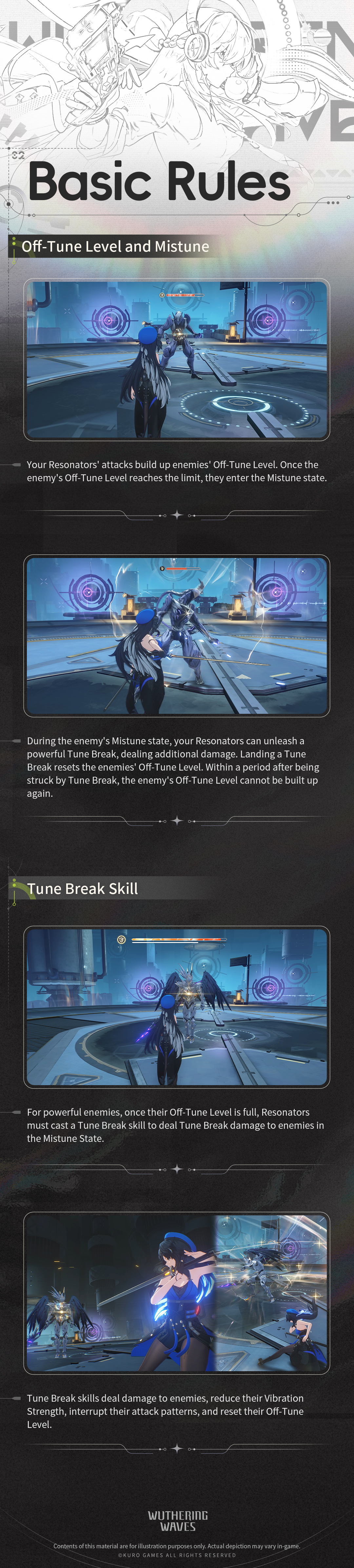
Version 3.0 added the Off-Tune system. Attacks increase an enemy's Off-Tune level; filling it puts the enemy into Mistune. A Tune Break then deals additional damage, resets the Off-Tune level and can reduce Vibration Strength while interrupting attack patterns. Powerful enemies may require you to activate Tune Break manually when the opportunity appears.
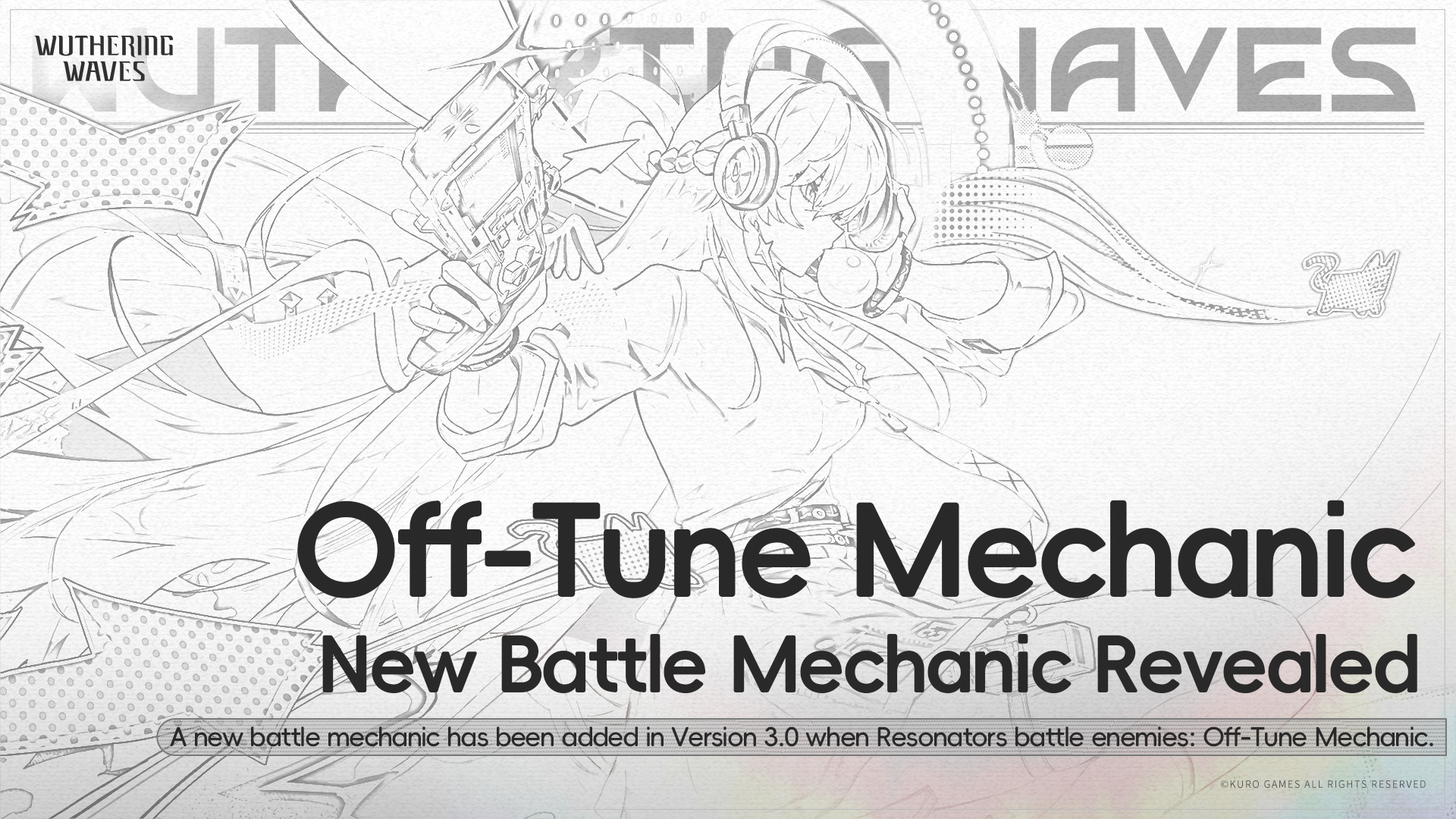
Tune Break is not another name for parry. Parry responds to a specific incoming attack cue and directly helps reduce Vibration Strength. Off-Tune is a separate state you build through offense; Mistune is the full state; Tune Break is the payoff action. Both systems can contribute to interrupting an enemy and creating damage opportunities, but they reach that result through different conditions.
| Mechanic | What starts it | What you watch | Main payoff |
|---|---|---|---|
| Parry | A parryable enemy attack and correctly timed eligible attack | The attack's golden-ring cue and your position | Cancels the attack and reduces Vibration Strength. |
| Off-Tune → Mistune | Your attacks build the enemy's Off-Tune level | The enemy's Off-Tune state | Prepares the enemy for Tune Break. |
| Tune Break | The appropriate action while the enemy is in Mistune | The Tune Break opportunity shown by the fight | Additional damage, reset of Off-Tune and pressure on Vibration Strength. |
View the official Off-Tune, Mistune and Tune Break rules graphic
Build a Rotation Without Memorizing 20 Inputs
Start from handoff purpose, not button count. A usable rotation tells you what each Resonator must accomplish before leaving and which teammate should receive the outgoing effect. It also leaves room for dodges, parries and enemy movement.
For a basic support → secondary damage → main damage loop, the support completes healing or buffs and reaches Concerto, then hands off to the secondary character. The secondary character performs the planned Forte/Echo/skill work and builds the next Concerto handoff. The main damage dealer enters with the intended Intro and Outro effects, then uses the prepared opening. The exact order inside each turn comes from those characters' descriptions.
Where Echo Skills Fit
The Echo in the main slot gives the active Resonator a castable Echo Skill. It is not decoration, and it should not be pressed automatically because it is off cooldown. Read what the equipped Echo does, then place it where that effect supports the turn. An Echo may deal damage, transform the Resonator, provide movement, apply a buff or serve another purpose. Echo Skills can also contribute to Concerto generation, so using one may change when the handoff becomes ready.
Keep two questions separate: the Echo set and stats affect the build, while the main Echo Skill is an action inside combat. This guide focuses on the action. Use a dedicated Echo guide when choosing Sonata Effects, Cost layouts and substats.
A Four-Pass Practice Routine
Practice one observation at a time against a familiar enemy. Changing the team, weapon, Echoes and combo together makes it impossible to know which correction helped.
Pass 1: One Forte
Use one Resonator and learn only what builds and spends that character's Forte mechanic.
Pass 2: Enemy response
Watch the attack cue. Choose dodge or parry, then notice the Dodge Counter or Vibration result.
Pass 3: One handoff
Fill the outgoing Concerto gauge, choose the recipient first, then confirm Intro and Outro activate.
Pass 4: Full loop
Connect three jobs and allow the enemy to interrupt the timing without losing the next decision.
Common Combat Mistakes and the First Fix
| What goes wrong | Likely cause | First correction |
|---|---|---|
| The swap happens but no Intro/Outro pair appears. | The outgoing Resonator did not have full Concerto Energy. | Watch the outgoing gauge and portrait ready cue before the planned handoff. |
| The Forte gauge fills, but the turn still feels weak. | You generated the resource without using the action it enables. | Re-read the activation or consumption line and practice only that payoff. |
| You keep dying while trying to parry. | The attack is not eligible, your move cannot reach, or the timing is not learned. | Dodge the pattern first; add the parry only after recognizing the cue consistently. |
| Concerto is full, but you remain on field with no purpose. | You are repeating a familiar chain after the handoff is ready. | Complete any necessary Forte action, choose the recipient and switch. |
| Liberation is pressed outside the useful damage window. | You treated readiness as timing. | Name the opening you want—stagger, buff window or another kit condition—before holding or spending it. |
| A copied rotation breaks after one enemy attack. | The sequence was memorized as inputs rather than jobs and conditions. | Rewrite it as three short turns with a Forte goal and handoff cue for each. |
When More Damage Is Not a Build Problem
Before replacing a weapon or farming new Echoes, check whether the planned actions are happening at all. A strong build cannot recover an Outro buff sent to the wrong character, an unused full Forte gauge, a Liberation cast after the stagger ends, or repeated hits taken while forcing unsafe parries.
Record one attempt and look for three points: who had full Concerto before every important switch, whether each Resonator completed the intended Forte payoff, and whether the main damage sequence landed inside the planned opening. If those conditions fail, fix the rotation first. If they succeed consistently and the result is still short, then build investment becomes the better question.
Lunites Are Separate from Learning the Combat System
Wuthering Waves' core combat systems are available without buying currency. If you later decide to prepare Lunites for a Resonator, weapon or other in-game purchase, check the live banner and the exact amount you need before paying. ManaBuy's Wuthering Waves page is for selecting a top-up amount and completing the purchase; it does not replace the in-game combat, build or pull-planning decisions explained in this guide.
Related Wuthering Waves Guides
Wuthering Waves Combat FAQ
What is Forte Circuit in Wuthering Waves?
Forte Circuit is the character-specific mechanic that controls a Resonator's unique resource, altered action or empowered state. The same name also appears as an upgrade branch on the Forte screen. Read the character description to learn what builds the mechanic, what spends it and where its payoff belongs before you swap.
Are Concerto Energy and Resonance Energy the same?
No. Resonance Energy is used for Resonance Liberation. Concerto Energy prepares the outgoing Outro Skill and incoming Intro Skill when you switch Resonators at full Concerto. Track them separately.
Do Intro and Outro Skills trigger on every character switch?
No. You can switch at any time, but the paired Outro and Intro interaction requires the outgoing Resonator to have full Concerto Energy. The ready cue on the other character portraits helps confirm the handoff is prepared.
Should I dodge or parry in Wuthering Waves?
Dodge attacks that are unsafe, unfamiliar or not parryable. Parry when the enemy shows an eligible cue and your current attack can meet it reliably. A Perfect Dodge can lead to a Dodge Counter; a successful parry cancels the marked attack and reduces Vibration Strength.
What is Tune Break?
Attacks build an enemy's Off-Tune level. When that level is full, the enemy enters Mistune, enabling the appropriate Tune Break interaction. Tune Break deals additional damage, resets Off-Tune and can reduce Vibration Strength while interrupting attack patterns. It is a different system from parry.
Does a Wuthering Waves rotation have to be exact?
No. Exact inputs vary by character, team and enemy. A useful rotation is built from conditions: finish each character's important Forte action, use skills and Echoes for a reason, reach Concerto, and pass the Outro effect to the intended next Resonator. Defensive cues can change the timing.
Bottom Line
Wuthering Waves combat is easier to master when every system has one clear job. Resonance Energy prepares Liberation, Forte Circuit defines the current character's unique turn, and Concerto Energy prepares the team handoff. Dodge or parry according to the attack, use Vibration Strength and Tune Break windows deliberately, and write rotations as jobs instead of fragile input strings. Once you can explain what each Resonator is building, spending and passing to the next one, the screen stops looking like several unrelated gauges and starts reading like one connected fight.
Sources reviewed September 24, 2026: Wuthering Waves / Kuro Games official Version 3.0 press materials; the Wuthering Waves team overview published by Xbox Wire in April 2026; current in-game terminology reflected in Game8's Concerto Energy guide, WutheringWaves.gg's Intro/Outro guide and WuWa Field Guide's combat-system reference; current Google results and ManaBuy's Wuthering Waves article inventory. Character-specific Forte rules, Outro effects and eligible attacks can differ, so the relevant in-game description remains authoritative for an individual rotation.


Copyright © FUTURE OUTLOOK TECHNOLOGY LIMITED.Company Registration No.: 77374965 All rights reserved.UNIT 135,1/F.,143 WAI YIP STREET,KWUN TONG HK