
State of Survival Guide: Shelter Building, Hero Growth, Alliance Play, and Resource Management

Many players who first enter State of Survival: Zombie War assume it is just another post-apocalyptic strategy game where you upgrade buildings, stack power, and fight zombies. But in reality, the game’s core loop is much more layered than that. You need to manage your shelter, train troops, research technology, recruit heroes, and work with allies through alliance and cross-state content. In other words, what really determines your progress is not simply how much you spend, but whether you can connect shelter building, hero growth, alliance cooperation, and resource management into one efficient development path.
For most players, the biggest mistake in the early and mid game is not a lack of resources, but poor resource distribution. One day you invest in a random building, the next day you level a hero without a plan, and then you throw your speedups and stamina into low-value content. In the end, you touch everything, but the systems that truly drive long-term growth never become strong enough. So if you want to avoid unnecessary detours, the first principle is simple: shelter building determines your foundation, hero development determines your ceiling, alliance play determines your efficiency, and resource management determines whether the first three systems can keep rolling forward.
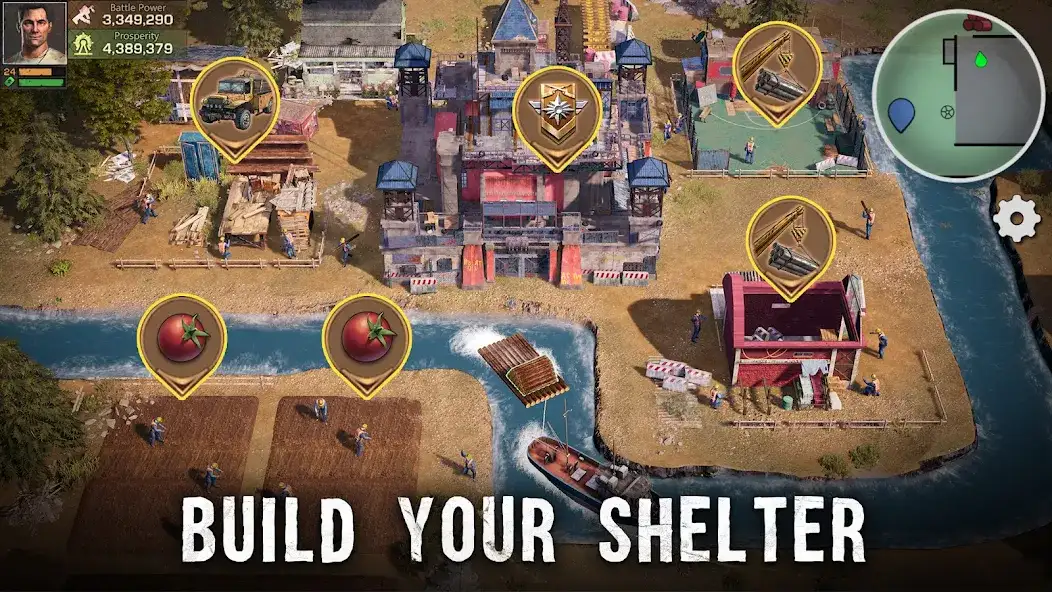
Shelter Building in State of Survival: Don’t Upgrade Randomly, Build Around Headquarters Progression
The key to shelter development is not upgrading everything equally. Instead, you should build around your Headquarters and make sure the supporting systems around it are progressing together. Your resource production, research development, troop training, and defensive capacity all exist to support smoother HQ advancement. Shelter building is not a collection of isolated upgrades. It is a connected system, and your Headquarters is the center of that system.
In the Early Game, Focus on Whether You Can Keep Progressing
At the start, the most important thing is not whether your total power number looks bigger, but whether your account can keep moving forward without getting stuck. Once your Headquarters is blocked, your building caps, unlock pace, and overall growth speed all slow down at the same time. Many players spend too much time upgrading things that look useful on the surface, but a better approach is to make sure your resource buildings, research-related buildings, and troop-training structures can consistently support the next HQ requirement.
In the Mid Game, Research and Training Matter More Than Surface-Level Growth
Once you reach the mid game, simply having higher building levels is no longer enough. You need to ask more important questions: is your research actually improving troop strength and long-term efficiency? Is your training capacity strong enough to keep up with alliance events, state events, and PvP losses? At this stage, your construction logic should shift from “upgrade whatever is available” to “upgrade what will make the entire next week more efficient.”
Hero Development Is Not About Leveling Everyone Equally
In State of Survival: Zombie War, hero growth is not just about rarity or raw individual power. What matters more is positioning, synergy, and how each hero fits into your overall direction. A hero may look strong on paper, but if that hero does not match your main troop path, rally focus, or long-term gameplay direction, the actual return can be much lower than expected.
Heroes Should Serve Your Main Combat Route
If your account is built more around rallies, alliance cooperation, and large-scale mid-to-late-game content, then heroes that improve troop-wide performance, rally value, and troop-type support are often more useful than heroes who only shine in narrow situations. That means hero development should never follow a “pull one, build one” mindset. The stable way to play is to first decide your main troop focus and combat role, and only then choose which heroes deserve priority investment.
The Biggest Problem Is Not Missing a Strong Hero, But Wasting Resources on the Wrong Ones
Many players worry too much about not getting the perfect hero. But in practice, the real problem is often investing into too many heroes that do not work well together. If your resources are spread across multiple unrelated heroes, your overall system becomes weaker even if your account looks more developed on the surface. A cleaner strategy is to build around heroes that match your main troop line and provide lasting value to your broader growth plan.
Alliance Play Is Not Optional, It Is a Major Growth Multiplier
Alliance content in State of Survival: Zombie War is not just an extra feature on the side. It is one of the biggest factors affecting how fast you develop. A large part of your resource income, event participation, rally rewards, and competitive efficiency is directly connected to alliance activity. If you treat alliance play as secondary, your growth speed will almost always fall behind players in stronger groups.
An Active Alliance Can Matter More Than a Few Extra Building Levels
If your alliance is active, you can participate more consistently in rallies, alliance missions, ranking content, state-level competition, and seasonal activities. On the other hand, even if your personal development is not terrible, a weak or inactive alliance will slowly drag down your event rewards, your pace, and your long-term account value. For free-to-play and low-spending players especially, alliance quality often creates a much bigger gap than a small one-time purchase.
When Choosing an Alliance, Activity Matters More Than Just Total Power
Do not judge an alliance only by its total battle power. You also need to look at how active the members are, whether people organize events, whether the alliance regularly participates in key content, and whether experienced players are willing to help newer members. A well-managed alliance gives you more stability, more opportunities, and a much better environment for long-term account growth.
Resource Management Is Not About Saving Everything, But Spending at the Right Time
In games like State of Survival: Zombie War, the most valuable thing is not just the amount of resources you own, but how well those resources line up with the right event windows. The stamina, speedups, and upgrade materials you waste today are often the exact resources you will be missing during the next high-value cycle.
Keep Your Main Progress Moving, But Always Save for Important Event Windows
If you spend every resource the moment you get it, your battle power may rise quickly in the short term, but over time you will notice that you are always unprepared for the best events. A better method is to divide your resources into two parts. One part keeps your shelter progression and core development from stalling. The other part is reserved for high-value events, seasonal milestones, and strong reward windows. This way, you are not forced to watch from the sidelines when the real payoff period arrives.
The Best Resource Mindset Is About Timing, Not Pure Hoarding
Good resource management does not mean refusing to spend. It means understanding when spending creates the most value. The goal is not to be overly conservative, but to make sure your resources are ready when important progress opportunities appear. Players who learn this timing usually grow much more steadily than players who only chase short-term power increases.
Why State of Survival: Zombie War Is More Than a Simple Power Game
The real strength of State of Survival: Zombie War does not come from one isolated system. It comes from whether your shelter building, hero development, alliance coordination, and resource management are all moving in the same direction. This is why the game is not simply about increasing your power score. It is about setting the right priorities and pushing the right systems at the right time.
Once you understand that the game is not asking you to upgrade everything blindly, but instead to build around clear progression goals, your growth speed will feel completely different. And if you are preparing to speed up your account, or want to secure key resources before the next major event arrives, you can also keep an eye on ManaBuy. Planning ahead through State of Survival: Zombie War Top Up is often much easier than trying to fix resource shortages after an event has already started.


Copyright © FUTURE OUTLOOK TECHNOLOGY LIMITED.Company Registration No.: 77374965 All rights reserved.UNIT 135,1/F.,143 WAI YIP STREET,KWUN TONG HK