
MLBB Hero and Meta Guide 2026: Roles, Builds and Ranked Picks

Choosing the best MLBB hero is not just about copying the latest tier list. A strong meta pick helps, but ranked games are usually won by the player who understands the hero's role, lane job, matchup, emblem setup, item plan and teamfight purpose. If you only ask "who is OP right now?", you may lock a powerful hero and still lose because your team has no front line, no wave clear, no crowd control or no way to secure Turtle and Lord.
This MLBB hero and meta guide is a main entry point for building a ranked hero pool. Start with the role you want to play, choose heroes that teach useful habits, check how the current meta affects each lane, then use deeper role, emblem, map and single-hero guides when you need exact builds or matchup detail.

Best MLBB Heroes to Learn First
The first heroes you learn should teach a clear habit. A beginner does not need the flashiest assassin or the newest tournament pick. You need heroes that make the map easier to read: a marksman who teaches farming and spacing, a tank who teaches engage timing, a mage who teaches wave clear, a fighter who teaches trading, or a jungler who teaches objective control.
Gold Lane starters
 Miya
Miya Clint
Clint
Learn farming, turret pressure, safe spacing and late-game damage timing.
Mid Lane starters
 Vexana
 Valir
Valir
Learn wave clear, zone control, river rotation and safe spell usage.
Roam starters
 Tigreal
 Minotaur
Learn bush control, engage timing, peel and objective setup.
EXP Lane starters
 Terizla
 X.Borg
Learn trading, sustain, side pressure and when to join Turtle fights.
Jungle starters
 Saber
Saber Akai
Akai
Learn pathing, gank timing, Retribution pressure and objective control.
Roles and Lanes: Start With the Job, Not the Hero Name
MLBB has five core lane jobs in ranked: Jungle, Roam, EXP Lane, Gold Lane and Mid Lane. A hero can be strong and still be wrong for your lineup if the role job is missing. Before locking a pick, ask what the team needs from that slot: objective control, engage, front line, wave clear, scaling damage, side-lane pressure, burst, peel or anti-dive.




If you are still choosing your main role, start with the MLBB Roles Explained guide. It is the best next step before you dive into individual hero lists.
Heroes by Role: What Each Pick Needs to Solve
Do not treat "best heroes" as one universal list. The best jungle pick and the best gold lane pick solve different problems. A ranked draft becomes easier when each role has a checklist.
| Role | What a good pick solves | Useful hero examples | Deeper ManaBuy guide |
|---|---|---|---|
| Jungle | Clear speed, gank timing, objective secure, damage type and whether the team needs a durable body. |  Fredrinn Fredrinn Harley Harley Ling Ling |
Best MLBB Jungle HeroesUse this when you need jungle picks, objective tempo and Retribution-friendly build ideas. |
| Roam | Vision, engage, peel, anti-dive, pickoff threat or team sustain around objectives. | Tigreal Lolita Lolita Floryn Floryn |
Best MLBB Roam HeroesUse this to compare engage, peel, healer and pickoff roamers for ranked drafts. |
| EXP Lane | Side-lane trading, front-line entry, backline pressure, split pressure or teamfight durability. | TerizlaX.Borg Paquito Paquito |
Best MLBB EXP Lane HeroesUse this when you want side-lane fighters, front-line pressure and Turtle-side timing. |
| Gold Lane | Scaling damage, turret threat, safe farming, late-game carry pressure and survival against dive. | Clint Brody Brody Ixia Ixia |
Best MLBB Gold Lane HeroesUse this for marksman choices, farming safety and late-game carry planning. |
| Mid Lane | Wave clear, river rotation, zone control, burst follow-up and enemy backline pressure. | Vexana Kadita Kadita Yve Yve |
Best MLBB Mid Lane HeroesUse this for wave-clear mages, rotation control and teamfight zone pressure. |
How to Read the MLBB Meta Without Chasing Every Patch
The word meta should not make you change heroes every week. The Mobile Legends Wiki Current Meta page describes meta picks as effective tactics that are prone to change with each season or patch. That is the key point: meta is a signal, not a permanent answer.
When you read MLBB tier lists or hero statistics, look for three different signals. A high win rate can mean the hero is strong, but it can also mean the hero is played by specialists. A high pick rate means players trust the hero, but popular picks are not always the best for your rank. A high ban rate usually means the hero is frustrating or difficult to answer, but you still need to know whether your draft can use that hero well.
Ranked Pick Logic: Build for Draft Jobs
Good ranked picks answer the lobby in front of you. Community advice in older and newer MLBB ranked discussions often comes back to the same practical lesson: keep a small hero pool, understand your role and turn kills into objectives instead of random fighting. This MLBB ladder climb discussion is useful because it frames ranked as a habit problem, not only a hero problem.
Emblems and Items: Builds Should Match the Hero's Job
A build is not only a list of six items. It is the way your hero performs the job you picked them for. An assassin build should create kill windows. A tank build should survive enough to check space and start fights. A marksman build should reach damage timings without dying to the first dive. A mage build should match the kind of damage the team needs: burst, poke, control or wave clear.
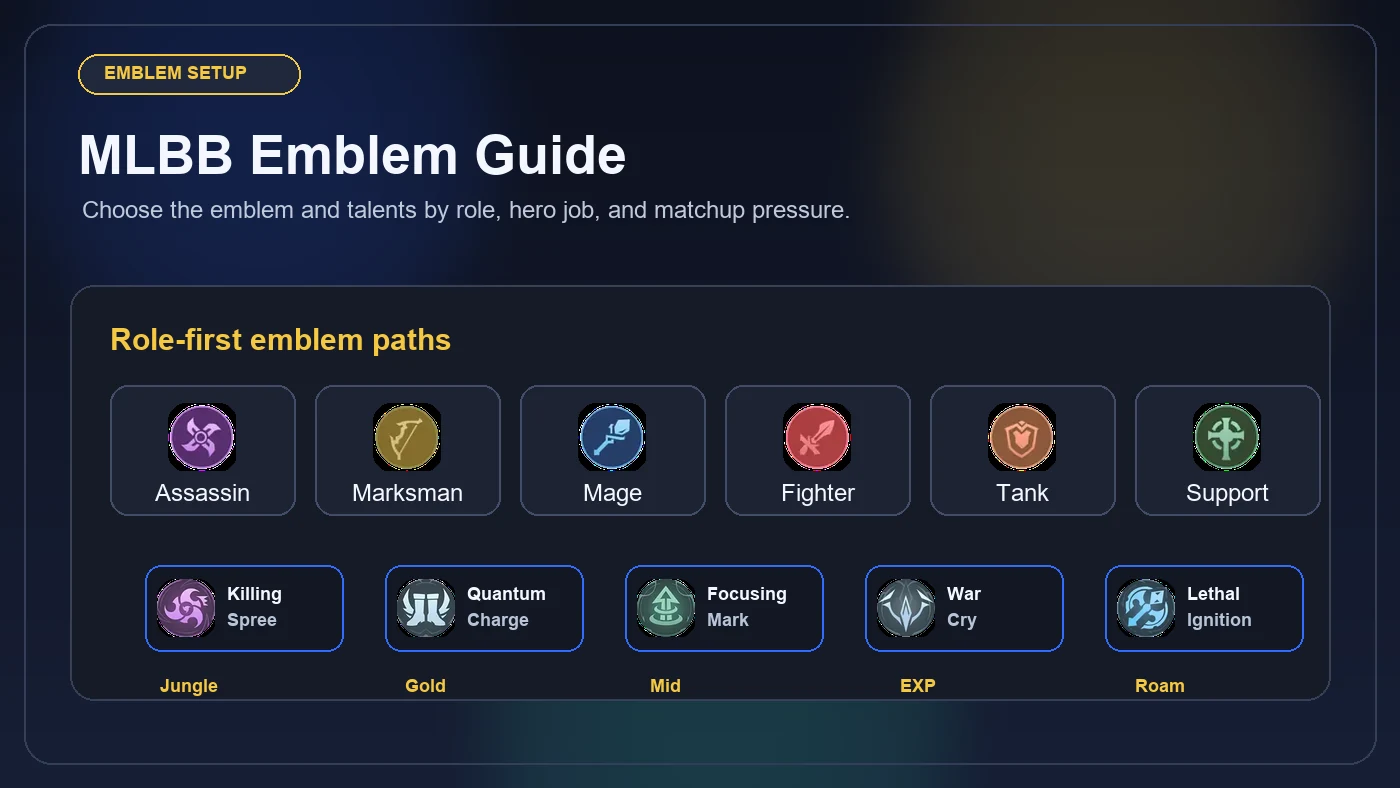
For detailed talent paths, use the MLBB Emblem Guide. For item adaptation, pair this page with the item counter-build guide when you need anti-heal, armor, magic defense or burst protection.
Single-Hero Guide Entry: When to Open a Dedicated Hero Guide
A single-hero guide is useful after you already know why you want that hero. Do not open ten hero pages just to decide your role. First choose the lane, draft job and hero pool. Then use a dedicated hero guide for details such as skill order, combos, power spikes, item paths, emblem variations, counters and matchup notes. For example, a new Assassin such as Hirara needs combo and entry timing practice, while a reworked Fighter such as Aulus needs you to understand his updated skills, lane fit and build direction before taking him into ranked.

Related MLBB Guides
Use this page as the hub, then jump into the specific guide that matches your next decision.
MLBB Hero and Meta FAQ
Final Pick
The best MLBB meta approach is role-first. Choose the lane job, build a small hero pool, read the current meta as a changing signal, then connect picks with emblems, items, map objectives and ranked draft logic. If a hero is strong but does not solve your lobby, it is not the right pick for that match. If a comfort hero fits the draft and you know the matchup, it can be the better ranked answer.




Copyright © FUTURE OUTLOOK TECHNOLOGY LIMITED.Company Registration No.: 77374965 All rights reserved.UNIT 135,1/F.,143 WAI YIP STREET,KWUN TONG HK