
Dunk City Dynasty Tier List: Best Players by Position

There is always a lot of debate around strength in Dunk City Dynasty, but if you only ask, “Who is the strongest player?”, you usually will not get a truly useful answer. That is because the game is not designed around just one mode. Its official promotion has consistently emphasized 11-Point, 5v5 Full Court Run, and Ranked, while update announcements keep introducing new players, new seasons, and new ways to play.
In other words, what really affects player strength is not just the player itself, but also which mode you play, whether you prefer solo queue or team queue, and what your current lineup is still missing.
So instead of making a “one absolute answer” type of list, this guide organizes a more practical position-based tier list based on current community discussion and official player positioning. For most players, this is the more useful way to understand strength.
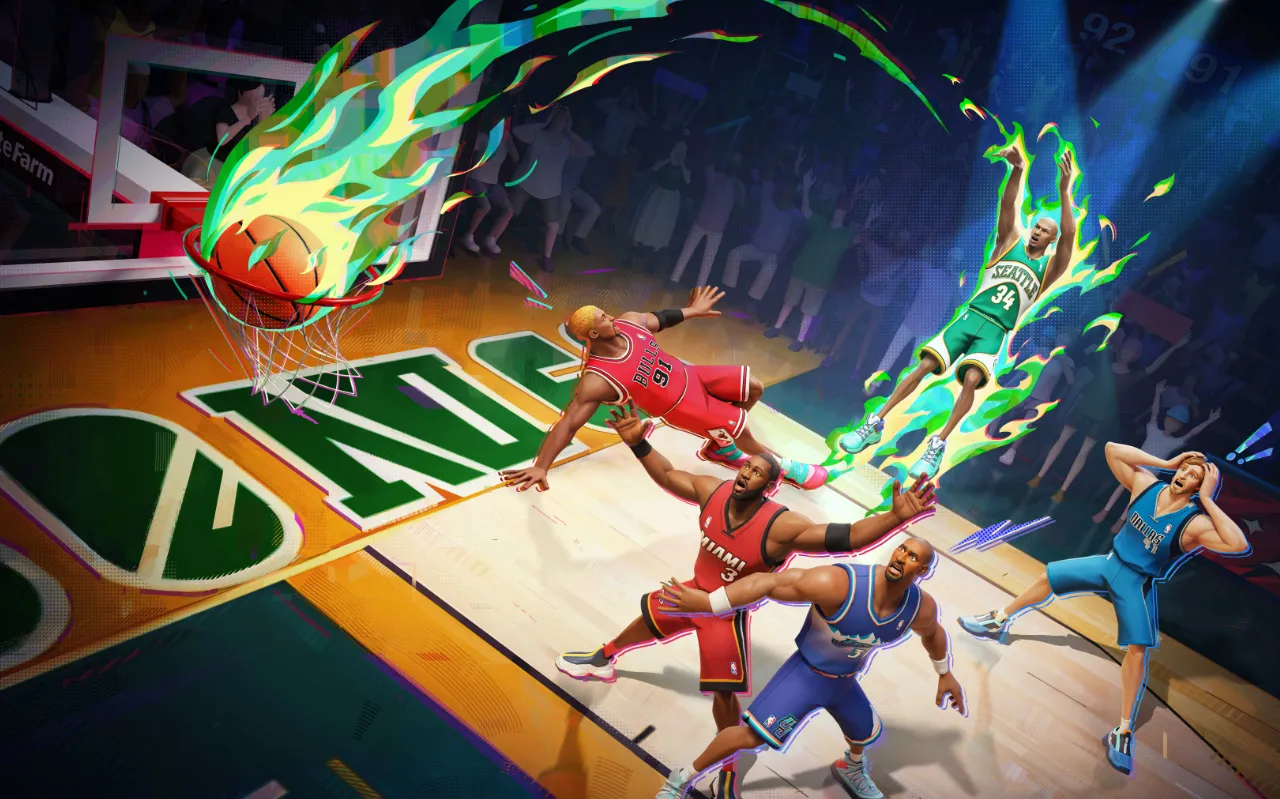
A More Practical Position Tier List for Ordinary Players
| Position | T1 Picks | T1-T2 Alternatives | Best For | Main Reason |
|---|---|---|---|---|
| PG | SGA | Curry, Luka, LaMelo, Westbrook | Players who like ball control, playmaking, and setting the pace | SGA is consistently rated very highly in the community, while Curry and Luka are also frequently mentioned. The real value of the PG role lies in floor control, chance creation, and on-ball pressure. |
| SG | Wade | Klay, Harden, Booker | Players who enjoy perimeter finishing and mid-range rhythm | Wade is often seen as a strong SG in recent discussions, while Klay and Harden are commonly valued as shooting and spacing threats. |
| SF | Kawhi | LeBron, KD, Brown | Players who want two-way impact, help defense, and matchup pressure | SF is one of the most team-function-oriented roles in many discussions. Kawhi, LeBron, KD, and Brown all appear frequently. Brown is also officially described as a well-rounded SF with strong offense and defense. |
| PF | Tatum | Rodman, Giannis, Malone, Dirk | Players who like rebounding, help defense, and mobile finishing | Tatum is officially described as a dual-form player who contributes on both offense and defense, with strong rebounding and off-ball spacing. Rodman is directly defined as a master of defense and rebounding. Community opinion on the PF spot is also consistently strong. |
| C | Gasol | Hakeem, Wallace, Jokic, Adebayo | Players who like rim protection, box-outs, rebounding, and interior anchoring | Gasol is often viewed as one of the steadiest center options in community discussion. Wallace leans defensive, Hakeem offers a more complete ceiling, and Jokic is often valued for playmaking from the inside. |
PG: The Most Demanding Role, but Also the Best Role for Controlling Solo Queue Tempo
The reason PG matters is not because the point guard must score the most every game, but because this role determines the quality of how a team starts its offense. In recent discussions around the “best PG” or “best solo queue role,” names like SGA, Curry, Luka, and LaMelo appear very often.
Different players may give different answers, but the shared understanding is clear: what makes a PG valuable is not simply holding the ball, but whether that player can create good opportunities consistently.
If you mainly play solo queue, PG is often the easiest role for taking control of the game’s rhythm by yourself. But if you are still not comfortable with passing, switching, and reading defenses, PG can also very quickly become the biggest source of team mistakes.
SG: One of the Easiest Scoring Roles to Understand
SG is often seen by players as one of the most intuitive positions, because shooting, moving off the ball, and finishing catches all feel relatively direct. Wade, Klay, Harden, and Booker are all mentioned frequently, which shows that different players expect different things from this role. Some want explosive scoring, some want spacing, and some want stability.
The real key is that an SG cannot just stand around waiting for the ball. You need to know how to use screens, how to shoot before the defense fully rotates, and when to give the ball back to the primary ball-handler.
A good SG turns the small openings created by teammates into points. A bad SG turns every possession into a forced shot.
SF: The Position That Often Determines Your Team’s Floor
SF is usually not as flashy as PG and not as visually obvious as center, but it plays a huge role in determining the lower limit of a lineup. Community opinion on Kawhi, LeBron, and KD remains consistently strong, and in recent official season updates, Brown (SF) is also clearly described as a player with strong driving, transition scoring, spot-up value, on-ball defense, and shot-blocking ability.
This shows that what makes SF valuable is not always one single extreme stat, but whether that player can handle wing finishing, help defense, rotation coverage, and perimeter physicality at the same time.
If you often run into chaotic team structures in solo queue, a two-way SF who can both attack and defend usually feels very comfortable to play.
PF: The Lineup Stabilizer
PF is a role many beginners do not value much at first, but the longer they play, the more they understand its importance. Official update notes directly describe Tatum as a dual-form player who can contribute on both offense and defense, grab rebounds, and create space off the ball. Rodman, meanwhile, is emphasized as a master of defense and rebounding. In community recommendations, names like Tatum, Rodman, Giannis, Malone, and Dirk are all common.
That means PF is not simply an “inside-only” role. It often has to balance rebounding support, help defense, spacing support, and secondary finishing. If your team already has a main ball-handler and a main scorer, a strong PF is often what makes the whole lineup feel complete.
C: The Most Reliable Win-Rate Amplifier
C remains one of the most impactful positions in Dunk City Dynasty. In community discussions, Gasol is often mentioned as one of the safest and most reliable answers. Wallace is more defense-oriented, Hakeem offers a higher all-around ceiling, and Jokic is often discussed as an interior player with valuable playmaking and pick-and-roll potential.
If you are a beginner or mainly play solo queue, center is often the role least likely to leave you invisible for an entire match. Even when your shooting is off, you can still affect the game through rebounding, rim protection, boxing out, and screens.
How Should You Use This Tier List?
The most practical way is not to blindly build according to the list, but to ask yourself three questions first:
1. Do I Mainly Play Solo Queue or Team Queue?
Solo queue values versatility and error tolerance more. Team queue values system fit and coordination more.
2. Do I Like Controlling the Ball, or Covering Team Weaknesses?
If you like having the ball in your hands, lean more toward PG or SG. If you prefer stabilizing team structure, focus more on SF, PF, or C.
3. What Is My Team Actually Missing Right Now?
If you already have a reliable main point guard, your second priority may not be developing another ball-handler, but adding a steadier wing or center instead.
If you plan to play seasons and ranked for the long term, investing around your main lineup idea will always be more efficient than chasing short-term popularity. For players who want to strengthen resources more efficiently, Manabuy Dunk City Dynasty Top Up makes the most sense after you have already identified the real gap in your lineup.
Conclusion
A truly useful tier list does not simply tell you “who is number one.” It tells you which position and which type of player fit your own playstyle better. Based on current public information and community discussion, PG, SG, SF, PF, and C all already have fairly clear popular choices. But whether those choices actually perform well for you still depends on how well you understand positional responsibilities and team structure.



Copyright © FUTURE OUTLOOK TECHNOLOGY LIMITED.Company Registration No.: 77374965 All rights reserved.UNIT 135,1/F.,143 WAI YIP STREET,KWUN TONG HK