
Dunk City Dynasty Beginner Guide: Best Ways to Start Strong

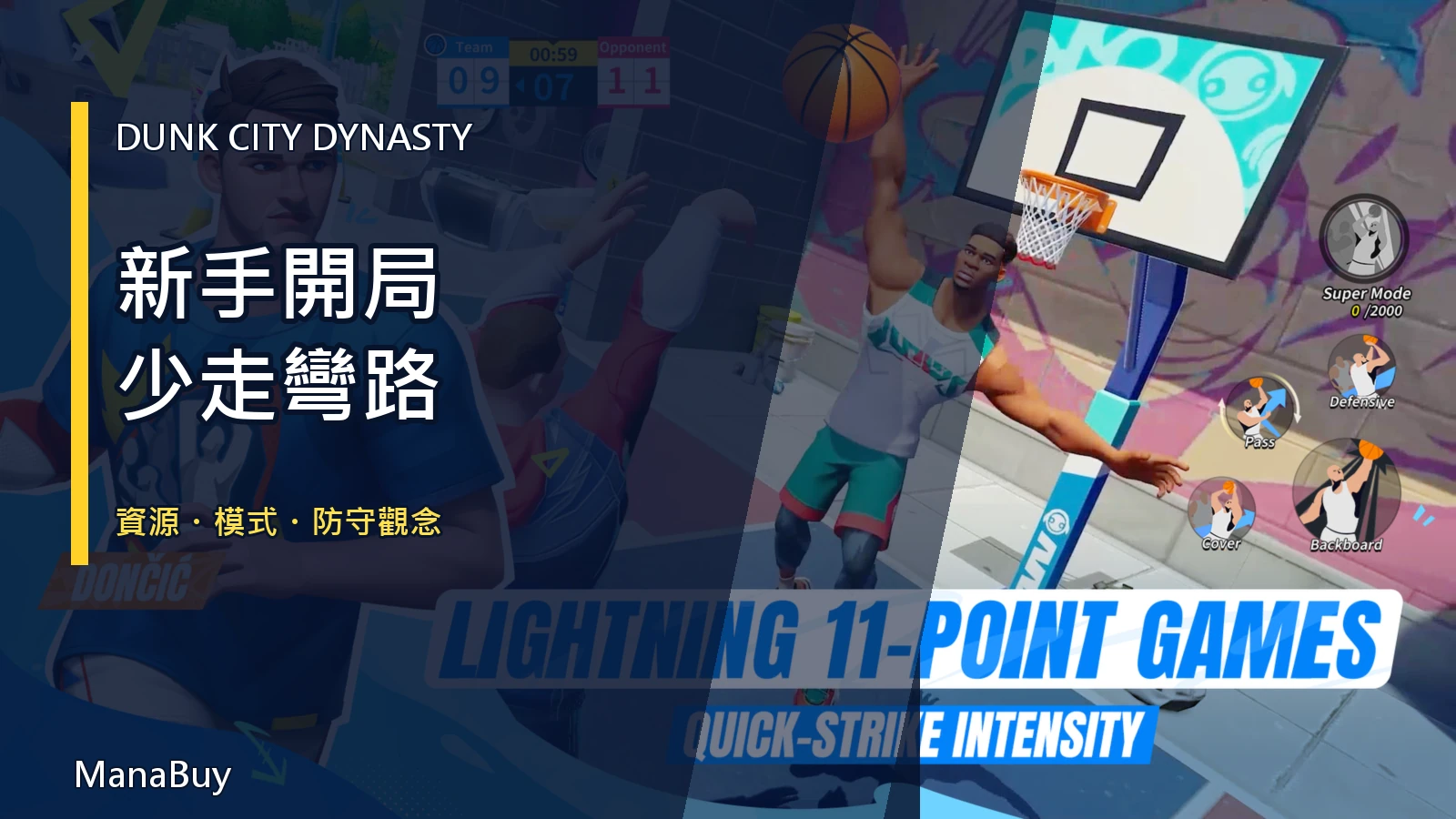
When you first start playing Dunk City Dynasty, the biggest mistakes usually are not about “not knowing how to shoot,” but about spreading your resources too thin, trying to learn too many positions at once, and taking too long to understand the game modes. This game is not just about simple streetball matchups. It also features multiple modes such as 11-Point, 5v5 Full Court Run, and Ranked, while seasonal updates continue to add new content and season rewards.
That means what beginners really need is not just flashy mechanics, but a clear development path that helps them climb steadily, earn rewards consistently, and grow efficiently.

Understand the Core of the Game First — Don’t Treat It as a Pure Mechanics Game
When many players first enter the game, they are drawn in by NBA stars, flashy moves, and the fast-paced streetball style. But in the early game, what really shapes your experience is usually not a single highlight play, but whether you actually understand the differences between the game modes.
For beginners, the most practical way to think about it is simple:
11-Point is more like a fast-paced practice mode, Ranked tests consistency, and 5v5 Full Court Run puts more emphasis on team structure and positional understanding.
You can treat 11-Point as the place to get familiar with your player, game rhythm, and shot opportunities, while Ranked is where you test whether you have truly learned teamwork and decision-making.
Rule Number One: Don’t Spread Your Resources Across Every Player
Beginners should not start by investing in too many players. Instead, you should focus on a few positions and a small number of core players first. Players on Reddit have clearly suggested that early on, it is better to concentrate on developing a limited roster, master a core position first, and then slowly expand your player pool. Other discussions repeatedly point out that what really affects your climbing experience is not “whether you own a lot of players,” but “whether you have one or two mains you can use consistently.”
This is especially important because Dunk City Dynasty is not the kind of game where you should instantly dump resources into every newly unlocked player. Official updates continuously introduce new players, new season rewards, new modes, and new events. If you spread your materials too widely in the early game, you may later realize that you can play every position a little, but you do not truly have one position that can win consistently.
A More Practical Approach
Choose one main position first, then prepare one secondary position.
If you like controlling the ball, start with PG.
If you prefer finishing plays and shooting from the perimeter, SG is a good option.
If you want better defense, rebounding, and overall room for error, bigger positions are usually more beginner-friendly.
In community discussions, teams are also often understood as a combination of Big Man + Scorer + Defender, rather than being locked into traditional position labels. This way of thinking is especially helpful for beginners.
Which Modes Should Beginners Play First?
Use 11-Point First to Learn Your Player’s Rhythm
The official store description clearly presents 11-Point as one of the game’s core modes, and App Store descriptions directly emphasize its fast-paced and intense nature. For beginners, this mode is especially useful for practicing three things:
1. Shot timing
2. Movement and receiving the ball
3. Basic defensive rotation reactions
Because 11-Point moves much faster, it helps you identify your real weaknesses more quickly. Are you struggling with ball handling? Cutting? Help defense? New players often make the mistake of blaming every loss on bad teammates, but in reality, many personal problems become much more obvious in a high-tempo mode.
If You Want Steady Improvement, Start Playing Ranked Early
Ranked is not a mode you should wait to try until you “fully understand the game.” On the contrary, the earlier you start playing Ranked, the sooner you will understand the real win conditions of Dunk City Dynasty. Official updates consistently treat Ranked rewards as an important part of each season, and there are even season celebration rewards tied to reaching 50 wins, which shows that the developers want players to invest in this mode long term.
As a beginner, your goal in Ranked should not be “go on a huge win streak and rush the leaderboard.” Instead, it should be:
• Find the position you perform most consistently in
• Learn when you should attack yourself and when you should pass
• Learn the basics of help defense and rotation coverage
What Beginners Overlook Most Easily: Position and Team Structure
Many people start out believing that any character who can score is automatically a strong character. But a large number of community discussions keep reminding players of one thing: in both solo queue and team queue, the most reliable players are not always the flashiest ones, but the ones who best fit the team structure.
For example, some players prefer more stable PGs, SGs who can also contribute on defense, or big men with stronger utility, instead of focusing only on explosive one-play potential.
So early on, the better question is not:
“Which player is the most broken?”
It should be:
“What does my team currently need most — ball handling, perimeter firepower, defensive disruption, or rebounding and rim protection?”
Once you build this way of thinking, everything becomes clearer later on — whether you are pulling for players, building your lineup, or deciding how to approach Dunk City Dynasty Top Up. Because topping up is never the goal by itself. The real point is to invest your resources into the core position and main players you will actually use for the long term.
For players who want a long-term progression path, it is far more effective to decide your main lineup direction first and then use channels like Manabuy to strengthen the resources you truly need, rather than simply investing in whichever player looks cool.
Four Practical Beginner Tips for the Early Game
1. Fully Learn One Position First
Do not try to learn all five positions at the same time. The earlier you develop a clear understanding of “what my main job is,” the easier the game becomes.
2. Don’t Chase Versatility Too Early — Chase Consistency
In the early game, what matters most is mastering one stable playstyle, not switching to a different player every match.
3. Learn Defense and Positioning Before You Chase Flashy Plays
Many recent beginner discussions in the community highlight the importance of help defense, defensive coverage, and shot rhythm control. That shows that the deeper you go in this game, the less it becomes a title where offense alone is enough.
4. Be Disciplined with Resource Investment
The developers continuously update the game with new players, new seasons, and new modes. The meta is always moving. Keeping some flexibility early on is much safer than spending everything at once.
Conclusion
During the beginner stage of Dunk City Dynasty, the real difference is not who gets the flashiest player first, but who understands the game’s progression logic earlier. Choose your main position first, focus your resources, build one stable playstyle, and only then start expanding your player pool. That is the most practical way to begin.



Copyright © FUTURE OUTLOOK TECHNOLOGY LIMITED.Company Registration No.: 77374965 All rights reserved.UNIT 135,1/F.,143 WAI YIP STREET,KWUN TONG HK