
Dunk City Dynasty Position Guide: PG, SG, SF, PF, C Explained

When many players first start Dunk City Dynasty, they often treat choosing a position as “I like this NBA star, so I should play that position.” But the real core of this game is not the star name itself. It is about what role you are responsible for on the court.
Official promotion has consistently emphasized that this is an NBA/NBPA-licensed streetball mobile game, with core modes including 11-Point, 5v5 Full Court Run, and Ranked. Community discussion has also increasingly started to understand team building as a combination of a playmaker, scorer, defender, and interior anchor, instead of looking only at traditional basketball labels.
So this article is not about telling you which position is the strongest. It is about explaining what kind of players PG, SG, SF, PF, and C are actually suitable for, and what function each of them takes on in real matches.
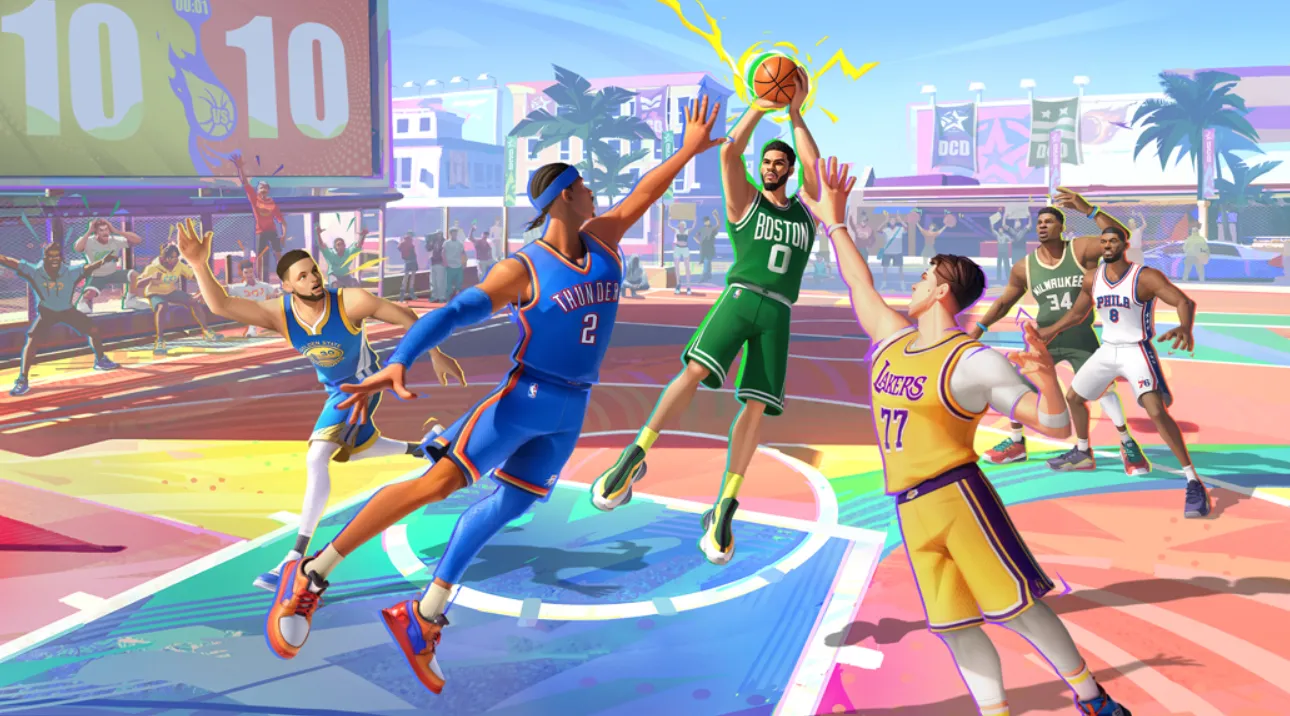
Quick Position Guide Table
| Position | Core Responsibility | Best For | Common Strengths | Common Misunderstanding |
|---|---|---|---|---|
| PG | Ball handling, playmaking, controlling tempo, creating chances | Players who like controlling the game and reading pass timing | Can drive the whole offense and has strong solo queue influence | Thinking PG only needs to dribble a lot and show off flashy moves |
| SG | Perimeter finishing, catch-and-shoot, wing scoring | Players who like moving, shooting, and punishing openings | Easy to understand and gives direct scoring feedback | Thinking SG only needs to shoot and does not need to move the ball |
| SF | Two-way wing play, matchup pressure, help defense, recovery | Players who want a flexible two-way style | High error tolerance and strong team value | Thinking SF “does a little of everything” but is not actually important |
| PF | Rebounding, help defense, cleanup finishing, spacing support | Players who do not mind dirty work but still want impact | A lineup stabilizer with broad functionality | Thinking PF is just a traditional stationary inside role |
| C | Rim protection, boxing out, rebounding, screens, interior finishing | Players who value stable impact and team structure | Beginner-friendly and consistently valuable for winning | Thinking centers only need to stand under the basket and wait for the ball |
PG: The Engine of the Team and the Most Decision-Heavy Position
PG is the position most likely to make you feel like you are controlling the game. In community discussions, popular PG names often include SGA, Curry, Luka, LaMelo, and Westbrook. But behind those names, the real shared value is the same: ball control, offensive initiation, reading the defense, and making each possession run smoothly.
Who Is PG Best For?
If you like having the ball, deciding when to attack, and deciding when to pass, PG will suit you very well.
What Is PG Most Afraid Of?
It is most afraid of a player who handles the ball a lot but cannot make the game easier for teammates.
Many beginners think PG just means more dribbling and more flashy moves. But a truly good point guard raises the quality of the whole team’s possessions.
SG: The Most Direct Scoring Position, but Not Just “Catch and Shoot”
SG is often the easiest position for many players to understand because the scoring feedback is very direct. Community discussions often mention names like Wade, Klay, Harden, and Booker, which also shows that the core value of this position is perimeter finishing and off-ball scoring movement.
Who Is SG Best For?
If you enjoy finishing possessions through open looks, movement, and shots after using screens, SG is a very good fit for you.
What Is SG Most Afraid Of?
It is most afraid of players who only know how to wait for the ball.
An SG who cannot cut back, use screens, or handle secondary passing often turns into a role that just stands and watches. A strong SG is not only someone who can shoot, but someone who knows how to turn spacing into real points.
SF: The Two-Way Core That Often Determines a Team’s Floor
SF is often the position that does not look the flashiest, but feels terrible to lose in a real lineup. Community discussion often highlights Kawhi, LeBron, and KD, while official updates also define Brown as an SF with driving, transition scoring, spot-up value, and strong defensive impact. That description actually reflects the essence of the position very well.
Who Is SF Best For?
If you do not want to lock yourself into one single duty, and you want to both take over some possessions and patch team weaknesses, SF will feel very comfortable.
What Is SF Most Afraid Of?
It is most afraid of becoming a player who can do a little bit of everything, but not enough of anything.
SF may look like the all-around role, but being truly strong at it usually means having at least one clearly reliable strength, such as on-ball defense, disruptive help defense, or transition finishing.
PF: The Glue Position That Is More Important Than Many Players Think
PF is one of the easiest positions to underestimate. Official descriptions for Tatum (PF) emphasize two-way ability, rebounding, and off-ball spacing, while Rodman (PF) is directly defined as a master of defense and rebounding. In community discussions, PF evaluations also often revolve around Tatum, Rodman, Giannis, Malone, and Dirk.
Who Is PF Best For?
If you like being involved in many possessions without always being the primary ball-handler, PF is an excellent role for you.
What Is PF Most Afraid Of?
It is most afraid of becoming an awkward role that feels like “slower than an SF and smaller than a C.”
The real value of PF is finding balance between rebounding, recovery defense, rolling, weak-side finishing, and spacing. That is why PF often acts as the glue that keeps the lineup together.
C: The Steadiest Team Pillar and the Easiest Position for Beginners to Feel Useful
C has always had a strong presence in Dunk City Dynasty. Common strong names in community discussion include Gasol, Hakeem, Wallace, and Jokic. Different players prefer different styles, but the shared understanding is simple: centers can consistently affect the game through rim protection, rebounding, screens, and boxing out.
Who Is C Best For?
If you want higher error tolerance and a more stable sense of involvement in every match, center is one of the best positions to prioritize.
What Is C Most Afraid Of?
It is most afraid of players who think, “I only need to stand under the basket.”
Modern center discussion also talks more and more about playmaking, pick-and-pop value, and synergy with shooters. That shows center is no longer just about protecting the rim.
How Should Beginners Choose a Main Position?
Choose PG if You Want to Control the Ball
Best for players who think quickly, are willing to take responsibility, and are ready to learn how to read defenses.
Choose SG if You Want Direct Scoring Feedback
Best for players who enjoy movement, timing, and taking clean shot chances.
Choose SF if You Want Two-Way Flexibility
Best for players who do not want to be locked into a single tactical responsibility.
Choose PF if You Want to Stabilize the Team
Best for players who are willing to cover weaknesses, rebound, and fill in important gaps.
Choose C if You Want High Error Tolerance and Stable Impact
Best for beginners, and also for players who want to raise their team’s lower limit.
How Should You Spend Resources More Efficiently?
Why do many players feel like they have developed many characters but still end up with a messy roster? The root cause is usually not a lack of resources. It is that they never fully decided what position they actually want to play and what responsibility they want to carry.
That also means when you later think about Dunk City Dynasty Top Up, it is better to first decide your main position and main lineup direction. For example, if you already know you want to build around a PG + secondary C path, then your resources should serve that plan first, instead of being spent just because a player is currently popular.
For players who want to plan their progression more efficiently, Manabuy works better as a reinforcement tool after your direction is already clear, rather than as an entry point for blind spending.
Conclusion
The five positions in Dunk City Dynasty are not simple labels for where you stand on the court. They are five completely different match responsibilities. PG controls tempo, SG converts perimeter chances, SF balances offense and defense, PF completes the lineup, and C raises the team’s floor.
The earlier you understand your position clearly, the sooner you will know what to practice, what to build, and what to strengthen. Once that becomes clear, your growth path will feel much smoother.




Copyright © FUTURE OUTLOOK TECHNOLOGY LIMITED.Company Registration No.: 77374965 All rights reserved.UNIT 135,1/F.,143 WAI YIP STREET,KWUN TONG HK