High slot value
Compact, saleable, easy to extract and not needed for a dangerous detour.

Earning more Tekniq Alloy does not depend on a rare jackpot. The repeatable loop is to extract with useful loot, process surplus blue and purple items, and let many small profitable runs pay for future Operations kits.
The key measurement is recovered value, not the maximum value briefly carried in the backpack. Dying with a red item produces no sale income outside protected storage, while a modest extraction converts blue and purple loot into Alloy and keeps the account moving.
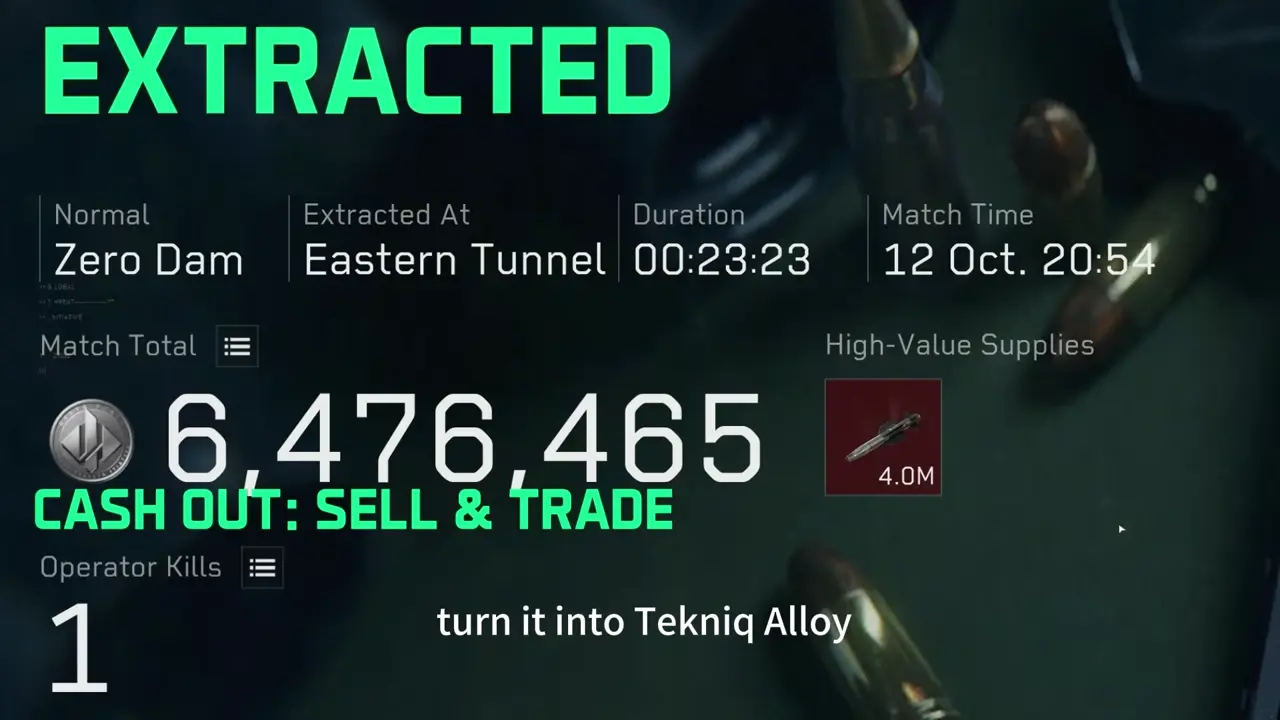
The Delta Force Earn More Tekniq Alloy guide specifically calls out extra blue and purple loot. These items provide a steadier income floor than waiting only for red drops.
Garena's Operations Mode guide defines extraction as the point at which carried items become part of the stash. It also explains that death loses ordinary carried items outside the Safe Box, making survival part of every Alloy calculation.
Blue and purple items appear often enough to create repeatable income and can be more practical than a rare item that encourages an unsafe detour. Their correct use depends on the account: one is a Black Site requirement, another replaces future gear, and a duplicate may be pure sale value.
| Item state | Best action | Reason |
|---|---|---|
| Needed for an active mission or near-term Black Site upgrade | Keep the exact required amount. | Buying it back can erase the profit from selling early. |
| Gear that fits one of the next planned loadouts | Keep a limited replacement stack. | Owned equipment reduces future Alloy spending. |
| Duplicate blue or purple collectible | List or direct-sell after a price check. | It converts dead stash space into usable currency. |
| High listed price but no near-term use | Compare demand, fees and direct-sale value. | A theoretical price is not profit until the item sells. |
| Low value per slot during a dangerous run | Replace it with a stronger item. | Backpack space and extraction chance are part of the return. |
A large purple item can be a worse carry than several compact blue items when it consumes too much backpack space. Compare the approximate sale value with the number of slots, then include route risk: an item is less attractive if collecting it forces a long detour, a loud fight or a late extraction.
Compact, saleable, easy to extract and not needed for a dangerous detour.
A mission, upgrade or replacement item that prevents a later purchase.
Bulky loot with weak resale value or an item kept only because its color looks important.
The single item placed in the Safe Box when losing it would block a task or meaningful account upgrade.
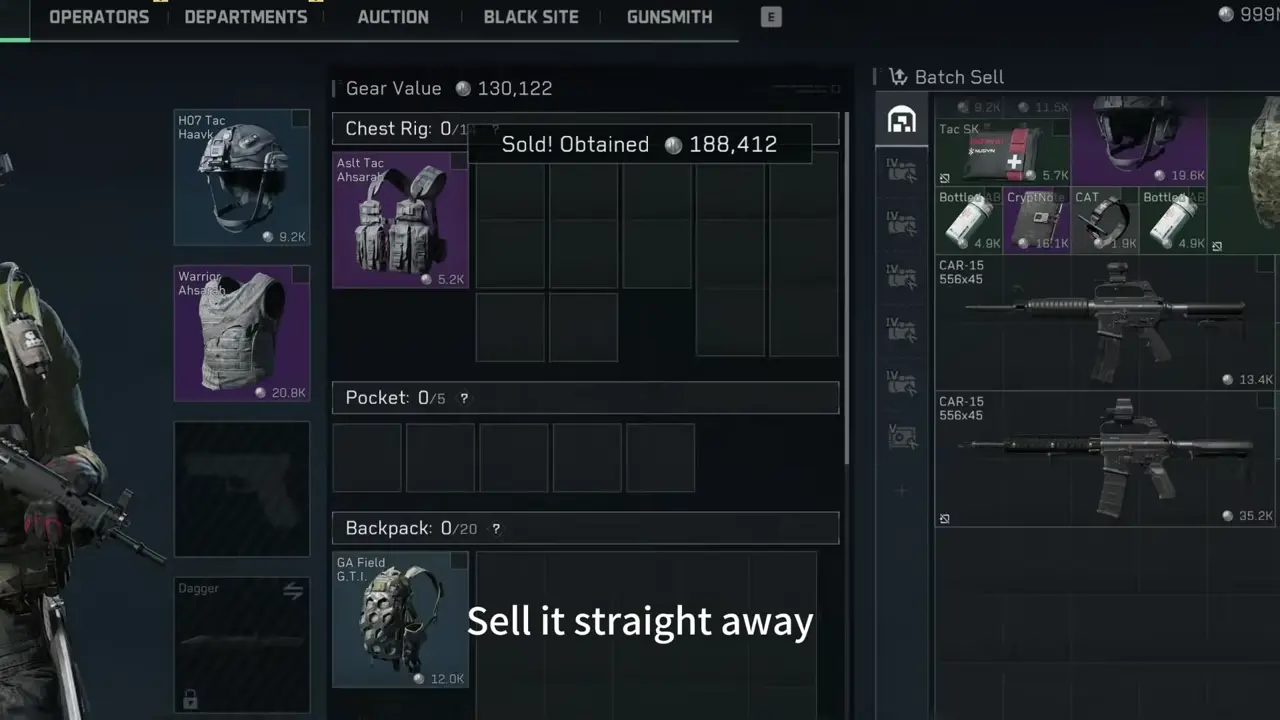
List surplus loot on the Market only after checking the live price, sale fees and direct-sale alternative.
A static “always sell” list becomes stale as missions, Black Site requirements and market demand change. The live client supplies the price; the keep-use-sell test supplies the repeatable decision.
| Situation | Better starting check | Why |
|---|---|---|
| High demand and a healthy gap above direct sale | Market listing | The extra return may justify fees and waiting. |
| Small price gap or slow demand | Direct sale | Immediate Alloy and stash space may be worth more than a marginal gain. |
| Item needed soon | Keep | Rebuying can cost more than the sale produces. |
| Many identical duplicates | Sell in controlled batches | Avoid filling the listing queue or undercutting without checking demand. |
Do not count the listed value as spendable Alloy before the item sells. Unsold inventory still occupies attention and may return to a crowded stash, so include waiting time in the decision.
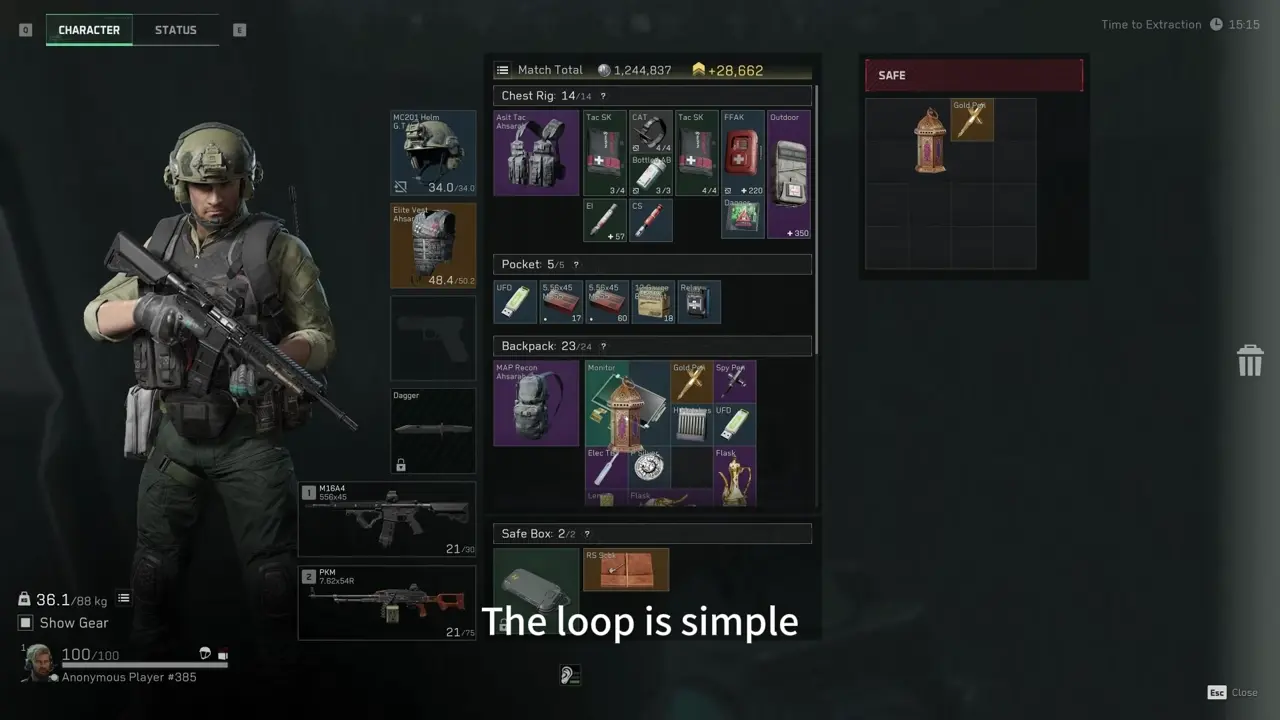
Recovered loot becomes income only after extraction. The next room should be judged against everything already secured in the backpack.
The task is complete, the backpack meets the profit goal, teammates are damaged, utility is low or the safe route is closing.
The squad is healthy, extraction remains available and one specific objective offers enough value to justify the added risk.
Use one question before every extra fight: would you risk the entire recovered backpack for the next room? If the answer is no, leave. This protects the small wins that form the foundation of a stable Operations economy.
| Route style | Main goal | Extraction rule |
|---|---|---|
| Learning route | Memorize spawns, containers and exits with a low-risk kit. | Leave after one completed loop rather than extending into unknown areas. |
| Mission route | Complete one task and protect the required item. | Extract immediately when the mission item is secured and the route allows it. |
| Steady loot route | Fill slots with reliable blue and purple sale items. | Leave when the value target is met, even if the backpack is not completely full. |
| Squad high-value route | Contest a named supply area with coordinated roles. | Reassess after the fight; winning does not require clearing the whole map. |
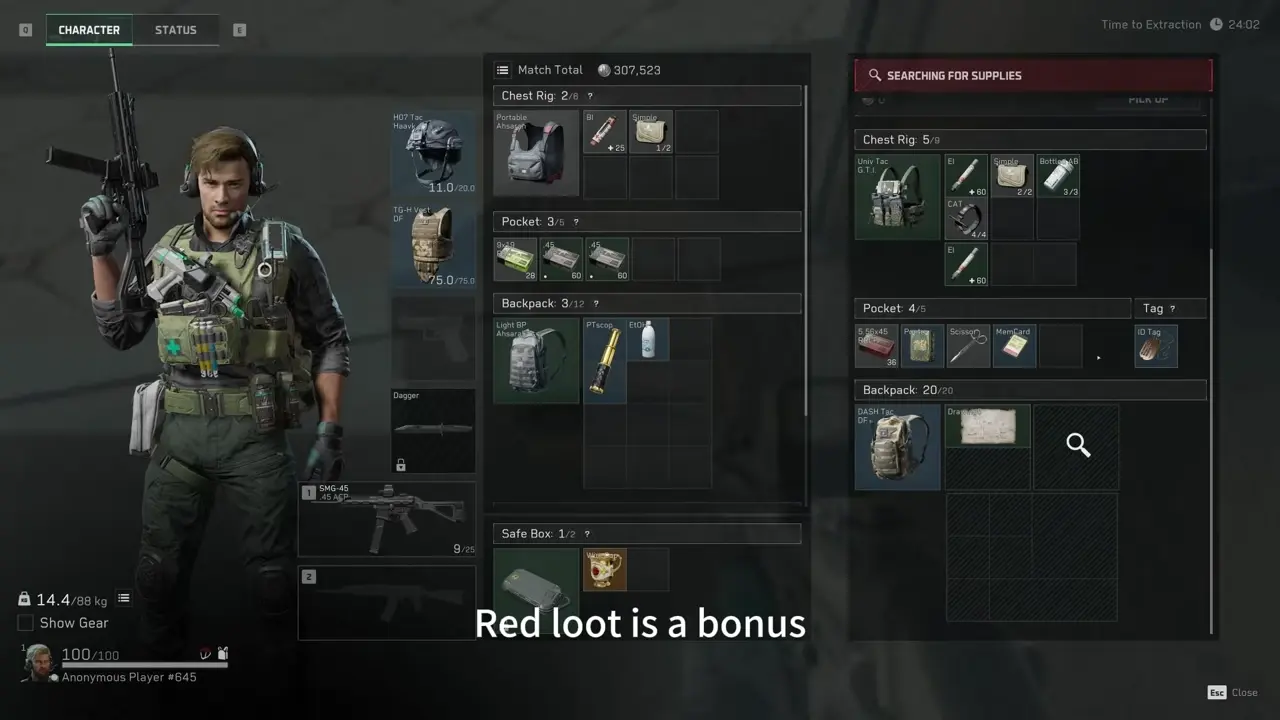
Small profits pay for future kits only when surplus loot is processed instead of disappearing into a full stash.
A crowded stash hides duplicates and makes players buy equipment they already own. Keep complete replacement kits, exact mission or upgrade quantities, and ammunition for weapons you actually use. Move everything else toward a sale decision.
| Stash lane | Rule | When to clear it |
|---|---|---|
| Next-run kits | Store complete, compatible sets instead of scattered premium parts. | When the kit no longer matches the routes you play. |
| Ammunition | Keep calibers and tiers tied to active weapons. | After changing weapon plans or accumulating unused surplus. |
| Mission and upgrade items | Favorite exact quantities for named goals. | When the task or upgrade is complete. |
| Sale queue | Process duplicates after every two or three raids. | Before unsold items blend back into general storage. |

Delta Coins are separate from Tekniq Alloy.
View coin options only for eligible cosmetics or passes.
No. Blue and purple surplus, successful extraction and regular sales can sustain positive income. Red items are valuable jackpots, not the only route to profit.
No. Keep exact quantities required for active missions, Black Site upgrades and near-term loadouts. Sell duplicates and items without a documented use.
No. Include fees, waiting time, the chance an item remains unsold and the value of using it instead of making a future purchase.
Prioritize a compact item whose loss would block a mission, upgrade or meaningful sale. The best choice depends on the current run and account goal, not rarity alone.
Use a replaceable kit, run a familiar route, collect steady saleable loot and extract when the objective is complete. Consistency matters more than one oversized backpack.
Profit is recovered value minus the kit and opportunities lost along the way. Build around repeatable extractions, process the stash regularly and let small wins fund the next run instead of gambling every result on a rare drop.

Copyright © FUTURE OUTLOOK TECHNOLOGY LIMITED.Company Registration No.: 77374965 All rights reserved.UNIT 135,1/F.,143 WAI YIP STREET,KWUN TONG HK