
Delta Force Beginner Guide: Why Game Understanding Matters More Than Aim

For many new Delta Force players, the biggest mistake is thinking improvement starts and ends with aim. Better recoil control, cleaner tracking, and faster reactions do help, but they are usually not the main reason strong players survive longer and win more fights.
The real difference often comes from game understanding.
Good players do not simply shoot better. They make better decisions before the fight even starts. They choose stronger positions, read danger earlier, and avoid low-value engagements instead of running into every gunshot they hear.
For beginners, this is one of the most important mindset changes you can make. If you treat Delta Force like a pure shooting test, you will often feel unlucky, overwhelmed, or outclassed. But once you begin to see it as a game of positioning, timing, information, and decision-making, your results can improve much faster.
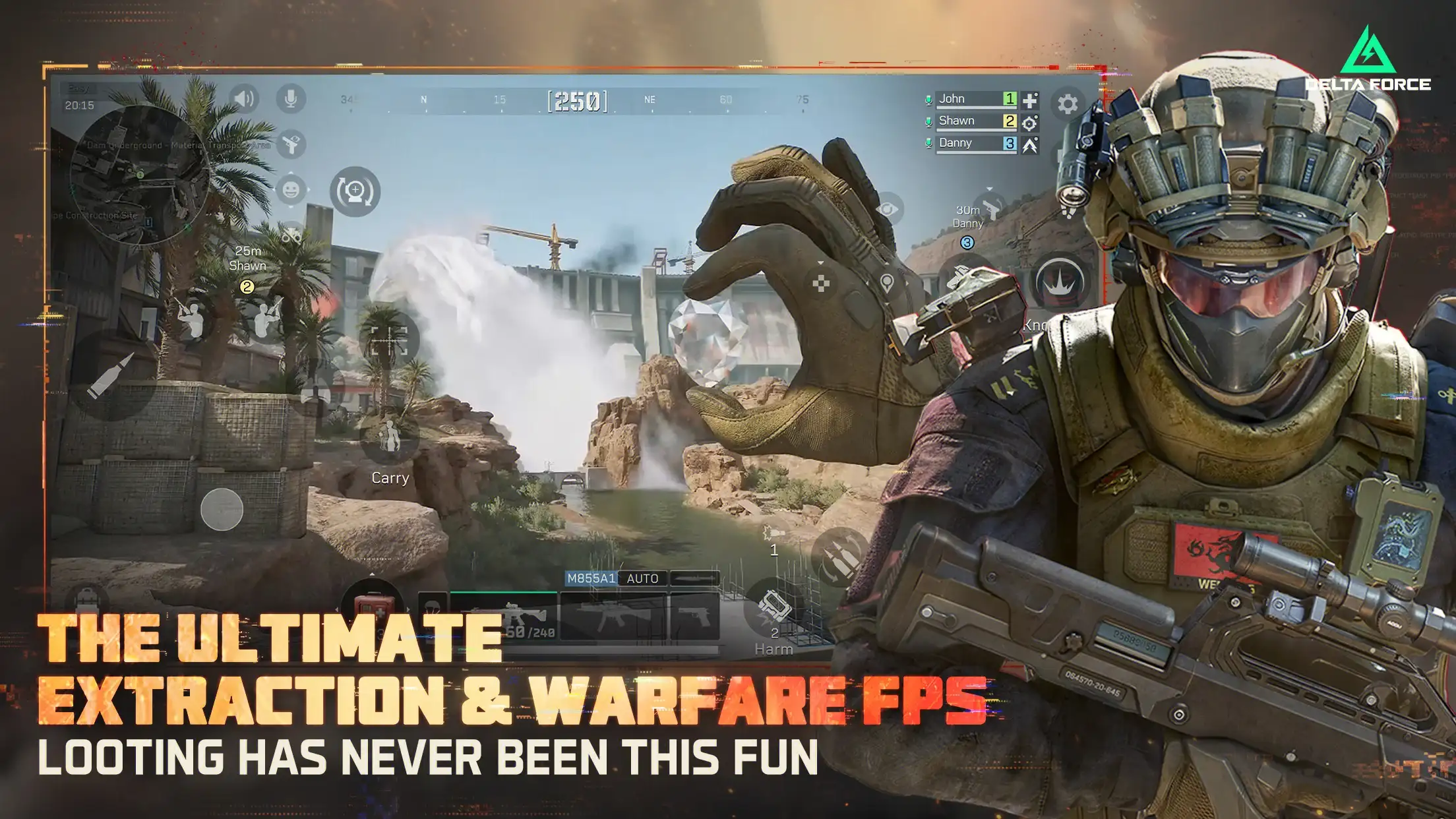
Strong Players Do Not Move Without Purpose
One of the most common beginner habits is moving on autopilot.
You spawn, hear action somewhere nearby, and immediately run toward it. You see teammates moving in one direction, so you follow. You fire because an enemy appears, even though the position is bad and the angle is weak. This feels active, but it is not always productive.
Stronger players usually move with intention.
Every Movement Should Have a Reason
They push because they want to take space that matters. They rotate because their old angle is no longer safe. They slow down because the next area is risky and likely to contain enemies. They stop exposing themselves just to see what happens.
This is a big difference. In Delta Force, movement is not only about speed. It is about why you are moving.
Autopilot Creates Avoidable Deaths
Every unnecessary step can reveal your location, give away timing, or lead you into a fight you were not ready to take. Beginners often think they die because their aim failed. In reality, many of those deaths were caused by a poor path, a rushed peek, or a fight taken from the wrong position.
Positioning Wins Fights Before Bullets Do
Good positioning gives you options. Bad positioning removes them.
Strong Positions Create Small Advantages
When you are in a strong position, you usually have access to better cover, better sightlines, and more control over how the fight begins. You can choose when to peek, when to back away, and when to force the enemy into a disadvantage. Even if your aim is not perfect, these small advantages can decide the outcome.
Weak Positions Make Every Fight Harder
When you are in a weak position, every fight becomes harder. You have fewer escape routes, worse visibility, and less time to react. Even if you land some shots, you are often already losing because the setup was bad.
That is why so many experienced players seem calm under pressure. They are not relying only on mechanics. They have already created a situation where they are more likely to succeed.
For beginners, one of the best habits to build is asking a simple question before every engagement: If this turns into a fight right now, is my position actually good enough?
If the answer is no, reposition first.
Information Is a Resource, Not Background Noise
Another big step in improving game understanding is learning to value information properly.
Good Players Read More Than They React
A lot of new players hear footsteps, shots, or movement and react emotionally. They either panic, overpush, or freeze. Better players treat all of that as useful information. They want to know where enemies might be, how many there could be, which angles are dangerous, and whether the area is still changing.
This makes their decisions look smarter because they are not guessing as much.
You Do Not Need to Chase Every Sound
You do not always need to chase every sound. Sometimes the correct play is to hold your ground, wait for more information, or let another team reveal itself first. In many tactical shooters, and especially in games where positioning matters heavily, the player who understands the situation better often has the real advantage.
This is also why beginners improve quickly when they stop obsessing over winning every duel and start focusing on reading the map and the flow of combat.
Timing Matters More Than Constant Aggression
Many players confuse aggression with skill.
Smart Pressure Is Better Than Blind Pushing
Constant aggression is not the same as smart pressure. Pushing at the wrong time can throw away a good position, expose you to multiple enemies, or leave you with no backup plan. Timing is what turns aggression into a strong play.
A Good Push Usually Has a Clear Reason
A good push usually happens because the enemy is distracted, your angle is stronger, your team is ready, the opponent has fewer escape options, or the risk is worth the reward.
Without those conditions, aggression often becomes gambling.
New players should remember that patience is not passivity. Sometimes the strongest move is waiting a few more seconds, holding a better angle, or letting the enemy make the first mistake.
Beginners Improve Faster When They Think Beyond Aim
If you want to get better at Delta Force, mechanical training still matters. You should improve your crosshair placement, recoil control, and general gun skill. But if you focus only on that, your growth may feel slow and inconsistent.
Mechanical Skill Still Matters
You do need better aim, cleaner recoil control, and stronger gun discipline. Those things are part of improvement, and they should not be ignored.
But Decision-Making Is What Connects Everything
Real progress usually comes when you combine mechanics with smarter movement, better positioning, cleaner timing, stronger awareness, and more disciplined decisions.
That is the kind of improvement that carries across different weapons, maps, and situations.
Once you start understanding the game at that level, Delta Force becomes much easier to read. Fights feel less random. Rotations make more sense. Mistakes become easier to identify. You stop feeling like every death was just bad luck.
Build Smarter, Play Smarter, Progress Smoother
For players who are spending more time in Delta Force and want a smoother overall experience, preparation outside the match matters too. Having the resources you need for progression, convenience, and account planning can make it easier to stay focused on improving instead of getting distracted by avoidable limitations.
Why Top-Up Convenience Can Help
When you already know what content you want to focus on, a smooth top-up process can help you spend less time dealing with account friction and more time actually playing the game.
ManaBuy as a Practical Option
That is where ManaBuy Delta Force Top-Up fits naturally into the experience. If you are looking for a convenient way to top up and keep your account ready for the content you care about, ManaBuy can help you spend less time worrying about resources and more time improving your gameplay.
In the end, Delta Force is not just about shooting first. It is about understanding the fight before it begins.


Copyright © FUTURE OUTLOOK TECHNOLOGY LIMITED.Company Registration No.: 77374965 All rights reserved.UNIT 135,1/F.,143 WAI YIP STREET,KWUN TONG HK