
Quick Answer
This Racing Master cornering guide gives you a repeatable method for learning unfamiliar tracks. It focuses on braking points, racing lines, apex choice, grip versus drift, and clean overtaking. Exact vehicle behavior can differ, so use the process below to diagnose your own car instead of copying one fixed input for every corner.
Racing Master cornering at a glance
Reduce speed while the car is stable and choose a point you can repeat.
Make one measured steering input toward the inside of the corner.
Reach the planned inside point without running out of road or steering.
Open the steering and add power as the car can accept it.
NetEase presents Racing Master around licensed cars, real-world circuits, city street tracks, vehicle physics, and real-time competition. Those features make a stable technique more useful than a single “best” setting. A dependable corner is one you can repeat in traffic, under pressure, and with different cars.
The four phases of a clean corner
| Phase | Main goal | Common error | Useful correction |
|---|---|---|---|
| Braking | Arrive at a controllable entry speed. | Braking too late and steering while overloaded. | Move the brake point earlier until the entry becomes calm. |
| Turn-in | Point the car toward a chosen apex. | Adding several sharp corrections. | Use one smoother steering input from a wider entry. |
| Apex | Pass the inside at the right moment for the exit. | Touching the inside too early. | Delay turn-in slightly and look farther through the corner. |
| Exit | Convert the corner into speed on the next section. | Full throttle while still using heavy steering. | Open the wheel first, then build power. |
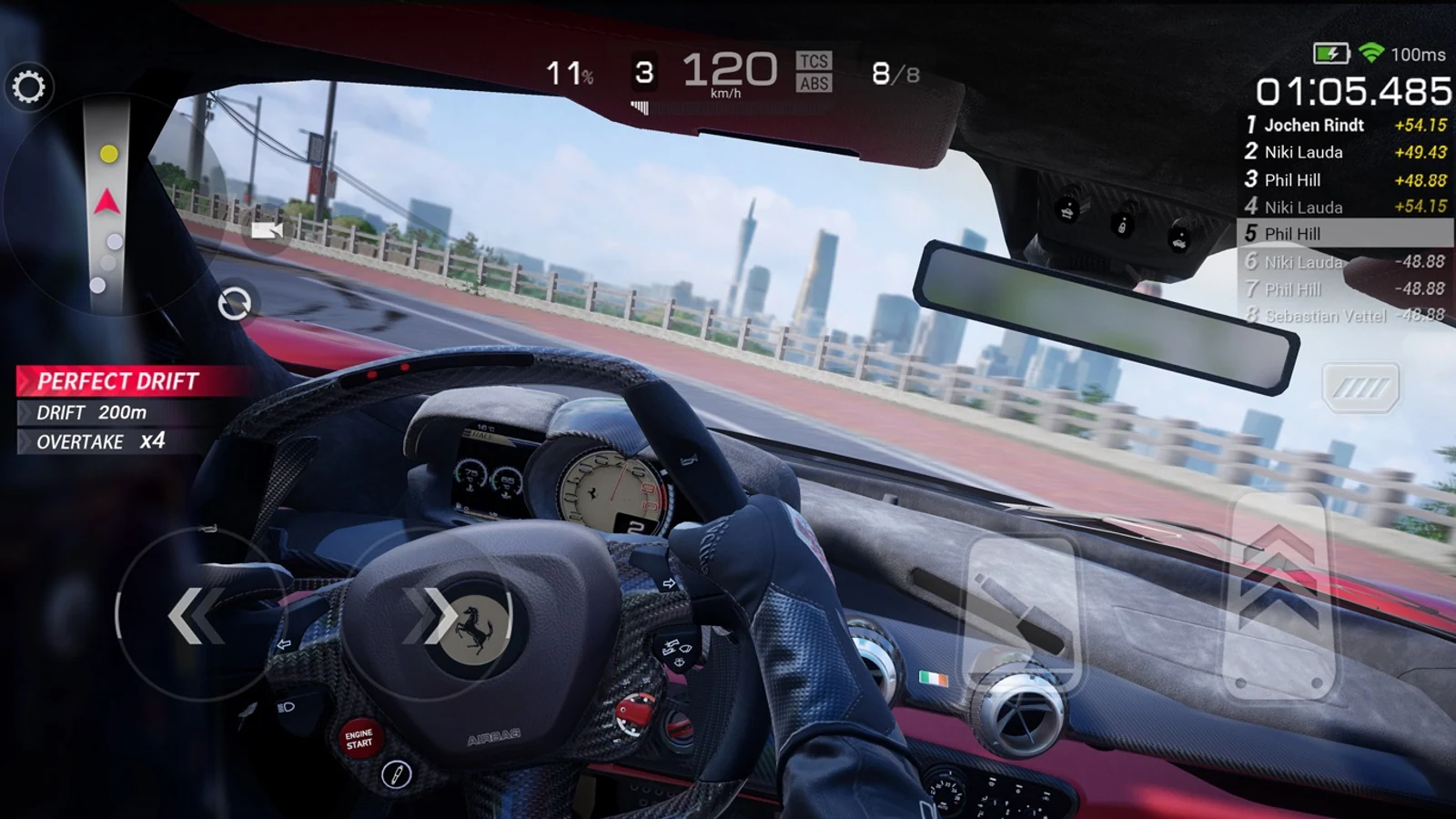
The phases overlap, but separating them helps you find the mistake. If the car refuses to rotate, the problem may have started with excessive entry speed. If it rotates but reaches the outside edge too early, the apex or throttle timing may be wrong. Fix the first broken phase instead of adding more steering at the end.
Set a braking point you can repeat
A braking point is a reference on the approach: a board, sign, shadow, barrier change, curb start, or another object that remains easy to see at speed. Begin with a conservative marker. Brake there for several laps, then move it later in small steps only when the car still turns and exits cleanly.
- Choose one visible marker. Avoid vague instructions such as “brake near the corner.”
- Use the same approach line. A marker is less useful if the car arrives from a different angle every lap.
- Compare the exit. Later braking is not progress if it forces a slow, wide, or unstable exit.
- Reset after a mistake. Do not compensate for one late brake by improvising the next three corners.
Why straight-line braking is the safe baseline
Braking and turning both ask the tires to create force. For a beginner, doing most of the heavy braking while the car is straight leaves more grip available for rotation. As the corner approaches, reduce brake pressure progressively rather than switching abruptly from full brake to full steering.
This does not mean the brake must be completely released before every steering input. It means the combined demand should remain manageable. If the car pushes wide at turn-in, reduce entry speed or release more brake. If the rear becomes nervous, make the transition smoother and avoid sudden steering.
Choose a racing line that creates room
The familiar baseline is outside, inside, outside: approach from the outer side, turn toward an inside apex, then use the available width on exit. The purpose is not to touch every edge. It is to reduce the amount of steering needed and give the car a wider arc.
The textbook line is a starting point, not a rule for every situation. A following corner may require you to sacrifice the first exit. Traffic may block the outer approach. A street circuit may punish small errors with barriers. Choose the line that prepares the next important action.
Favor a wide entry, deliberate apex, and open exit.
Position the car for the final or faster corner, not only the first apex.
Protect space and leave room; the fastest solo line may be unavailable.
Hit the apex without turning too early
The apex is the inside point your line reaches. Turning too early often feels fast because the car reaches the inside immediately, but it also points the car toward the outside before the corner is finished. The usual result is extra steering, lifted throttle, or contact near the exit.
A slightly later apex is a useful learning choice when the corner opens onto a long acceleration zone. It lets the car finish more of its rotation before you demand power. Look through the corner toward the exit, not only at the nearest curb or barrier. Your steering tends to follow your visual target.
Prioritize exit speed
Exit speed matters most when a long straight follows. A small entry sacrifice can be worthwhile if it lets you open the steering sooner and accelerate cleanly. Apply power progressively. If full throttle makes the car run wide, keep a partial input until the steering angle falls.
- Do not add more steering to fight a power-induced wide exit; reduce the demand first.
- Use the full safe road width, but keep a margin while learning.
- Judge the corner several seconds later. A neat apex with poor speed onto the straight is not a complete success.
- If the car remains stable, test a slightly earlier throttle application before testing a later brake point.
Grip cornering versus drifting
Racing Master visibly supports drift actions, but that does not mean every corner should be drifted. Grip cornering usually gives a cleaner, more repeatable baseline. Drifting can help rotate the car in selected situations or suit a particular objective, but it also creates more angle, speed loss, and correction if initiated without a plan.
Use the same comparison for both styles: did the line remain controlled, did the car face the exit early enough, and was the following acceleration strong? A “perfect” on-screen action is useful only when it improves the complete section you are driving.
Learn a new track in three passes
Official materials highlight both real-world circuits and city street tracks, each with different visual references and consequences. Do not try to maximize every corner on the first lap. Build a track map in stages.
- Reconnaissance pass: identify corner direction, obvious braking markers, narrow sections, and the longest acceleration zones.
- Consistency pass: use earlier braking and repeat the same line. Mark only the two or three corners that cause the largest loss.
- Optimization pass: change one input in one problem corner, then compare the exit and the next section.
This method separates track knowledge from car control. If you change the brake point, steering style, camera, and car setup together, you cannot tell which change produced the result.
Diagnose the corner before changing settings
| What you feel | Likely starting cause | First change to test | What success looks like |
|---|---|---|---|
| Car runs wide before the apex | Too much entry speed or too-early throttle. | Brake earlier and keep the early throttle lighter. | The car reaches the intended inside point without extra steering. |
| Car hits the inside too early | Turn-in begins too soon. | Wait slightly longer before the main steering input. | More road remains available at exit. |
| Rear feels unstable on entry | Abrupt brake release or steering. | Smooth the transition and reduce combined demand. | Rotation happens once instead of requiring a catch. |
| Exit is slow despite a neat apex | Line prioritized entry over acceleration. | Use a later apex and open steering earlier. | Stronger speed carries onto the next section. |
| Every lap fails differently | No repeatable marker or approach. | Choose one brake reference and one entry line. | The same error appears consistently enough to fix. |
Settings can matter, but a setup change should answer a known problem. First prove that the same symptom survives several consistent attempts. Otherwise a new setting may only hide an inconsistent brake point or line.
Overtake without destroying both lines
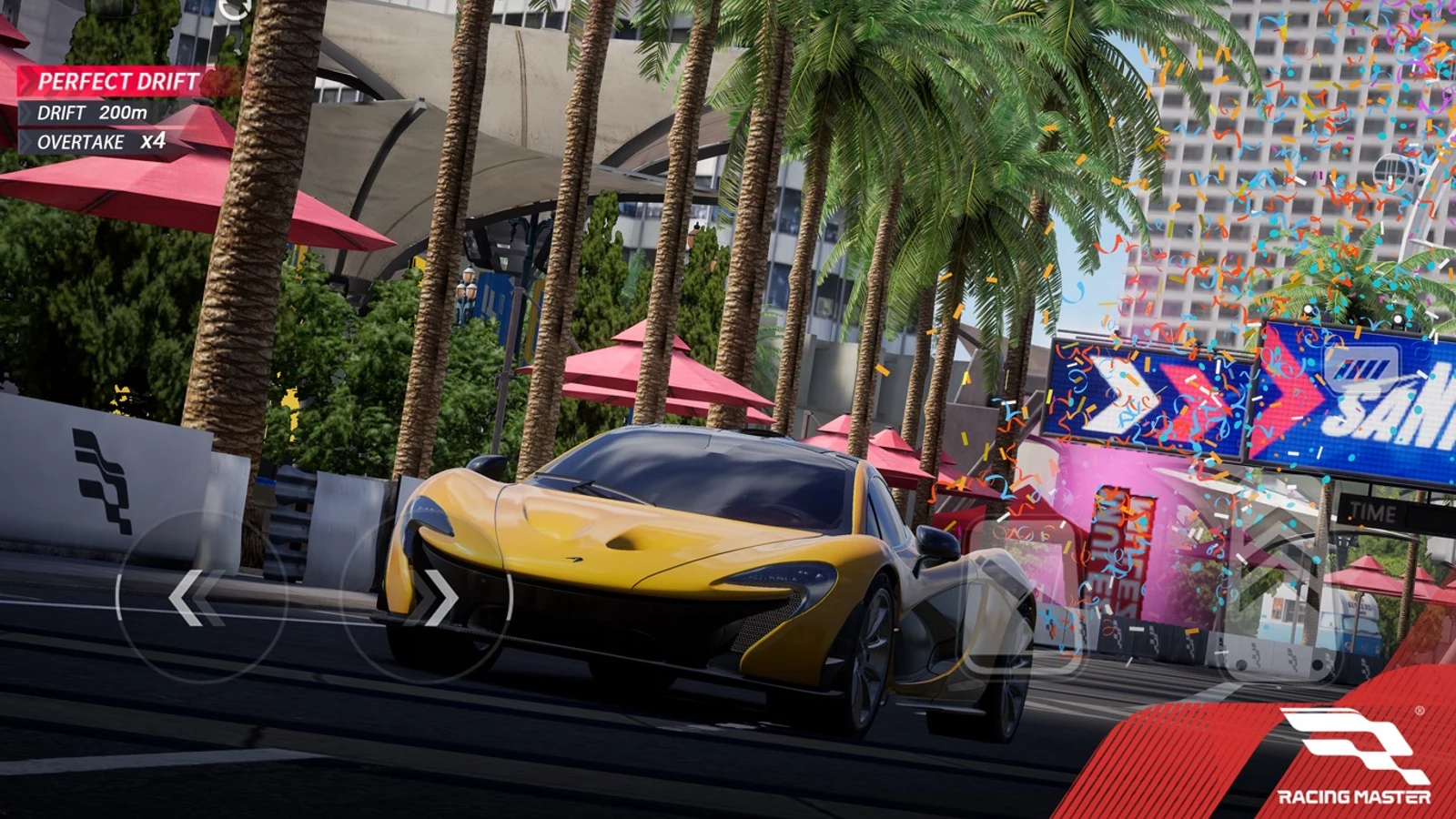
An overtake changes the available road. If you move inside, expect a tighter radius and brake earlier than on the solo racing line. If you stay outside, leave room for the other car and plan a later crossover only when the space is real. Avoid steering across an occupied lane simply because the normal apex is there.
- Win the braking phase first. Arrive under control before claiming the inside.
- Keep a usable lane. Contact or a barrier penalty costs more than a small delay.
- Plan the exit. A rival may enter first but run wide; a cleaner exit can create the better next position.
- Do not stare at the opponent. Track the car, but keep looking toward your available road and exit.
Common Racing Master cornering mistakes
- Braking late because it feels aggressive. The car reaches the apex overloaded and loses more time on exit.
- Turning in twice. The first input was uncertain, so the second input scrubs speed or destabilizes the car.
- Using the same apex for every corner. Sequences and long exits need different priorities.
- Forcing a drift for style. The slide is judged alone instead of by section time and control.
- Changing several variables at once. There is no reliable lesson from the next lap.
- Looking at the barrier or curb. The visual target pulls attention away from the exit route.
- Copying a faster car's marker. Different speed and behavior can make the reference unusable.
A five-session cornering practice plan
| Session | Single focus | What to record | Success checkpoint |
|---|---|---|---|
| 1 | Repeat one braking marker. | Early, correct, or late arrival. | Three similar entries in a row. |
| 2 | Use one smooth turn-in. | Number of steering corrections. | The car reaches the apex without a second sharp input. |
| 3 | Choose a later apex. | Road width remaining at exit. | Steering opens earlier before acceleration. |
| 4 | Build throttle progressively. | Where the car begins to run wide. | Power increases without adding steering. |
| 5 | Repeat the method in traffic. | Forced line changes and avoidable contact. | You finish the corner with a usable lane and exit. |
Use one familiar track and one car while learning the method. After the inputs become repeatable, transfer the same brake-turn-apex-exit process to another track. The goal is not memorizing one lap; it is building a diagnosis you can reuse.
Do purchases make cornering faster?
No purchase replaces track knowledge, braking consistency, or controlled inputs. If you already plan to buy in-game currency or an eligible product, verify the receiving account, region, item, and delivery instructions before paying. Do not treat a purchase as a guaranteed lap-time improvement.
Check the current product details and account requirements before ordering.
View Racing Master top-up optionsStart with the full Racing Master beginner guide
If you still need help with installation, controls, first-session priorities, beginner cars, track learning, multiplayer, currency, and purchase safety, read the Racing Master beginner guide. You can also browse the Racing Master guide hub for future guides.
Racing Master cornering FAQ
How do I corner faster in Racing Master?
Brake from a repeatable marker, reduce brake pressure smoothly, make one deliberate turn-in, aim for a useful apex, and add power as the steering opens. Compare exit speed and control, not only entry speed.
Should I brake before turning?
For a stable beginner baseline, complete most heavy braking while the car is straight. Blend the remaining brake and steering smoothly so the combined grip demand stays manageable.
What is the best racing line in Racing Master?
Outside-inside-outside is a useful baseline for a single open corner, but sequences, barriers, traffic, and the following straight can require a different line. Choose the line that creates the best usable exit.
Should I drift every corner?
No. Learn a controlled grip line first. Test a drift only when it improves rotation or the complete section, and compare the exit rather than judging the slide alone.
Why does my car keep running wide?
The usual starting causes are excessive entry speed, turning too early, or applying too much throttle while the steering angle is still high. Brake earlier and change one input at a time.
How do I learn a new Racing Master track?
Use three passes: reconnaissance for layout and markers, consistency for repeatable lines, then optimization for one problem corner at a time. Keep the car and major settings stable while diagnosing.
Official references
- NetEase Games: Racing Master global launch
- Racing Master official website
- Racing Master on the App Store
Official sources support the game, platform, track, vehicle, and competition context. Driving recommendations are practical applications of general racing technique. Live handling, modes, cars, and values can change.