
PUBG MOBILE Crate and Lucky Draw UC Budget Guide

PUBG MOBILE crates, Lucky Spins and upgradeable gun skins can be fun, but they are also the easiest places to spend UC without noticing how fast the balance disappears. A direct shop item has a fixed UC price. A crate or draw uses RNG, prize pools, chance-up events, vouchers, exchange points, fragments or upgrade materials, so the right question is not only "Can I afford one draw?" It is "What is my maximum UC limit if I do not get the reward?"
This guide gives a budget-first way to approach crates, Lucky Draws, gun skins and material-based upgrades. It does not promise a fixed cost for every event because PUBG MOBILE draw rules change by crate, region and season. Instead, it shows how to read the current draw page, separate guaranteed rewards from random rewards, set stop-loss rules and choose a UC package only after the limit is clear.

Quick answer: Treat every PUBG MOBILE crate or Lucky Draw as a capped entertainment budget. Check the draw cost, prize pool, duplicate rules, exchange options, chance-up progress and material requirements before spending UC. If the reward is not guaranteed at your budget level, decide the stop point first. For most players, a small test budget or a fixed 10-pull cap is safer than chasing one skin, upgradeable gun or mythic outfit after bad results.
PUBG MOBILE Crates and Lucky Draws Explained
Crates and Lucky Draws are different from normal shop purchases. A normal shop item usually tells you the UC cost before you buy. A crate gives a random item from a prize pool. A Lucky Spin or themed draw may add first-draw discounts, 10-pull buttons, reward progress, event tokens, exchange shops, "chance up" banners, or limited-time prize pools. Some pages also show free vouchers or discounted first pulls, which can make the first step feel cheap even when the full reward path is not cheap.
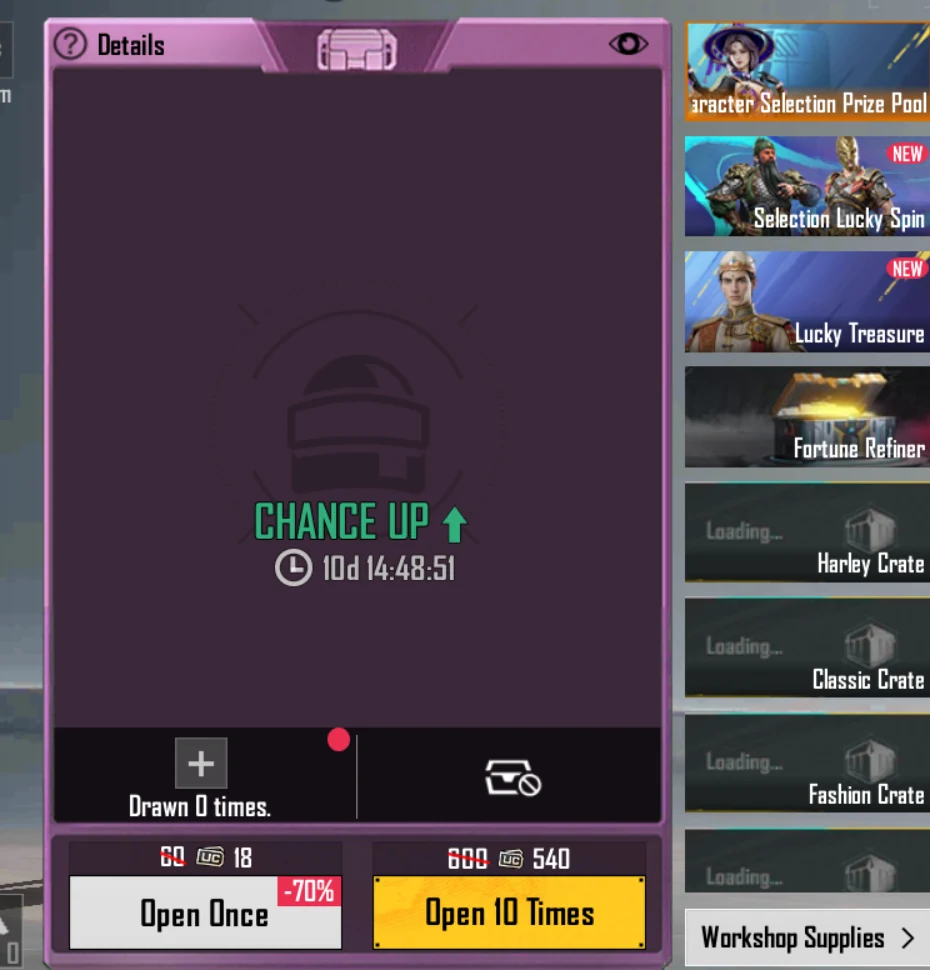
| Cost you may see | What it means | Budget impact | Player rule |
|---|---|---|---|
| Open Once: 18 UC Discounted from 60 UC |
A cheap single pull for the current Selection Lucky Spin style page. | Good for a small test, but it does not price the full reward path. | Use it only if you are comfortable stopping after one pull. |
| Open 10 Times: 540 UC Discounted from 600 UC |
A 10-pull cost where the discount is smaller than the risk of continuing. | One 10-pull already uses more UC than a 300 + 25 package provides. | Set "one 10-pull only" before pressing the button. |
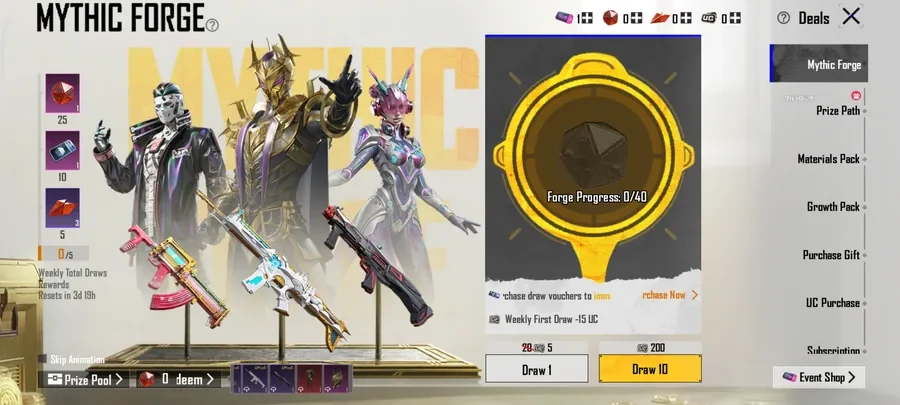
| Draw 1: 5 UC Weekly first-draw style discount |
A very cheap entry pull that can appear in event pages such as forge-style draws. | Useful as entertainment or material fishing, not as a promise of a rare item. | Do the discount only if you can ignore the follow-up button. |
| Draw 10: 200 UC | A lower-cost 10-pull style event path, often tied to progress or tokens. | Five 10-pulls already equals 1000 UC before any upgrade materials. | Count how many 10-pulls your stop-loss allows before starting. |
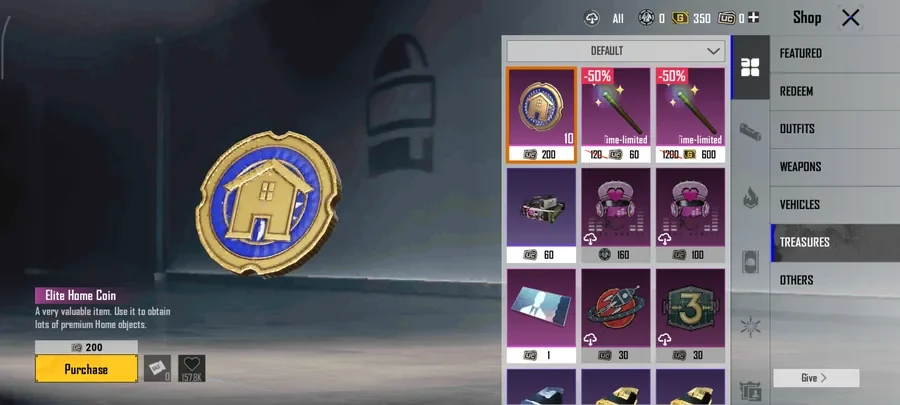
| Direct item: 200 UC | A shop or treasure item with a visible price, such as a coin or fixed item. | Safer than RNG because the cost is known before purchase. | Use direct prices as a benchmark: would you rather buy this than gamble? |
Random prize pool. The main reward may be rare, and duplicates or lower-tier items can appear before the target item.
Draw button plus event rules. It may include discounted starts, 10-pull options, chance-up timing, points or exchange progress.
Progress-based route. Draws, tokens or points move you toward a visible prize. It is safer only when the final requirement is clear.
Base reward plus materials. A gun skin may need materials, paint, fragments or duplicate conversions after the first unlock.
The most important beginner mistake is treating all of these as one category. A crate with no clear guarantee, a spin with a progress meter, and an upgradeable gun with material costs should not share the same UC budget. Each one needs a different stop-loss rule.
Guaranteed Rewards vs RNG Rewards
Before spending UC, separate the reward into three layers: what you receive immediately, what can be earned through progress or exchange, and what is purely random. Players get into trouble when they mentally price the rare reward as if it were guaranteed after a few pulls.
| Reward type | What it means | Budget risk | Best player rule |
|---|---|---|---|
| Direct price | The item has a visible UC price or a known shop cost. | Low. You know the full spend before buying. | Buy only if the item is worth that fixed price to you. |
| Guaranteed progress | Draws give points, tokens, fragments or milestones toward an exchange reward. | Medium. It is safer than pure RNG, but the full point requirement may still be high. | Calculate how many pulls are needed before you start. |
| Chance up | The event suggests improved odds or a timed boost for selected rewards. | Medium to high. Better odds are not the same as a guarantee. | Use a fixed cap and do not chase just because the chance looks improved. |
| Pure RNG | The reward comes from the prize pool and may not appear within your budget. | High. Results can be good, bad or far worse than expected. | Spend only what you are comfortable losing for entertainment. |
| Upgradeable reward | The base gun or outfit is only the first step; materials may be needed later. | High. The post-unlock cost can be bigger than expected. | Budget the base reward and upgrade materials separately. |
How to Read Draw Rules Before Spending UC
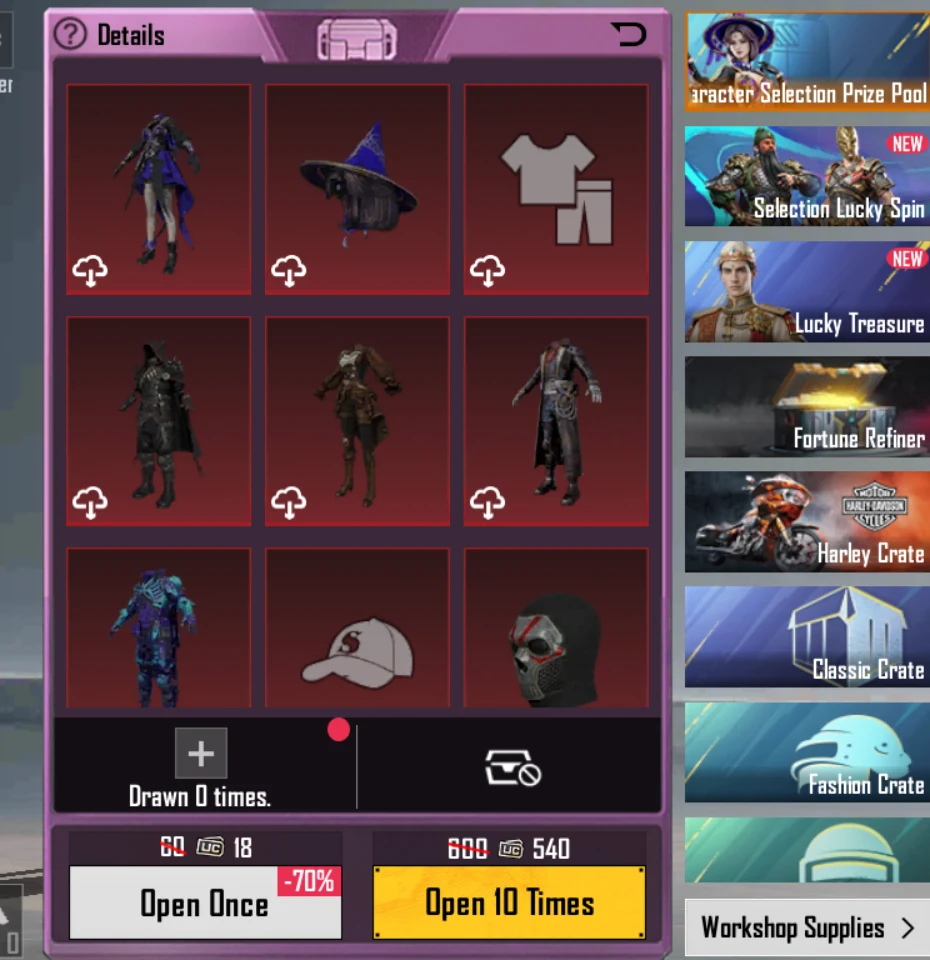
Every crate and Lucky Draw can use different rules, so the safe habit is to read the event page before spending. Do not stop at the banner art. Open Details, Prize Pool, exchange shops, material shops, milestone pages and any question-mark icons. If the page has a limited-time timer, also check how many days you have left. A good budget on day one may become a bad budget near the end if you cannot finish the reward path.
Check draw cost
Write down the UC cost for one pull and 10 pulls. Separate discounted first draws from normal repeat costs.
Check reward path
Look for tokens, points, exchange shops, fragments, milestones or guaranteed counters before calling the event random.
Check upgrade cost
If the target is an upgradeable gun, count materials and paint after the base skin, not only the first unlock.
Set stop point
Choose a UC ceiling before pulling. A ceiling written after bad luck is usually too late.
Ignore sunk cost
Missing the reward after several pulls does not make the next pull cheaper. Stop when the limit is reached.
Use leftovers wisely
Leftover UC should go to a planned pass, direct shop item or future event, not random extra pulls.
Stop-Loss Rules for Crates and Lucky Spins
A stop-loss rule is a decision you make before the draw starts. It protects your UC balance when the event is exciting, the reward looks close, or the first few results feel unlucky. The point is not to remove fun. The point is to keep a fun draw from turning into a regret purchase.
Use one discounted pull only. Stop immediately unless the result, token progress and prize path still fit your plan.
Use one 10-pull as the whole event budget. If the reward does not appear, leave the page instead of topping up again.
Buy one UC package for the event. Do not use a second package to repair bad luck from the first one.
Continue only when points or tokens create clear exchange value. Random pulls without progress should stay capped.
Stop before the base gun if upgrades are the real goal. The gun is not "finished" if the materials are out of budget.
Leave the page when you feel rushed. A timer, a near miss, or a bad streak is not a reason to remove the limit.
Important: "Chance up" means your chance may be improved under that event's rules. It does not mean the reward is guaranteed inside your personal budget. Treat it as a reason to read the rules, not a reason to remove your stop-loss.
UC Budget Tiers for Crates and Lucky Draws
Choose the UC package after you choose the event limit. The best package is not always the biggest one. Larger packages can have better unit value, but they also make it easier to keep pulling after the original plan is gone.
| Budget tier | Use it for | Good stop-loss | Avoid if |
|---|---|---|---|
| 60 UC | Discounted first pulls, tiny direct-price items or delivery testing. | One pull, then leave unless the reward path is clearly worth more. | You are hoping one lucky pull will solve a collector goal. |
| 300 + 25 UC | Light Lucky Spin attempts, small crate sessions or a strict fun budget. | Set the full package as the ceiling and do not add more UC mid-event. | The target is an upgradeable gun that needs extra materials later. |
| 600 + 60 UC | One normal 10-pull style budget, depending on current event costs. | Stop after the planned pull count, even if the reward did not appear. | You would be upset if all results were lower-tier items. |
| 1500 + 300 UC | Medium event planning with room for pass or direct shop leftovers. | Split the balance before spending: draw cap, pass cap, leftover cap. | You cannot name exactly how the leftover UC will be used. |
| 3000 + 850 UC | Larger themed events, exchange progress or multiple planned purchases. | Write the reward target and stop point before the first pull. | You are buying only because the event art looks limited. |
| 6000 + 2100 UC | Collector-level spending across several events or a long-term UC bank. | Use a full written plan and stop after each event sub-budget is used. | You are a casual player, new spender, or chasing a single RNG reward. |

Upgradeable Gun Skins and Materials
Upgradeable gun skins need extra caution because the base gun is not the full cost. A player may spend UC to unlock the base weapon, then realize that the kill effect, loot crate, elimination broadcast, final form or other upgrade levels need materials, paint or fragments. That second layer can make the real cost feel much higher than the first draw page suggested.
Community spending discussions repeatedly point to the same problem: materials can become the expensive part, not the first gun skin. In one PUBG MOBILE gun lab budget discussion, experienced collectors warn that several thousand UC is not a confident full-upgrade budget. Another upgrade materials discussion highlights that getting materials can be harder than getting the base gun. Use those stories as a warning: do not price an upgradeable gun by the base-skin draw alone.
| Cost layer | What to check | Budget question | Stop-loss rule |
|---|---|---|---|
| Base gun skin | How the weapon is unlocked: direct exchange, crate, spin or event path. | Can I accept missing it within my UC cap? | Do not exceed the cap just to "finish" the unlock. |
| Materials | Material count, material packs, duplicate conversion and event shop prices. | Can I upgrade the gun to the level I actually want? | Do not unlock the base gun if the desired upgrade level is out of reach. |
| Paint or fragments | Whether upgrade progress also needs paint, fragments or extra currencies. | Do I already own enough, or must I buy more? | Count existing inventory before buying extra UC. |
| Duplicate rewards | Whether duplicates convert into useful progress or low-value currency. | Do repeats help the goal or only soften bad luck? | Continue only if duplicate conversion supports a guaranteed exchange. |
| Upgrade budget item | Where UC usually enters | Why it matters | Safer UC rule |
|---|---|---|---|
| Base weapon draw | Crate, Lucky Spin, Prize Path or themed event draw. | Unlocking the base weapon can still leave the best effects locked. | Decide whether base-only is acceptable before drawing. |
| Material packs | Event shops, weekly packs, exchange shops, duplicate conversion or special offers. | Materials often decide whether the gun reaches the level you actually want. | Count materials first, then decide if the draw budget still makes sense. |
| Paint | Shop purchases, RP rewards, silver/AG routes, crates or event exchange. | Paint may be easier to collect than materials, but it still blocks upgrades. | Use non-UC sources first when available, then buy only the missing amount. |
| Duplicate gun skins | Some draws convert duplicate upgradeable skins into material progress. | Duplicates can help, but only after you have already spent enough to get repeats. | Do not rely on duplicate luck unless the conversion rule is clear. |
If you only want the weapon for looks, the base skin may be enough. If you want the full upgrade experience, calculate that goal separately. The most expensive mistake is buying halfway into an upgrade path and discovering that stopping feels bad but continuing costs much more.
Is a PUBG MOBILE Crate or Lucky Draw Worth It?
A crate or draw is worth it when the reward matters to you, the rules are clear, and the UC cap is comfortable even if you lose. It is not worth it when the value depends on getting lucky early, when the item will not be used often, or when you are using UC that was meant for Royale Pass, direct shop items or future events.
Worth considering
- You already use the gun, outfit style or vehicle often.
- The event has a visible exchange path or useful progress.
- Your UC cap is money you are comfortable losing.
- You understand material costs after the base reward.
Skip or wait
- You only like one rare item in a large prize pool.
- You do not know the odds, progress rules or material needs.
- You would need another top-up after bad luck.
- You are spending because the event timer feels urgent.
Better alternative
- Choose Royale Pass if you play enough missions.
- Choose a direct shop item if it has a fixed price.
- Save UC for a gun or outfit you use every week.
- Wait for a clearer event path if the current one feels vague.
Personal test
- Would I still be happy if I got only low-tier items?
- Will I use this skin after the event ends?
- Do I know my exact stop point?
- Can I stop without topping up again?
Common UC Budget Mistakes
Most bad crate sessions do not start with a huge top-up. They start with a small pull, a bad result, and the feeling that the next pull should be better. RNG does not work that way. Unless the event has a clear guaranteed progress system, each new pull can still miss the target.
Counting discounts as savings
A discounted first pull lowers the first step, not the full event cost. Budget the normal repeat price too.
Ignoring duplicate rules
Duplicates may convert into points or fragments, but they may not be enough to justify continuing.
Chasing one rare item
If only one reward is exciting, the rest of the prize pool should be treated as the real downside.
Forgetting upgrades
Upgradeable guns can need materials after the unlock. A base skin is not always the final budget.
Buying before reading rules
Every event can change costs, progress and exchange options. Read first, draw second.
Letting leftovers decide
Leftover UC is not free UC. Keep it for a planned pass, shop item or future event.
Related Guides
Use these guides when you want to connect crate spending with a broader PUBG MOBILE plan.
PUBG MOBILE Crate and Lucky Draw FAQ
How much UC should I spend on a PUBG MOBILE crate?
Spend only the amount you are comfortable losing without getting the main reward. For most players, that means a discounted first pull, one small package, or one fixed 10-pull cap. If the event has a guaranteed exchange path, calculate the full requirement before deciding.
Are Lucky Draws better than crates?
They can be easier to read when they show progress, exchange points or milestones, but they are not automatically better. A Lucky Draw is still risky if the target reward is random and the progress path is expensive or unclear.
Does chance up guarantee the PUBG MOBILE skin?
No. Chance up usually means the event gives improved odds or a selected reward focus under its own rules. It is not the same as a guarantee unless the page clearly says the reward is guaranteed after a specific condition.
Should I chase upgradeable gun skins?
Only if you also budget for upgrade materials, paint, fragments or duplicate conversion. Getting the base gun can be exciting, but the full upgrade path may cost much more than the first unlock.
Is it better to buy Royale Pass or do crates?
Royale Pass is usually easier to budget because the reward path is visible and progress-based. Crates and Lucky Draws are better treated as optional entertainment spending unless you can clearly calculate a guaranteed exchange path.
When should I stop drawing?
Stop when you reach the UC limit you set before the first pull. Also stop if the event no longer has a clear path to the reward you want, if you need another top-up to continue, or if you are pulling only because previous results were bad.
Final UC Budget Rule
The safest PUBG MOBILE crate and Lucky Draw rule is simple: decide the reward, read the current rules, set the UC limit, then stop when the limit is reached. If the event needs luck, treat the spend as entertainment. If the event has progress, calculate the full path. If the item needs upgrade materials, budget the upgrade before chasing the base reward.



Copyright © FUTURE OUTLOOK TECHNOLOGY LIMITED.Company Registration No.: 77374965 All rights reserved.UNIT 135,1/F.,143 WAI YIP STREET,KWUN TONG HK