
A mode-specific ranking for Operation VERGE and Ace Arena, with honest data limits for Mecha BREAK's five newer Strikers.
Reviewed September 9, 2026 · Based on the September 1 balance update and a third-party match-data snapshot retrieved September 9
Mecha BREAK tier lists for September 2026
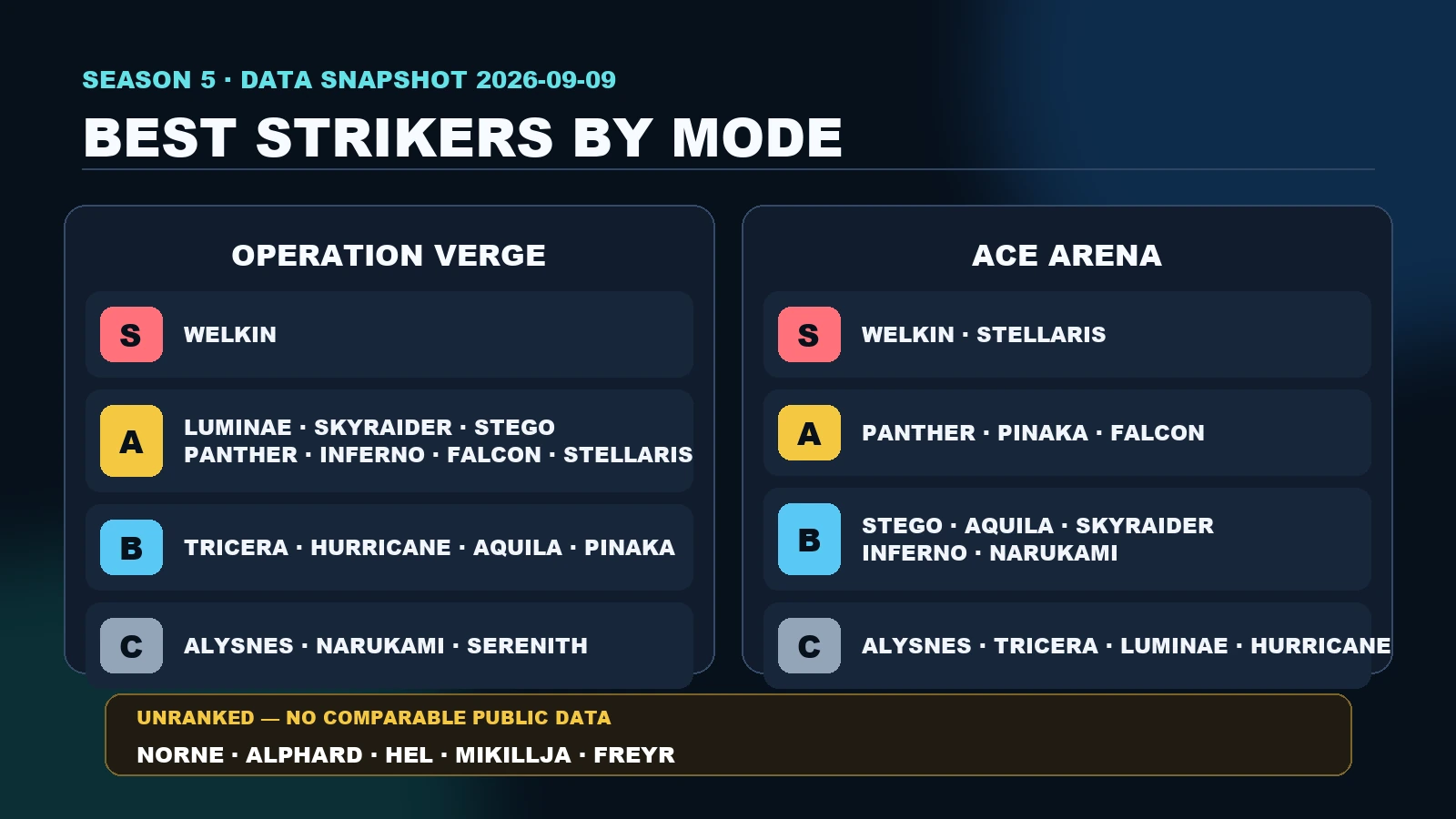
These lists rank the 15 Strikers covered by the public MechaTracker dataset. A high tier does not mean “wins every duel.” It means the Striker currently offers a strong combination of results, usage, role value, and repeatability in that mode. The five newer Strikers are shown in a separate section because the same dataset excludes them.
Operation VERGE tier list
| Tier | Strikers | How to read it |
|---|---|---|
| S | Welkin | The strongest all-round blend of usage, pressure, and repeatable 6v6 value in the snapshot. |
| A | Luminae, Skyraider, Stego, Panther, Inferno, Falcon, Stellaris | Powerful main picks, but their value depends more on team composition, map geometry, or pilot execution. |
| B | Tricera, Hurricane, Aquila, Pinaka | Strong specialists and counterpicks. Several have good win rates but lower pick rates, so they should not be treated as universal blind picks. |
| C | Alysnes, Narukami, Serenith | Playable, but the public snapshot gives less evidence for consistent general-purpose VERGE value. |
Ace Arena tier list
| Tier | Strikers | How to read it |
|---|---|---|
| S | Welkin, Stellaris | Welkin brings dependable close-range control; Stellaris converts the smaller arena and kill-focused format into exceptional pressure. |
| A | Panther, Pinaka, Falcon | Clear 3v3 jobs: isolate a target, keep a carry alive, or create an aerial angle the enemy must answer. |
| B | Stego, Aquila, Skyraider, Inferno, Narukami | Useful when the map and matchup give them space, but easier to punish when the enemy can collapse quickly. |
| C | Alysnes, Tricera, Luminae, Hurricane | The 3v3 format reduces some of their formation, sustain, or area-control advantages. |
| — | Serenith | Only 45 Ace Arena matches appeared in the snapshot. Its high displayed win rate is too small a sample for a responsible tier assignment. |
How this Mecha BREAK tier list was built
This is not a disguised opinion list. It uses three evidence layers, and each layer has a different job:
1. Official patch facts
The official Mecha BREAK Steam news feed is the authority for balance changes, mode rules, and Season 5 systems. The September 1 update changed BREAK Override for all Strikers and adjusted Panther, Tricera, Inferno, Hurricane, Stego, Hel, Alphard, Skyraider, Falcon, Luminae, and others.
2. Public match snapshot
MechaTracker supplied mode-level matches, wins, and pick rates for 15 Strikers. The snapshot was retrieved on September 9, 2026. The site does not publish a clear sampling window, so we treat it as directional—not proof of post-patch performance.
3. Sample-size checks
Raw win rate can mislead. Aquila and Pinaka, for example, show good VERGE win rates with much lower pick rates than Welkin. Serenith's Ace Arena figure comes from only 45 matches. Usage and sample size therefore matter.
4. Role and counterplay
Recent player discussions repeatedly describe Mecha BREAK as a counterpick game. Falcon can pressure Norne; Tricera and Hurricane answer different damage patterns; support value changes with team coordination. The list reflects that context instead of declaring one permanent best mech.
Important limitation: MechaTracker currently filters out Norne, Alphard, Hel, Mikillja, and Freyr. We do not assign them fake win rates or quietly mix community opinion into the statistical tiers.
Best Strikers for Operation VERGE
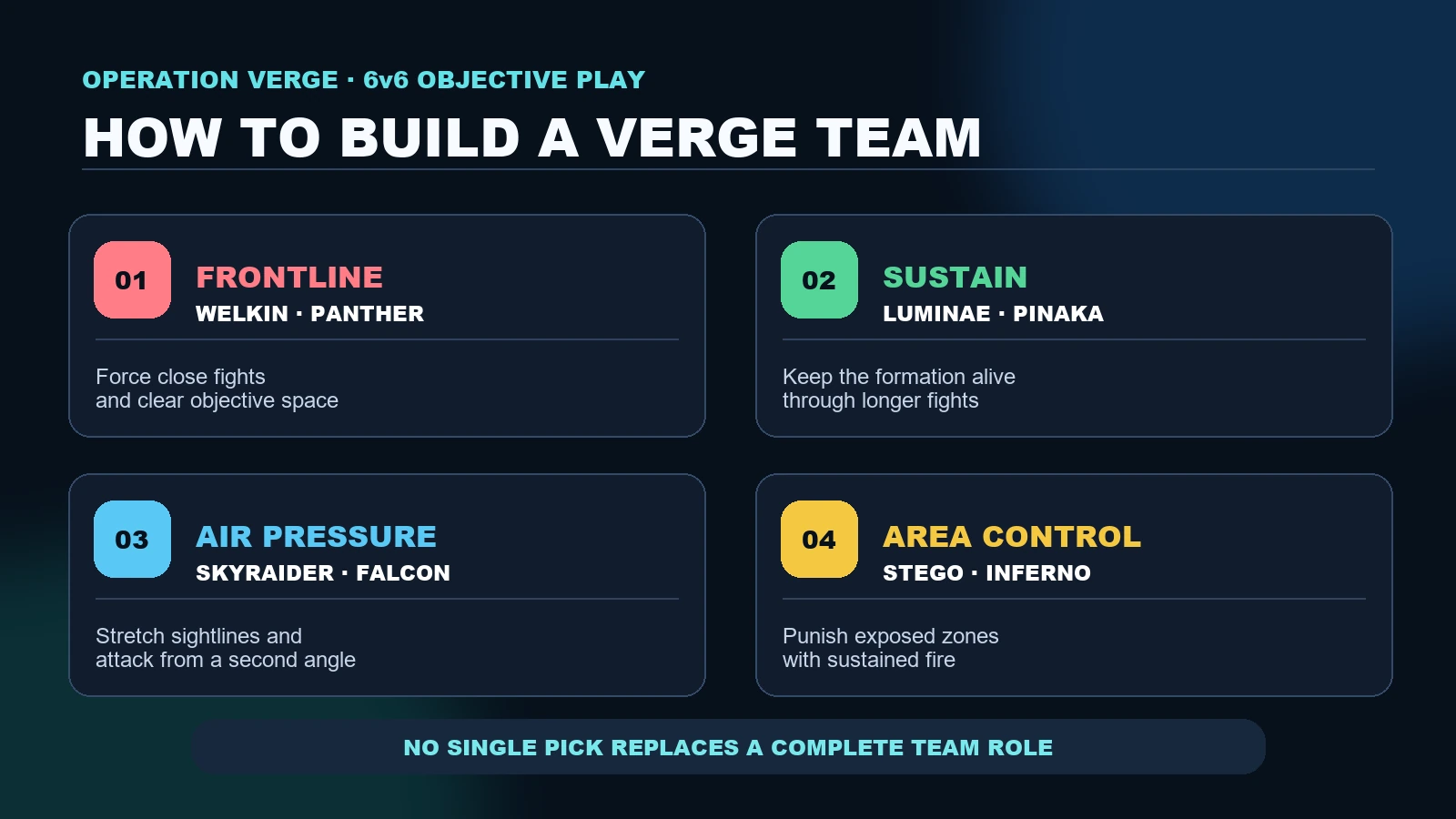
VERGE is a 6v6 objective mode. A useful pick must do more than win isolated duels: it has to contest space, survive coordinated focus, contribute while an objective is active, or create a side angle that pulls defenders away.
Welkin — the safest all-round VERGE pick
Heavy BrawlerFrontline controlHigh pick rate
Welkin is the clearest S-tier answer in the available snapshot. It was both the most picked established Striker in VERGE and one of the better-performing choices by win rate. Its practical advantage is role clarity: close distance, force a fight inside favorable space, and stop the enemy from freely operating around the objective.
The September patch did not simply hand Welkin more damage. Its BREAK Override behavior changed, including how its Defense Field activates. That makes timing and manual control more important, but it does not remove Welkin's core value as a brawler that can dictate where the fight happens.
Luminae and Skyraider — team value and map pressure
Luminae is not ranked highly because healing is automatically overpowered. It ranks well because 6v6 gives a mobile support more targets, more opportunities to stabilize a fight, and more time to turn one saved teammate into objective progress. The September 1 patch also increased Luminae's all-attribute damage reduction during BREAK Override from 25% to 40%, improving the survival of its power window.
Skyraider provides a different kind of value. Its aerial routes, missile pressure, and ability to attack from angles above normal cover can stretch a formation. The September patch added an instant reset and four-second cooldown reduction to its Jamming Missile during BREAK Override, making that window more disruptive.
Stego, Panther, Inferno, Falcon, and Stellaris — strong with a plan
These A-tier Strikers are not interchangeable. Stego and Inferno want sightlines and sustained firing windows. Panther wants a route into melee and a target it can keep under pressure. Falcon wants vertical space and vulnerable backline targets. Stellaris rewards a pilot who can turn mobility into repeated, clean engagements instead of overcommitting.
Panther is a good example of why patch notes need interpretation. Its base Lance and Shield Blade damage increased on September 1, but its BREAK Override damage bonuses were reduced. The result is a shift toward stronger normal-state consistency and a less extreme Override spike—not a simple “buff everything” story.
Why Tricera, Hurricane, Aquila, and Pinaka are not weak
These are B-tier specialists, not bad Strikers. Tricera can still make a capture area miserable for melee-heavy teams. Its Fortress shield capacity fell from 52,000 to 44,000, but the shield now covers attacks from above. Hurricane is more attractive into ranged pressure and received substantially faster Defense Field Drone regeneration during BREAK Override. Aquila can control movement from long range, while Pinaka's repair and cover tools can enable a coordinated carry.
The catch is draft dependence. Blind-picking one of these into the wrong map or composition can leave the team without the mobility, finishing power, or flexible frontline it needs.
Best Strikers for Ace Arena
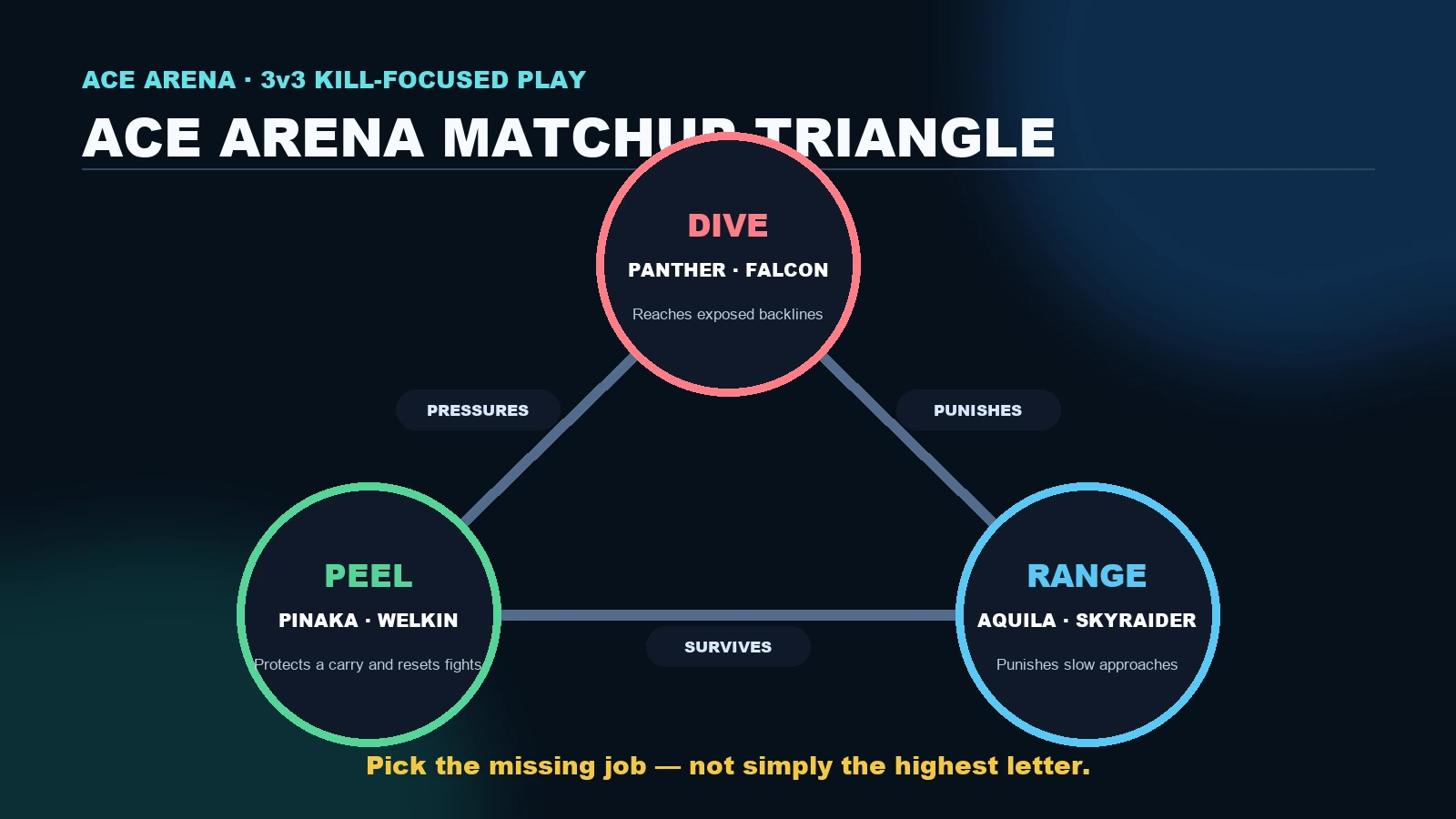
Ace Arena is 3v3 and kill-focused. With fewer teammates, every missed engagement matters more. Fast target access, burst, self-sufficiency, and the ability to reset after a kill become more valuable; slow area control and long sustain become less reliable.
Welkin and Stellaris — the top two established picks
Welkin remains the safest choice because it can force close-range situations and deny comfortable spacing. Stellaris climbs from A tier in VERGE to S tier in Ace Arena because the smaller team size rewards direct pressure, mobility, and the ability to finish a target before support can stabilize it.
Panther, Pinaka, and Falcon — three different win conditions
Panther creates a melee threat that the enemy must respect. Pinaka gives a team a durable pocket of cover and repair, which can decide an otherwise even 3v3. Falcon wins through angle creation: it can pull attention upward, punish an exposed sniper or support, and leave before a slower Striker can answer.
Pick the one that fills the missing job. A team with damage but no way to reach the enemy needs Falcon or Panther more than another backline gun. A team that already has a carry and frontline may gain more from Pinaka.
Do not overread Serenith's displayed win rate
Serenith shows an unusually high Ace Arena win rate in the retrieved snapshot, but it appears in only 45 matches. Welkin has 1,244 recorded matches in the same mode. A small specialist sample may come from experienced loyalists or coordinated teams; it is not enough evidence to crown Serenith S tier.
Norne, Alphard, Hel, Mikillja, and Freyr: why they are unranked
All five are real current Strikers, and several received recent official adjustments. They are unranked here only because the public tracker used for the tier tables excludes their IDs. “Unranked” means insufficient comparable data, not weak.
| Striker | Confirmed current information | Practical watch point |
|---|---|---|
| Norne | Official July notes increased High-Explosive Arrow damage. Recent community discussion emphasizes stealth, charged damage, and the Falcon matchup. | Potentially oppressive when uncontested, but matchup-sensitive. Do not blind-rank without comparable mode data. |
| Alphard | Received BREAK Override charge improvements in August and an extra Blast Cord during Override in September. | A mobile skirmisher worth testing after the new Override changes. |
| Hel | September changed its Override defense effect, increased close-range Long-range Emitter damage bonus to 75%, improved beam turning, and reset Deception Kit. | Its flexible range profile may be stronger than older lists suggest, but the new state needs clean samples. |
| Mikillja | September removed the movement penalty when Sling Grappler captures ultra-heavy units and increased Override energy gain from damage dealt and taken. | A frontline threat with a more forgiving Override cycle; exact tier still depends on mode and counterplay. |
| Freyr | Official July notes changed the fully charged Complex Shield release behavior. Recent players describe it as versatile but sensitive to aim and matchup. | Promising flexible pick, but player testimony is not a substitute for the missing public stats. |
Best Strikers for Mashmak and Operation STORM
We are not publishing a letter-grade Mashmak tier list from the current snapshot. The dataset contains only 1,530 matches, and several Strikers have tiny samples. Mashmak and the current Operation STORM activities also test different things from PvP: extraction safety, boss damage, sustain, travel time, modular weapons, and the ability to recover from a bad route.
For safe movement
Falcon is a natural route and disengage option. Mobility reduces time exposed between objectives and gives more ways to abandon a losing fight.
For boss damage
Inferno and Stego can exploit long damage windows. Their value drops if the route constantly forces movement or line-of-sight breaks.
For sustain
Tricera, Pinaka, and Luminae make mistakes less expensive. In co-op, survival and teammate recovery can be worth more than a theoretical damage ceiling.
For current PvE
Season 5 added Synchro Nexus and later expanded two-player access. Its rotating challenge modifiers can change which damage type or chassis is best, so check the active modifiers before locking a “best” pick.
Best Mecha BREAK Strikers for beginners
If you are new, do not start with the highest letter and ignore the job. Choose one simple job, learn the mode, then add a second Striker that covers your first pick's bad matchups.
| If you want to… | Start with | What to learn first |
|---|---|---|
| Fight on the objective | Welkin | Approach timing, target isolation, and when to activate the field. |
| Hold ground for the team | Tricera | Fortress positioning, shield angles, and when to leave a losing position. |
| Support without staying passive | Luminae | Target priority, mode switching, and surviving while helping teammates. |
| Play from the air | Skyraider | Energy management, safe altitude, and attacking from a second angle. |
| Learn high-mobility carry play | Falcon | Disengage discipline. A failed dive should not become a free death. |
For a role-first explanation without rankings, read the Mecha BREAK Best Strikers by Playstyle guide. If you still need the basic mode and control framework, start with the Mecha BREAK Beginner Guide.
Planning a cosmetic purchase?
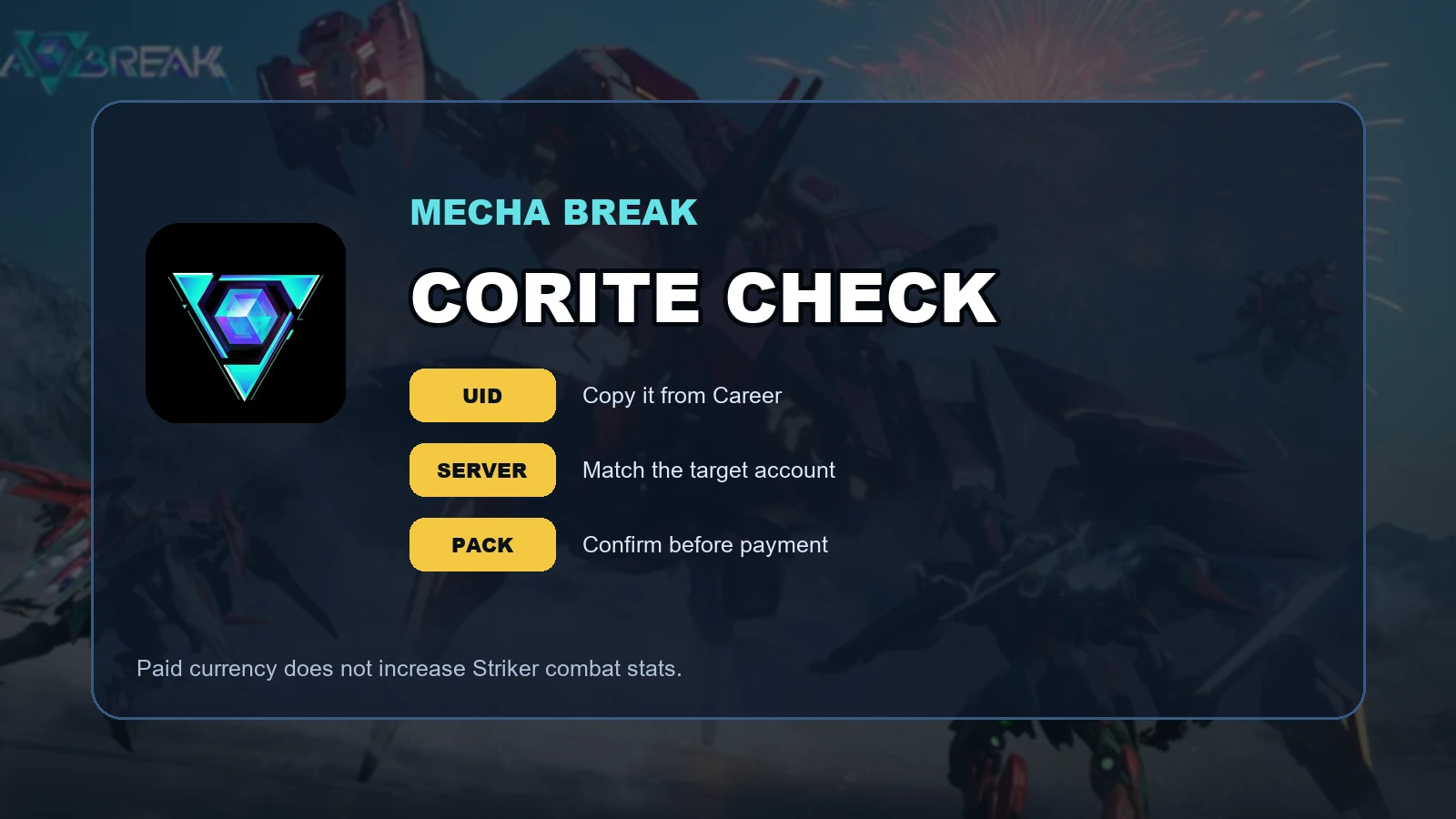
Corite is Mecha BREAK's paid currency for eligible store content; it does not make a Striker stronger in combat. If you decide to buy Corite, check the account UID, server, and selected pack before payment on the Mecha BREAK top-up page.
Final verdict
Welkin is the best single answer for players who want one established pick that works in both ranked PvP modes. For VERGE, build a wider pool around Luminae, Skyraider, Stego, Panther, Inferno, Falcon, or Stellaris. For Ace Arena, prioritize decisive 3v3 jobs: Stellaris for pressure, Panther for melee access, Pinaka for protection, or Falcon for aerial picks.
Do not treat the list as permanent. The August 18 update brought BREAK Override into ranked VERGE and Ace Arena, and the September 1 update changed its behavior across much of the roster. We will only give Norne, Alphard, Hel, Mikillja, and Freyr full letter grades after comparable public mode data becomes available.
FAQ
What is the best Striker in Mecha BREAK right now?
Welkin is the safest all-round answer in the public Operation VERGE and Ace Arena data retrieved on September 9, 2026. The best pick for one match can still change with the mode, map, team composition, and enemy counterpicks.
Is there one Mecha BREAK tier list for every mode?
No. VERGE rewards objective presence and 6v6 coordination; Ace Arena rewards 3v3 target access and finishing power; Mashmak and other Operation STORM activities add PvE, survival, progression, or extraction requirements.
Why are Norne, Alphard, Hel, Mikillja, and Freyr unranked?
The public tracker dataset used for the tables excludes those five Strikers. They are current playable choices, but assigning precise statistical tiers without comparable data would be misleading.
Is Stellaris better in Ace Arena than Operation VERGE?
The retrieved data supports that direction: Stellaris ranks much more strongly in the 3v3 Ace Arena snapshot. Its direct pressure and mobility fit the smaller, kill-focused format.
Which Striker should a beginner learn first?
Welkin is the clearest general recommendation. Tricera is easier if you prefer holding objectives, Luminae if you want support, and Skyraider if you want ranged aerial pressure.
Does Corite unlock stronger combat stats?
No. Corite is a paid currency for eligible store content and customization. Your Striker choice, positioning, teamwork, and execution decide combat performance.
Sources and data notes
- Official Mecha BREAK Steam news feed, including the August 18, August 21, and September 1, 2026 updates.
- MechaTracker Strikers, retrieved September 9, 2026. Third-party data; sampling window is not stated. The visible ranking code excludes five newer Striker IDs.
- Recent community discussion on current counterpicks, used only for qualitative context.