
Mecha BREAK Beginner Guide: Striker Roles, Game Modes, and Early Tips

If you are just getting started with this game, the easiest mistake to make is to immediately ask, “Which Striker is the strongest?” But from Manabuy’s perspective, what really determines your early-game experience is not whether you picked the so-called meta answer, but whether you first understand the basic rhythm of Mecha BREAK.
This is a mech combat game built around high-speed mobility, layered air-and-ground combat, and clear team role division. Players pilot Strikers and need to perform according to their role, battlefield objectives, and team needs across different modes, rather than treating it like a traditional stand-and-shoot shooter.
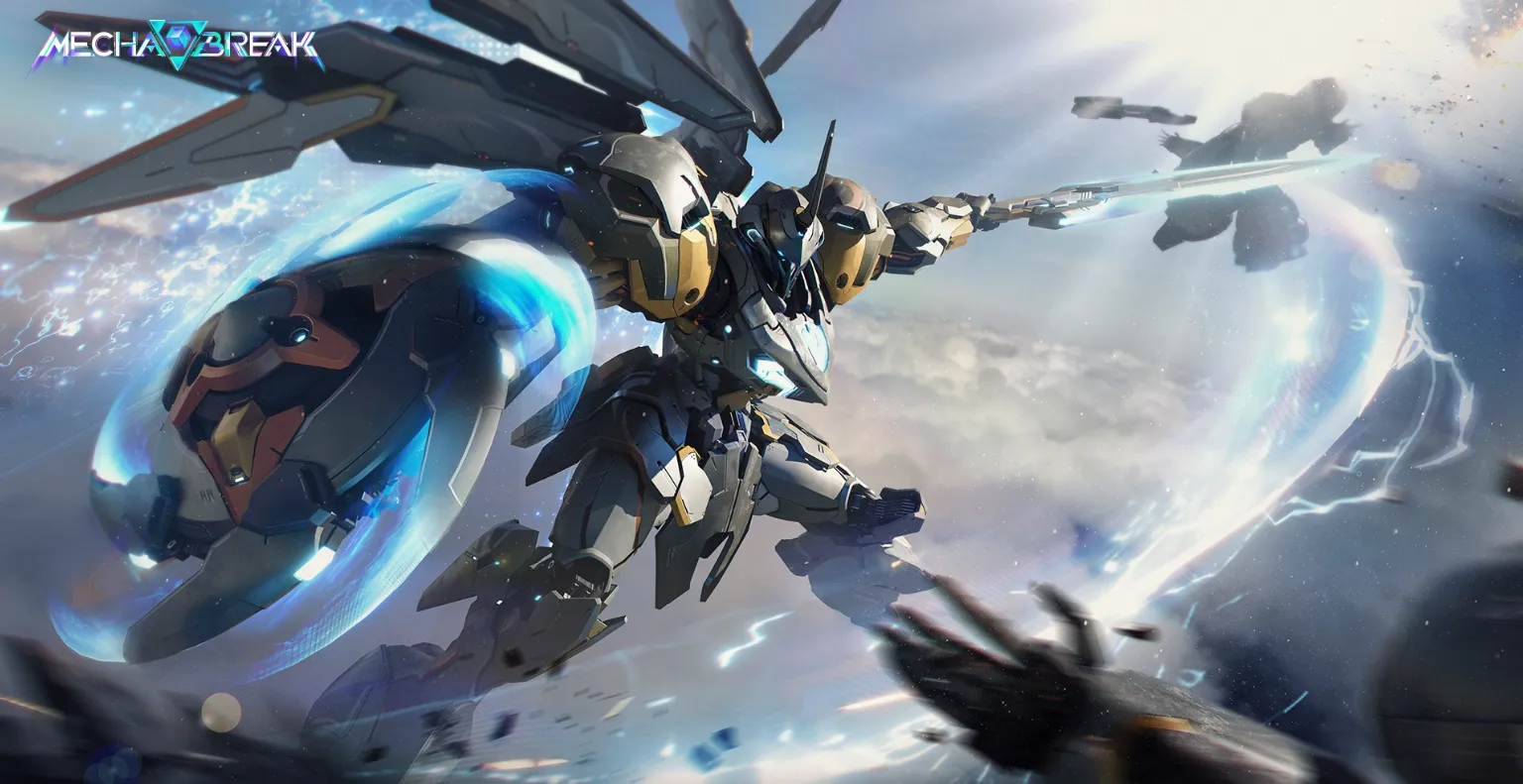
Your First Step as a Beginner: Strikers Have Different Roles
Understand the role first, then the playstyle
The mechs in Mecha BREAK are not just cosmetic variations. Strikers are divided into Attackers, Brawlers, Snipers, Defenders, and Supports. In other words, there are distinct directions such as offense, close-range suppression, sniping, defense, and support. For beginners, this means you should not choose a mech just because it looks cool. You should first ask yourself: which kind of battlefield role suits you better?
If you are just starting out, I would recommend beginning with one of two approaches:
One is to use a mid-range or close-range Striker with a clear function and higher margin for error, so you can first get used to the pace of battle;
The other is to pick a Support or Defender-type Striker with a well-defined role, so you can first learn the basic logic of team-based matches.
Do Not Treat Yourself Like the “Ace Damage Dealer” Right Away
When many players first enter the game, they instinctively think mech combat is simply about “whoever aims better wins.” But Mecha BREAK officially emphasizes high-speed movement, melee blocking and parrying, ranged fire suppression, and objective-based modes, which shows that this is not a game purely about raw aim.
Whether you can reposition in time, disengage from a bad position, and know when to push with your team often matters more than how much damage you deal in a single exchange.
The Focus of the Three Modes Is Completely Different
Ace Arena: Learn the tempo of small-scale fights first
Ace Arena is a 3v3 mode. Because there are fewer players, every mistake gets amplified. For beginners, the biggest value of this mode is not just practicing mechanics, but quickly understanding what “engagement timing” and “focus fire awareness” really mean.
If you always dive too deep by yourself or use your skills too early, 3v3 will expose those problems very quickly. The official description defines it as a fast-paced, decisive small-scale battle, which also means you need to learn as early as possible: watch your teammates’ positions, identify the enemy’s key firepower point, and do not throw yourself away first when you are not sure.
Operation VERGE: Objectives matter more than kills
The 6v6 mode, Operation VERGE, is closer to a true team battle. This is a mode built around objective progression and team strategy. The easiest mistake beginners make here is becoming obsessed with chasing enemies, only to lose the point, the resources, and the momentum of the push.
You need to remember one thing:
In 6v6, forcing the enemy away from a key area is often more valuable than making sure you finish the kill. As long as the objective is not secured, kills are not the only answer.
Operation STORM: It is not about fighting randomly, but knowing how to extract with resources
Operation STORM, the PvPvE mode, follows a completely different logic. Players need to gather resources in a large zone, take down high-value targets, enter restricted areas, watch out for other squads, and safely extract before the expanding pulse storm closes in.
So when beginners play this mode, the most important thing is not “charge whenever you see someone,” but first understanding these three questions:
Should I take this fight right now?
Is this engagement actually worth it?
Do I have a real chance to get these resources out safely?
If you do not build this way of thinking first, it becomes very easy to turn PvPvE into a situation where “the fight feels exciting, but the rewards are low.”
The Three Fundamentals Beginners Should Practice Most
First, learn how to stay alive
Early on, beginners should force themselves to build two habits:
First, after one round of damage output, immediately reposition;
Second, when you realize multiple enemies are focusing you, disengage first instead of trying to brute-force the fight.
Many players do know how to deal damage. The real problem is that they are standing in the wrong place at the wrong time.
Second, understand your own role clearly
If you are a Sniper or backline damage dealer, do not always try to be the first one in.
If you are a frontline suppressor or a melee Striker, do not play like a passive survivor hiding in the back.
If you are playing a Support role, you need to pay more attention to your teammates’ status, formation integrity, and the overall sustain of the teamfight.
Mecha BREAK already has very clear role division. If you perform the wrong job, even great aim will feel awkward and ineffective.
Third, learn to make decisions based on the mode objective
One of the clearest differences between beginners and experienced players is that experienced players constantly ask themselves: “Does this action actually match the current objective?”
In 3v3, you need to watch the numbers advantage and the focus-fire window;
In 6v6, you need to watch the point and the pace of the push;
In PvPvE, you need to judge resource value and extraction risk.
Once you start playing with this mindset, your improvement speed will become much faster.
Do Not Rush Your Growth Path. First Master Your Main Striker
Do not switch Strikers too often at the start
Mecha BREAK features multiple Strikers as well as customizable mech and pilot appearances, and the official presentation also emphasizes personalization as an important part of the experience. This system is definitely appealing, but for beginners, the biggest mistake early on is switching to a different Striker every couple of matches.
A better approach is:
First choose one main Striker whose role you can understand consistently, and play it for a while;
Use it across 3v3, 6v6, and PvPvE so you can feel the differences between those modes;
Only after you truly understand what this Striker is weak against, where it is strong, and when it should disengage, should you expand to a second or third Striker.
Customization is fun, but do not get the priorities backward
The official game really does make mech and pilot customization an important selling point. Colors, insignias, patterns, and visual details can all be adjusted, and that is one of the reasons Mecha BREAK has such a strong identity.
But for beginners, what really affects the early-game experience is still not the paint job. It is whether you have already learned:
how to enter a fight, how to reposition, how to judge whether to keep fighting, and how to work with your team.
Build your fundamentals first, then enjoy personalization later. That will make the experience much smoother.
Conclusion
As long as you first understand Striker roles, the objective differences between the three modes, survival and repositioning awareness, and team responsibilities, your learning speed will become much faster.
Mecha BREAK is currently being shaped around exactly these core ideas: fast-paced combat, layered air-and-ground firefights, clear Striker role division, and strategic choices built around different modes.
Once you can consistently play your main Striker well and know when to push and when to fall back, it becomes much more reasonable to think about deeper resource planning and long-term progression. At that stage, whether you want to expand your collection, personalize your appearance, or manage your growth more efficiently, you can use Mecha BREAK Top Up to obtain the relevant resources.



Copyright © FUTURE OUTLOOK TECHNOLOGY LIMITED.Company Registration No.: 77374965 All rights reserved.UNIT 135,1/F.,143 WAI YIP STREET,KWUN TONG HK