
Mecha BREAK Best Strikers Guide: Which Striker Fits Your Playstyle Best

If you have recently been searching for mecha break best strikers, you have probably already noticed one thing: this is not the kind of game where you can simply pick the number one meta Striker and win automatically. From Manabuy’s perspective, Mecha BREAK is more like a mech combat game where Striker role, mode understanding, and team coordination work together to determine performance. It is a multiplayer mech action shooter featuring both aerial and ground combat, as well as clear role division across different types of Strikers, so the “best Striker” is usually not judged by damage alone, but by whether it can consistently fulfill its role.
So which Strikers are more worth learning first? Which mechs are better suited to specific types of players? Let’s take a closer look below.
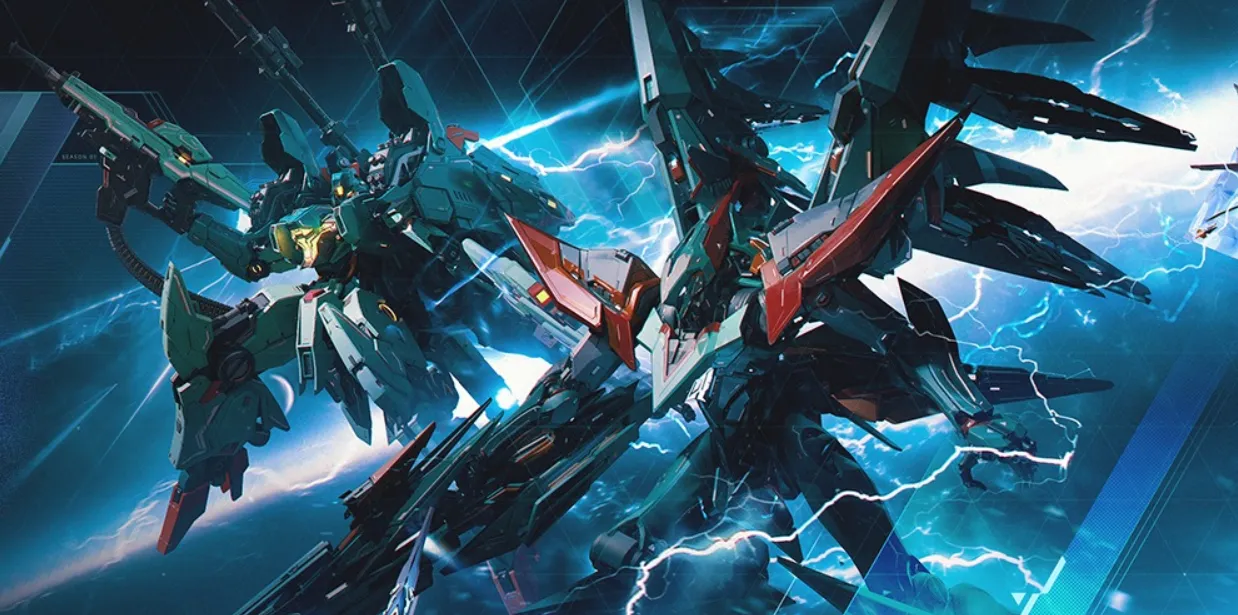
Strikers Worth Prioritizing at the Current Stage
Practical recommendation table
| Recommendation Level | Striker | Best For | Reason for Recommendation |
|---|---|---|---|
| Top Priority | Welkin | Players who like frontline pressure and close-range brawling | Strong shielding and suppression tools, with a very complete overall kit |
| Top Priority | Tricera | Players who prefer a steady playstyle focused on holding ground and pushing objectives | Excellent field presence and high value in objective-based battles |
| Top Priority | Pinaka | Players who enjoy teamwork and support gameplay | Repair, cover, and protection tools are highly practical |
| High-Potential Recommendation | Aquila | Players who like long-range damage and vision control | Highly mobile sniper that can apply constant pressure from safe positions |
| High-Potential Recommendation | Panther / Falcon | Players who enjoy high-mechanics, fast-tempo gameplay | Strong burst and engage potential, but much more dependent on player skill |
The core logic of this table is not “who has the highest stats,” but rather “who can perform more consistently across most matches.” Welkin, Tricera, Pinaka, and Aquila are all highly recognizable Strikers with very clear roles; by contrast, Strikers like Panther and Falcon have very high ceilings, but usually demand more mechanics and decision-making.
Why Welkin Is One of the Best Strikers to Practice First
Its frontline suppression kit is extremely complete
Welkin is a Striker built around a heavier melee suppression style. It has skills such as Dueling Forcefield, Jamming Pulse Ejector, and Defense Field, all of which clearly combine offense and defense, while its heavy melee weapon allows it to keep creating threats in direct brawls. This kind of design means it is not just capable of tanking damage, but can also genuinely disrupt the enemy frontline.
It is great for players who want to first understand direct teamfights
For many beginners and average players, Welkin’s biggest value is not that it looks the coolest or is the most popular, but that its role is extremely clear:
Your job is to hold space, force movement, divide the enemy, and create frontal pressure.
This kind of Striker is especially well suited for building your understanding of Mecha BREAK teamfight tempo. You do not need to start out by constantly making ultra-tight movement plays like a high-mobility Striker. As long as you learn when to push, when to pull back, and when to activate your skills to protect yourself and your teammates, you can quickly make an impact.
Why Tricera Is So Popular in Objective Modes
Its value is not only damage, but its ability to hold ground
In public descriptions, Tricera is categorized as an ultra-heavy Defender, featuring a classic objective-defense and fire-suppression kit built around Gatling Gun, Heavy Gatling Gun, Fortress Form, and Howitzer. It is not a flexible roaming Striker, but in situations where you need to hold a point, anchor the frontline, and consistently absorb pressure, its presence is extremely strong.
If you prefer a steadier playstyle, Tricera often feels better than flashy high-skill Strikers
Many players naturally lean toward high-mobility or high-burst Strikers, but after playing longer, you begin to realize that in team modes, the hardest Strikers to replace are often the ones that can stabilize the battlefield. Tricera belongs to that category. It is ideal for players who do not want to put all their attention into extreme mechanics, but would rather help the team win through positioning, fire coverage, and objective defense. Especially in objective-based modes, a Striker like Tricera that says, “I’m here, and you are not getting through easily,” already creates value by existing.
Pinaka Is Easy to Underrate, but Actually Very Worth Learning
Support is not just an accessory in Mecha BREAK
Pinaka is a Medium Support that can deploy shields, block off areas, and provide crucial repair support to damaged Strikers, making it the kind of support unit that can truly control the battlefield. Official social posts also describe it as a Striker that not only maintains and covers teammates, but can also reshape the pace of combat through defensive weapons and airdropped cover.
The more team matches you play, the more obvious Pinaka’s value becomes
In many games, support-type units are often misunderstood as “low damage” or “not exciting,” but Mecha BREAK is not a game purely about personal kills. In many situations, a Striker like Pinaka that can repair, protect, and control areas will actually make the whole team function more smoothly.
If you are the type of player who pays attention to teammate positioning and knows when to restore condition or keep the frontline going, then Pinaka is a Striker that is very worth practicing over the long term. It may not be the flashiest, but in many matches, it will be one of the most comfortable presences your teammates can have beside them.
Why Aquila Fits Players Who Like Long-Range Pressure and Control
This is not a normal “stationary sniper”
Aquila is described as a highly mobile sniper-type Striker with hovering capability, and it also carries systems such as Multi-lock Radar that expand its lock-on and battlefield control potential. This Striker is equipped with heavy artillery capable of eliminating enemies from long range. In other words, Aquila’s strength is not just “shooting from far away,” but consistently creating threat and movement pressure from a safer position.
It suits players who know how to position and manage their camera angles
Aquila is not a good fit for players who only want to charge straight ahead without thinking, but if you already enjoy ranged roles, are good at finding firing angles, and know when to reposition, it can be extremely attractive. Its advantage is that you do not always need to stand on the most dangerous frontline to exert strong pressure on the enemy. Its weakness is that if your positioning becomes too static, or you do not know how to shift targets, Aquila’s upper limit becomes much harder to reach.
Panther and Falcon: High Ceiling, but More for Players Who Really Know How to Use Them
Panther is more like a melee spearhead designed for focused breakthroughs
Panther is defined as a Medium Brawler that uses a massive lance to charge, break through single targets, and bypass shields, making it very suitable for players who like close-range pressure. This kind of design naturally gives it powerful burst and threat potential, but at the same time it also means: you must know exactly when to charge, who to charge, and how to disengage afterward.
Falcon leans more toward high mobility and fast-paced entry plays
In public Striker ability summaries, Falcon has consistently been presented as one of the representative Strikers of the high-mobility path. Strikers of this type usually demand stronger repositioning, engage timing, and survival judgment from the player, so although they may “look very strong,” they are not always ideal as a first main Striker for everyone. For players who already have some mechanical foundation and enjoy fast rotations and roaming picks, Falcon’s appeal becomes much greater.
How to Choose the Striker That Fits You Best
Beginners should first look at whether the role is clear
If you are just starting out, I would recommend that you do not begin by asking, “Which one is the strongest?” Instead, ask:
Which Striker is most likely to help me learn this game well?
By that standard:
• If you want to learn frontal teamfights, start with Welkin
• If you want to learn point defense and field control, start with Tricera
• If you want to learn support and team coordination, start with Pinaka
• If you want to learn ranged control, start with Aquila
• If you want to play high-burst melee, then move on to Panther
This kind of selection method is more effective than blindly chasing the so-called number one meta pick, because it matches what you will actually be doing in real matches.
Most players are better off specializing in one or two Strikers first
The playstyles of Mecha BREAK Strikers are very different from each other, so in the early stage, the biggest mistake is not really “choosing the wrong one,” but rather trying a little bit of everything without truly understanding any of them.
A more reasonable approach is to choose one main and one secondary Striker first:
For example, Welkin + Pinaka, or Tricera + Aquila.
This allows you to quickly build your understanding of matches, while also giving you a backup option when different team needs arise. The official game has always treated Striker differentiation as one of its core selling points, so this kind of playstyle is naturally better suited to a “master first, expand later” approach.
Conclusion
If you only look at the question of mecha break best strikers, then the ones currently most worth learning and practicing first are indeed Welkin, Tricera, Pinaka, and Aquila. What they share is not that their numbers are absolutely unbeatable, but that their roles are clear, their practical value is stable, and they can help you understand the true tempo of Mecha BREAK much more quickly.
And once you have already found your own preferred style, whether that is frontline brawling, long-range suppression, or more team-oriented support, then making more detailed resource plans and Striker investments will become much smoother. At that stage, when you start looking into Mecha BREAK Top Up-related content, you will have a much clearer understanding of what you actually need and which investments are really worth making.



Copyright © FUTURE OUTLOOK TECHNOLOGY LIMITED.Company Registration No.: 77374965 All rights reserved.UNIT 135,1/F.,143 WAI YIP STREET,KWUN TONG HK