
HSR Team Archetypes Guide: How To Build Better Teams

Quick answer: Strong HSR teams are built around jobs: a damage plan, support or debuff value, skill point economy, and enough sustain to keep the plan alive. Choose the missing role before chasing another banner character.
Current-use note
Team examples and mode rules change over time. Use the archetype logic to understand roles, then match the final team to your roster and the enemies in front of you.
A strong Honkai: Star Rail team is not just four powerful characters placed together. It is a working plan. The team needs a way to deal damage, a way to improve that damage, enough skill points to keep acting, and enough survival to finish the fight. Once you understand those jobs, team recommendations become much easier to judge.
Archetypes are useful because they explain why a team works. Hypercarry, DoT, Break, follow-up, dual DPS, and F2P teams all ask different questions. Who creates the damage? Who enables it? Who keeps the team alive? Who spends skill points? Who can basic attack without breaking the rotation? The answers matter more than copying a lineup from a screenshot.
The Basic Team Formula
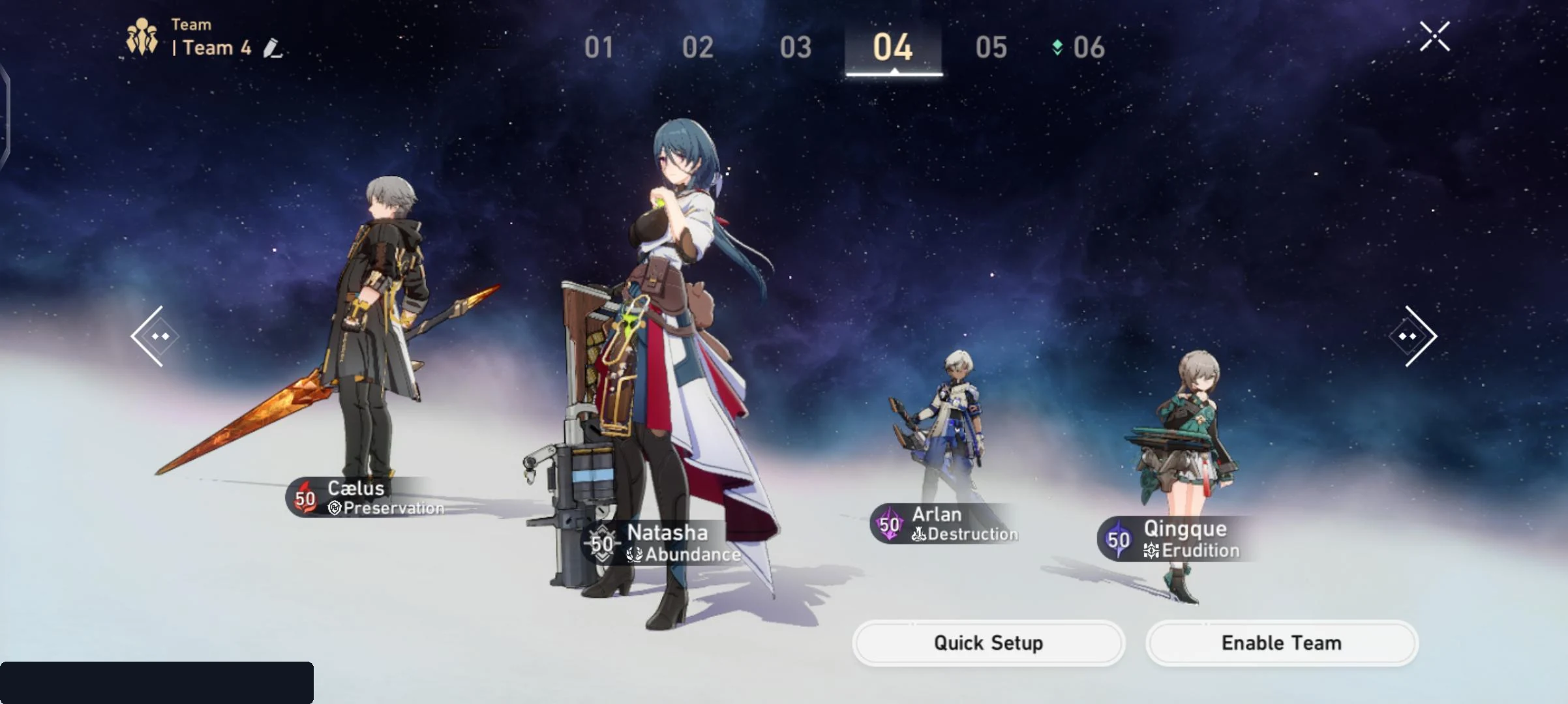
| Slot | Job | Common Examples | Question To Ask |
|---|---|---|---|
| Carry | Creates most of the damage, Break pressure, DoT output, or follow-up value. | Hypercarry, DoT core, Break DPS, FUA core | What does this team do to win? |
| Amplifier | Raises damage, speed, energy, vulnerability, defense reduction, or turn flow. | Harmony or Nihility support | Who makes the carry better? |
| Flex | Adds second damage, utility, weakness coverage, debuffs, or another buff. | Sub-DPS, debuffer, second support | What problem does this fight require? |
| Sustain | Keeps the team alive and stable. | Healer, shielder, preservation, abundance | Can the team survive long enough? |
Skill Point Economy
Skill point economy is one of the most important parts of team building. A team can look strong on paper and still feel terrible if every character wants to use Skill every turn. If the carry spends skill points constantly, the supports and sustain must either generate points, take basic attack turns, or provide enough value with fewer skill uses.
Before blaming relics or damage, watch the rotation. Does the support need Skill every turn to keep the buff active? Does the sustain spend too often under pressure? Does the second damage dealer compete with the main carry? If the team runs out of skill points, the archetype may be correct but the characters may not fit together yet.
Skill point positive characters can be extremely valuable because they make expensive carries easier to use. A basic attack from a support is not wasted if the support's buff remains active and the carry gets the point needed for a high-value Skill.
Main HSR Team Archetypes
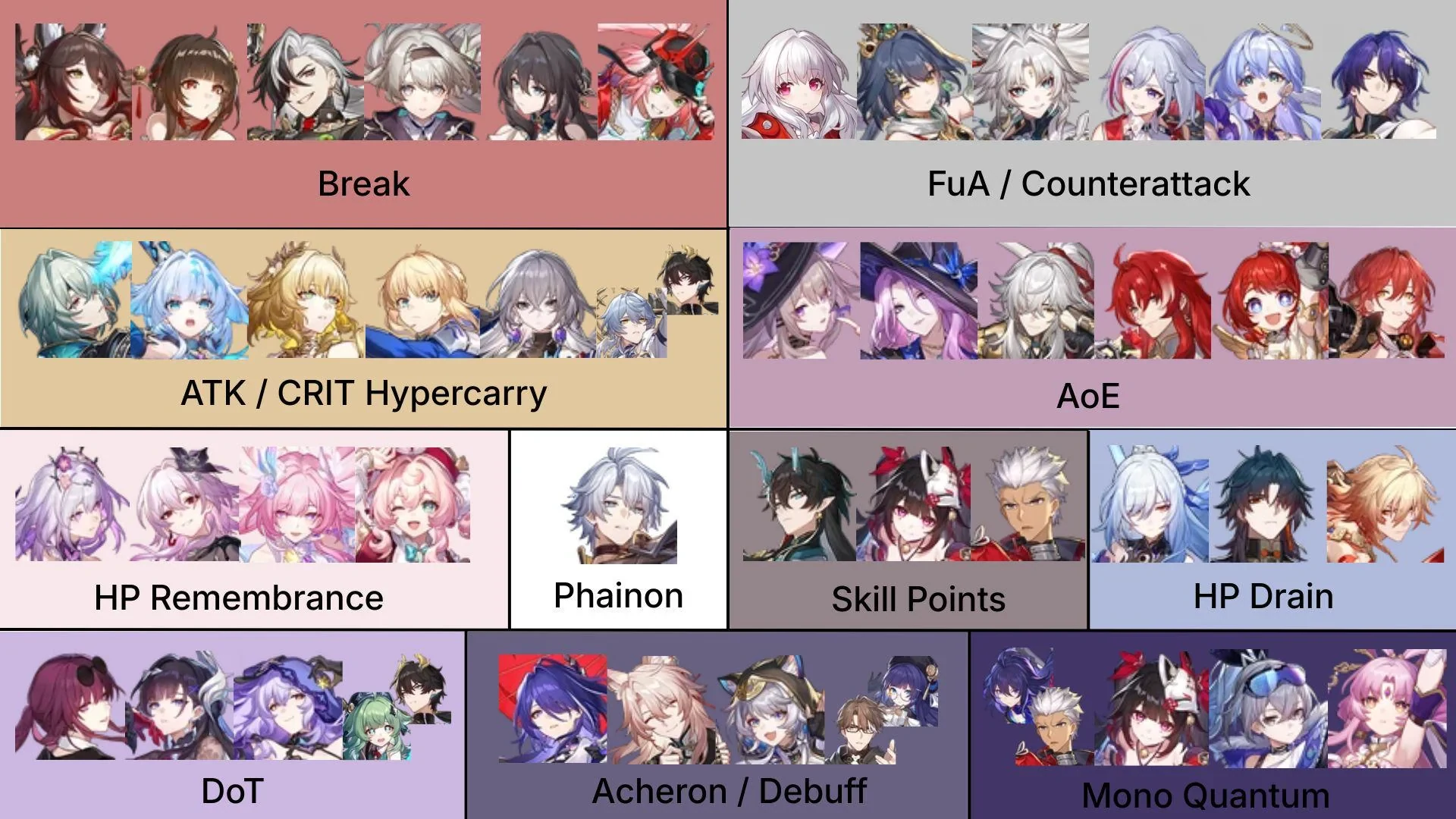
Hypercarry teams put most resources into one damage dealer and stack supports around that unit. The goal is simple: make one character hit as hard and as often as possible. Hypercarry teams are easy to understand and often beginner-friendly because the upgrade priority is clear. The risk is that the team can struggle if the carry is resisted, poorly matched to enemy weakness, or missing key support conditions.
DoT teams win through damage-over-time application, detonation, and sustained pressure. They often care about debuff uptime, enemy turns, speed, and multiple characters contributing damage. DoT teams can feel less explosive than a single crit carry, but they become powerful when the engine is complete and the team keeps effects active.
Break teams focus on weakness break, break effect, turn control, and mechanics that reward breaking enemies. These teams care deeply about enemy weakness, toughness bars, speed, and support tools that increase Break output. A Break team can look weak into the wrong enemies and excellent into the right ones.
Follow-up teams trigger attacks outside normal turns. They often scale with frequency, counters, marks, or ally actions. The key question is whether the team can trigger follow-ups often enough to justify the slots. A follow-up unit without the right trigger partners may feel inconsistent.
Dual DPS teams split damage between two attackers. They can be strong when both damage dealers share buffs well or cover different enemy needs. They can also become skill point hungry. Dual DPS works best when at least one damage dealer is efficient or when the supports amplify both units at the same time.
Hypercarry Teams
A hypercarry team usually includes one main DPS, one or two amplifiers, and one sustain. The carry receives most buffs, most relic investment, and most field priority. This structure is clean because each character has a job. The carry deals damage. The supports increase that damage. The sustain keeps the fight stable.
The main weakness is overdependence. If the carry cannot break the enemy, is controlled, lacks the right element, or falls behind in relics, the whole team suffers. Hypercarry teams also need supports that match the carry's damage type, turn pattern, and stat needs. A support can be strong in general but still not ideal for a specific carry.
DoT Teams
DoT teams revolve around applying and improving damage over time. The team may need multiple DoT sources, detonation tools, vulnerability, defense reduction, speed, and enough sustain to let the damage tick. DoT teams care less about one huge crit and more about keeping the engine active.
When building DoT, check application reliability first. If the key DoT misses or falls off, the team loses its identity. Then check speed and action flow. DoT teams often benefit from acting frequently and keeping enemies under effects. Finally, check whether the support slots improve the whole engine rather than only one character.
Break Teams
Break teams are matchup-sensitive. They shine when the enemy can be broken and when the team can attack the right weakness often enough. Break effect, weakness application, speed, and action manipulation all matter. A Break unit with poor weakness coverage may need teammates who solve that problem.
Before investing in a Break team, look at the modes you want to clear. If those enemies frequently share the team's weakness coverage, the investment can feel excellent. If not, you may need a second team plan. Break teams reward preparation, but they are not always universal without the right roster.
Follow-Up Teams
Follow-up teams need triggers. Some follow-up attacks happen after ally actions, enemy attacks, marks, counters, or specific character mechanics. The team should be built to activate those triggers naturally. If the follow-up unit attacks rarely, the team is not using the archetype properly.
Follow-up teams also care about buffs that last through extra attacks. A buff that only affects one action may not cover all the damage. A support that improves repeated attacks, team-wide damage, or vulnerability can be more valuable than a narrow buff that misses part of the follow-up chain.
F2P Team Building
F2P teams should start with role coverage. A free or lower-rarity unit that completes the team can be better than a premium unit that leaves the roster without sustain, debuffs, or skill point stability. Do not measure a team only by rarity. Measure whether the jobs are covered.
Build one reliable team first. Then build the second team for modes that require two sides. Spread resources only when the first team can already handle routine content. A complete team with average gear clears more than several exciting characters with missing traces and weak relics.
F2P planning also changes banner value. If you already have several carries but lack sustain, another DPS may feel fun but fail to improve the account. If you have one universal support that every team wants, a second support can unlock more flexibility than a Light Cone upgrade.
Roster Audit Before Your Next Pull
Before pulling a new unit, list your current carries, supports, debuffers, sustain options, and teams that already clear routine content. Then identify the missing job. The missing role matters more than the newest character label. A roster with no sustain needs a different pull plan from a roster with weak damage.
Use archetypes as a diagnosis tool. If your hypercarry team fails because the carry dies, the next upgrade may be sustain. If a Break team fails because enemies do not share weakness, you may need coverage. If a DoT team fails because effects miss, you may need reliability. If every team runs out of skill points, you may need more efficient supports.
| Roster Question | What It Tells You |
|---|---|
| Do I have two usable sustains? | If no, a defensive pull may improve more teams than another DPS. |
| Do my supports move between teams? | Flexible supports raise account value across modes. |
| Can my teams manage skill points? | Poor economy can break an otherwise strong lineup. |
| Do I cover enemy weaknesses? | Weakness coverage can matter more than copying one lineup. |
| Which team fails most often? | The failure point usually reveals the missing role. |
How To Choose Your Next Pull
Choose the next pull by role gap. If you need a carry, ask which archetype you want to build. If you need a support, ask which teams that support improves. If you need sustain, ask whether the unit can stabilize both current and future teams. If you want a Light Cone, ask whether the character already has enough team support to justify the upgrade.
A banner is more valuable when it solves more than one problem. A universal support can improve several teams. A sustain can unlock two-side content. A carry can open a new archetype if the account already has the support pieces. A narrow upgrade can still be worth it, but only when the account is ready for that level of specialization.
Common Team Building Mistakes
The first mistake is using four favorites without jobs. Favorites are important, but the team still needs damage, support, skill point economy, and survival. The second mistake is copying a team without the relics, traces, speed, or Light Cones that make it work. The third mistake is ignoring enemies. Weakness, mechanics, and mode scoring can change which archetype performs best.
The fourth mistake is pulling a new carry while the account lacks support or sustain. Carries are exciting, but they need a team. If two teams already have damage dealers but neither can survive or maintain buffs, support and sustain upgrades may create more progress.
Match Teams To The Mode
Different modes reward different team behavior. Some fights reward fast single-target damage. Others reward wide damage, repeated actions, breaking enemies, or clearing waves efficiently. A team that feels excellent in one mode can feel average in another. Before changing the roster, check whether the team is failing because the archetype is wrong for the mode.
For wave-based content, area damage, frequent actions, and flexible targeting can matter more than one huge hit. For boss-focused content, single-target damage, break timing, debuff uptime, and survival may matter more. For modes with unusual scoring, the best team may be the one that matches the scoring rule rather than the team with the rarest units.
This is also why a second team should not be a weaker copy of the first. If one side uses hypercarry, the other side might need Break, DoT, follow-up, or a different element to handle enemies. Building multiple archetypes gives the account more answers when the mode changes.
When To Replace A Team Member
Replace a team member when the job is not being done. If the sustain cannot keep the team alive, upgrade sustain before blaming damage. If buffs fall off before the carry acts, fix support speed or choose a better amplifier. If the team runs out of skill points, add a more efficient unit or change the rotation. If enemies resist the main damage plan, bring better weakness coverage.
Do not replace a unit only because a newer option exists. A familiar support with good traces, relics, and speed tuning can outperform a new unit that is barely built. New characters are most valuable when they solve a specific problem your current roster cannot solve cleanly.
More HSR Guides For Your Next Step
Use these guides to check banner timing, build priorities, resource farming, and pull value before spending Stellar Jade or paid currency.
FAQ
What is the safest HSR team archetype?
Hypercarry with two supports and one sustain is often the easiest structure to understand, but the best option depends on your roster and the mode.
Can F2P teams clear hard content?
Yes, but F2P teams need role coverage, careful upgrades, and mode-specific planning.
Should every team have a sustain?
Most general teams should. Advanced clears may drop sustain for speed, but that is not the default plan for most accounts.
Is dual DPS better than hypercarry?
It depends on skill point economy, shared buffs, enemy layout, and the characters involved. Dual DPS is strong when both damage dealers receive value without starving the team.
How do I know what to pull next?
Find the role that blocks progress most often. Missing sustain, weak support, poor weakness coverage, and bad skill point economy are usually more important than banner hype.


Copyright © FUTURE OUTLOOK TECHNOLOGY LIMITED.Company Registration No.: 77374965 All rights reserved.UNIT 135,1/F.,143 WAI YIP STREET,KWUN TONG HK