
HSR Relic Farming Priority Guide: When To Farm and What To Keep

Quick answer: Do not start relic farming by chasing perfect substats. Build the character shell first, secure important traces, farm correct main stats, then improve set bonuses and substats. A correct main stat on a mixed set often beats a full set with the wrong stats.
Current-use note
Relic sets, planar ornaments, and character kits can change. Use this as a priority framework, then check the live set effects and character kit before spending Fuel or large amounts of Trailblaze Power.
Relic farming is one of the easiest places to waste Trailblaze Power in Honkai: Star Rail. The rewards are random, the perfect piece is rare, and a single domain can consume days of energy without producing a visible upgrade. A strong farming plan protects your account from that randomness by putting deterministic upgrades first and relic perfection last.
The simple rule is: build the unit, then polish the unit. Character levels, Light Cone levels, and key traces create the foundation. Main stats create the usable build. Set bonuses and substats refine the build. If you reverse that order, you can end up with beautiful relics on a character who still lacks the base stats or trace scaling needed to perform.
The Priority Ladder
| Stage | Spend Power On | Stop When | Why |
|---|---|---|---|
| 1 | Character level and Light Cone level | The unit is not badly underleveled. | Relics cannot replace missing base stats. |
| 2 | Important traces | The role-defining abilities and major traces are usable. | Trace upgrades are predictable. |
| 3 | Correct main stats | Body, feet, sphere, and rope match the role. | Main stats create the build shape. |
| 4 | Practical set bonuses | You have a useful 2-piece, 4-piece, or mixed setup. | Set value depends on the kit. |
| 5 | Substat optimization | Only after the build can clear content. | Perfect rolls are the final layer. |
Main Stats Before Set Bonuses
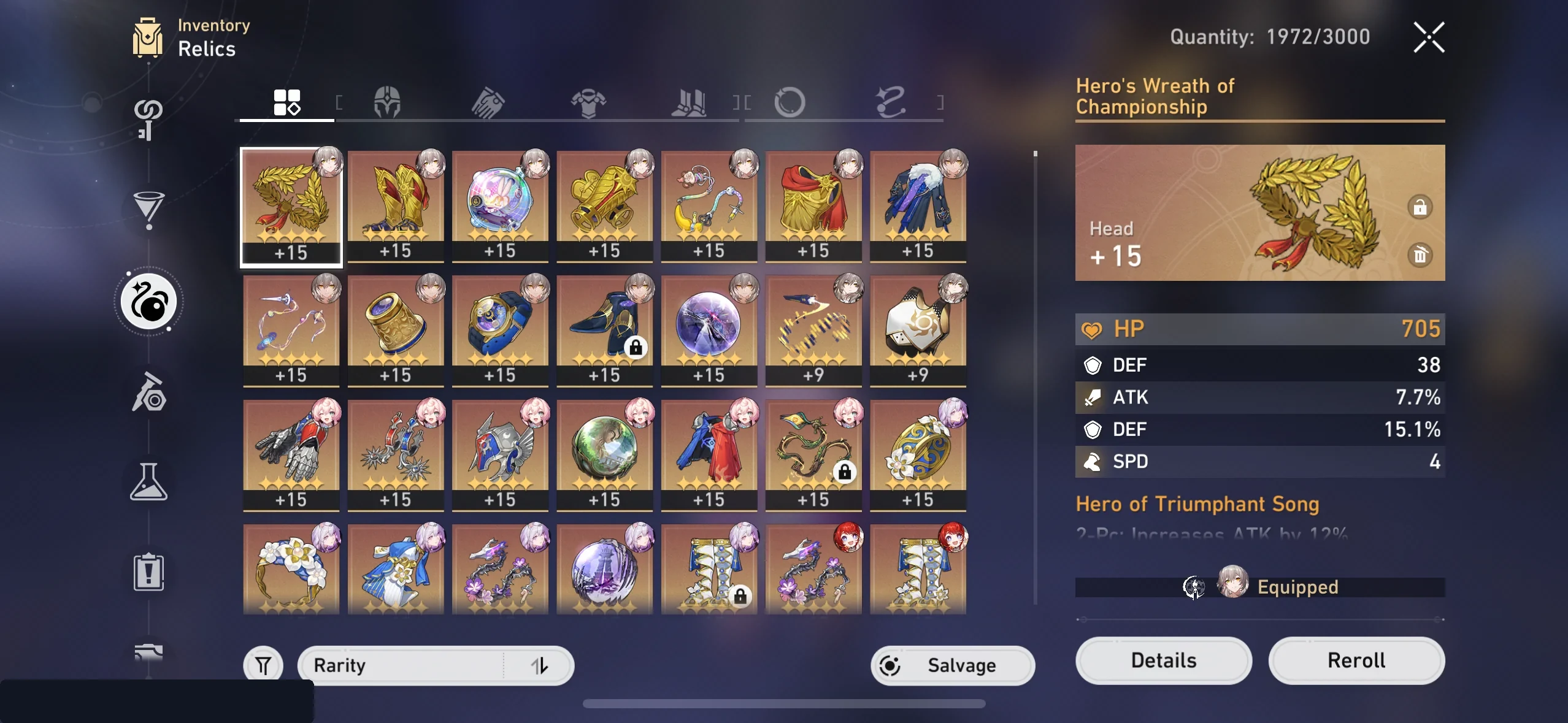
Main stats matter because they decide what the character is actually doing. A damage dealer with the wrong body or feet can lose more output than a set bonus can recover. A sustain without enough HP, defense, healing, speed, or effect resistance can fail the team even if the set looks correct. A support without enough speed or energy can break rotation timing.
This is why mixed relic sets are often acceptable during progression. A two-piece bonus plus correct main stats can outperform a full four-piece set with poor stats. Do not let a full set trick you into wearing a bad build. The game checks whether the character survives, acts, breaks, buffs, debuffs, and deals damage. It does not reward cosmetic neatness.
Rare main stats deserve patience. Speed boots, energy regeneration ropes, role-specific spheres, and unusual build pieces can be worth keeping even with average substats. They may unlock a character now and become a bridge piece for another character later.
When To Farm Relics Hard
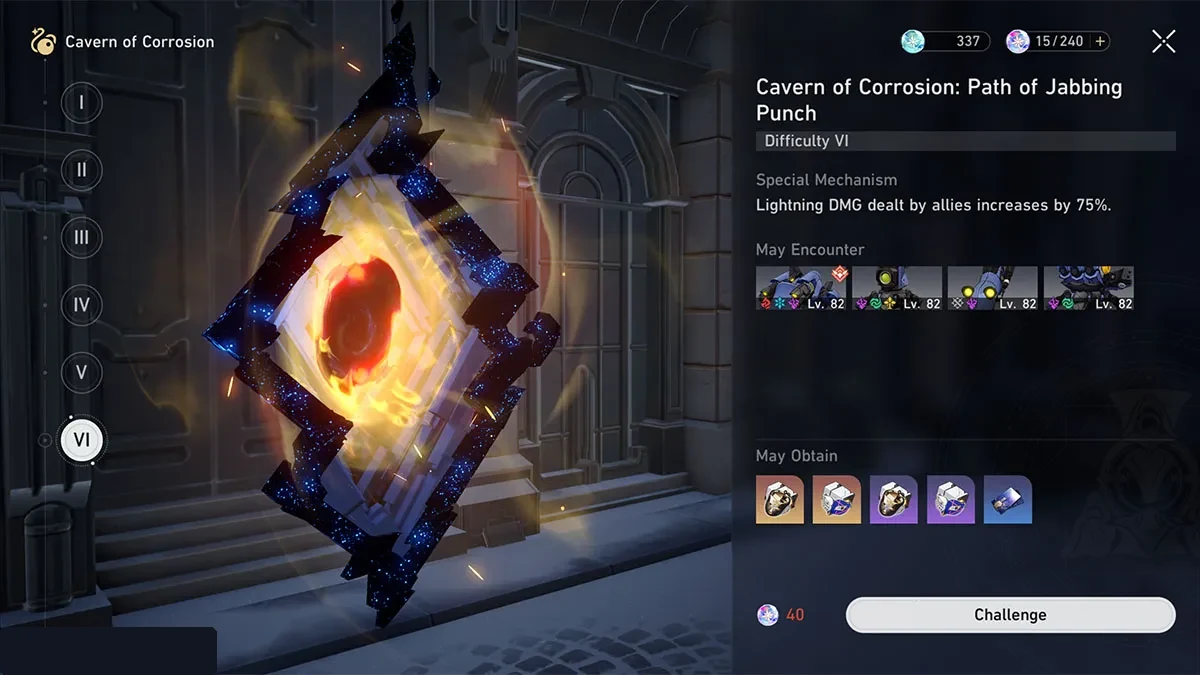
Heavy relic farming makes sense after deterministic upgrades are in a good place. If your main carry is underleveled, the Light Cone is behind, or a core trace is missing, spend energy there first. Relic farming becomes more valuable once the character can actually convert better pieces into better clears.
A good time to farm hard is when one domain benefits multiple characters. If both relic sets are useful or one set can supply flexible two-piece bonuses, the domain has stronger account value. If a domain only helps one character and the other set is useless for your roster, consider whether a mixed set, synthesis, or another upgrade path would be more efficient.
Fuel should be treated carefully. Using Fuel to finish a build before an important mode reset can be reasonable. Spending Fuel because a piece rolled badly is usually a trap. Randomness does not become kinder just because the account is frustrated.
Cavern Relics And Planar Ornaments
Cavern relics usually define the visible set structure: body, hands, head, and feet. Planar ornaments add sphere and rope decisions. Both matter, but they solve different problems. A damage dealer may need elemental damage, attack, crit, speed, break effect, or energy depending on the kit. A support may care more about speed, energy, effect hit rate, or survivability.
Do not farm planar ornaments only because the set bonus looks strong. The main stat on the sphere and rope can matter more than the ornament effect. An energy rope that fixes a support rotation can be worth more than a theoretically better set with the wrong rope. A correct elemental sphere can carry a build while you wait for better substats.
When farming ornaments, think about team behavior. Does the character need to act before the carry? Does the ultimate need to line up with a damage window? Does the sustain need speed to recover skill points or emergency healing? Those questions decide which pieces are worth keeping.
What To Keep And What To Feed
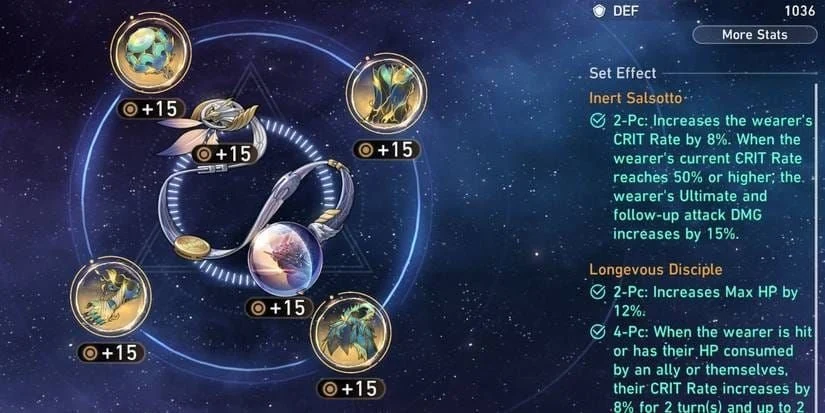
Keep pieces that solve a real role problem. Correct main stats come first. Then look for substats that match the job: crit and attack for many damage dealers, speed and energy for supports, break effect for Break units, effect hit rate for debuffers, and defensive stats for sustain units. A piece does not need to be perfect to be useful.
Do not delete flexible pieces too early. Speed boots, energy ropes, crit bodies, rare spheres, and pieces with multiple useful substats can become valuable when a new character arrives. A growing account needs bridges, not only final builds. Feeding every imperfect piece can leave you farming the same basic slot again later.
Feed pieces that have the wrong main stat for any realistic role, no useful substats, or belong to sets you do not expect to use. Even then, be slower with rare main stats. A mediocre rare piece can still be better than having no piece when a character needs that stat to function.
Upgrade Stopping Points
Relic upgrading should have checkpoints. Many pieces reveal enough by level 3, 6, 9, or 12 to decide whether they deserve more materials. If the early rolls avoid every useful substat, stop and save resources. If a piece rolls into the right stat, continue only if the character still needs that upgrade.
The final levels are expensive. Do not push every temporary piece to maximum just because it is equipped. A bridge piece can stay at a functional level until a better piece appears. Save full investment for pieces with correct main stats, useful substats, and a clear owner.
For supports and sustains, the stopping point is often practical rather than perfect. If the support reaches the speed needed for rotation and survives, more damage substats may not matter. If the sustain keeps the team alive, another small defensive roll may be less valuable than improving a carry or another team.
Self-Modeling Resin And Rare Slots
Self-Modeling Resin is best used to create a hard-to-find main stat that unlocks a build. Energy ropes, speed boots, and specific spheres are common examples. Using it for a small upgrade on an already functional slot is less valuable because the substats are still random.
Before using Resin, ask whether the piece changes what the character can do. If it fixes an energy rotation, enables a sustain build, or lets a damage dealer equip a correct sphere, it may be worth it. If it only creates another attempt at a substat lottery, normal farming may be better.
Weekly Relic Review Routine
Review relics weekly instead of judging every run emotionally. Sort new pieces by role: damage pieces, speed pieces, energy pieces, debuff pieces, sustain pieces, and rare main stats. This prevents good bridge pieces from being fed because they are not perfect for the character you are focused on today.
A weekly review also shows whether farming is still worth it. If several characters improved, continue. If the account has spent a week with no meaningful upgrade while traces and Light Cones remain behind, pause relic farming and finish predictable upgrades. Relic farming should support account progress, not consume all progress.
| Review Bucket | Keep If |
|---|---|
| DPS pieces | They have correct main stat plus crit, speed, attack, break, or the character's scaling stat. |
| Support pieces | They help speed, energy, effect hit rate, or skill point stability. |
| Sustain pieces | They improve survival through HP, defense, healing, speed, or resistance. |
| Rare main stats | They unlock a build even when substats are only average. |
| Flexible two-piece options | They can move between characters without breaking a team. |
Common Relic Farming Mistakes
The first mistake is farming relics before the character is ready. A perfect relic cannot fix missing levels or important traces. If deterministic upgrades are cheap and unfinished, do those first. The second mistake is worshiping four-piece sets. Some kits need the full effect, but many builds can perform well with strong mixed pieces.
The third mistake is farming a domain for one character while ignoring account-wide value. A domain that improves two teams is usually better than a narrow domain for one luxury build. The fourth mistake is deleting pieces too aggressively. New characters, new teams, and new speed needs can make old bridge pieces useful again.
Role-Specific Stat Priorities
Damage dealers usually want the stats that match their kit's scaling. Many carries care about crit, attack, speed, elemental damage, or break effect, but the correct answer depends on how the character deals damage. A crit carry without enough crit value may need better body and substats. A Break carry may prefer break effect and speed. A follow-up carry may need the stats that keep repeated attacks valuable.
Supports usually care about acting at the right time and keeping their tools available. Speed, energy, effect hit rate, and survivability can be more important than personal damage. If a support's buff must be active before the carry acts, speed tuning can matter more than a set bonus. If a debuff misses, effect hit rate may be the upgrade that actually improves the team.
Sustain units need enough defensive value to keep the team alive without draining too many skill points. HP, defense, healing output, speed, effect resistance, and energy can all matter depending on the kit. A sustain piece is good when it makes the fight more stable. It does not need damage substats to be worth keeping.
Trailblaze Power Weekly Plan
A simple weekly plan can keep relic farming under control. Spend the first part of the week on deterministic needs: ascension, trace materials, Light Cone materials, and any upgrade that clearly raises a core team. Use the remaining energy on relics only after those needs are handled. This keeps random farming from delaying guaranteed progress.
If your account is preparing for a new banner character, pre-farm only what is safe. Universal materials, credits, and flexible relic pieces are safer than overfarming a narrow set before you are sure the character fits your account. Once the unit is confirmed and built enough to use, relic farming can become the long-term polish layer.
More HSR Guides For Your Next Step
Use these guides to check banner timing, build priorities, resource farming, and pull value before spending Stellar Jade or paid currency.

FAQ
Are relic substats more important than set bonuses?
Often yes, especially when the set bonus is small and the substat difference is large. Main stat and role fit should be checked first.
When should I start serious relic farming?
After key character levels, Light Cone levels, and important traces are usable. Relics become more valuable once the character foundation is ready.
Is a mixed relic build okay?
Yes. A mixed build with correct main stats can be better than a full set with weak or wrong stats.
Should I use Self-Modeling Resin right away?
Use it for rare main stats that unlock a build, not for minor upgrades that only chase better substats.
Should supports have perfect relics?
Supports need the stats that make their role work, such as speed, energy, survivability, or effect hit rate. They usually do not need perfect damage rolls.



Best Relic Sets for DPS Characters in HSR - 2026 Guide
2025-09-12 16:01:36
Honkai Star Rail Character Builds and Pull Value Guide 2026
2026-06-02 14:40:23
HSR Energy Management Tips for Daily Missions - 2026 Guide
2025-09-10 17:20:43
Honkai: Star Rail Speed Breakpoints and Action Value Guide
2025-12-03 15:53:45


Copyright © FUTURE OUTLOOK TECHNOLOGY LIMITED.Company Registration No.: 77374965 All rights reserved.UNIT 135,1/F.,143 WAI YIP STREET,KWUN TONG HK