
Are Genshin Top-Up Sites Legit? Safe Ways to Buy Genesis Crystals

If you are asking are Genshin top-up sites legit or are Genshin top-up sites safe, the real answer is not a simple yes or no. Safety depends on the route, the information the site asks for, and whether you can review the exact Genshin product before payment. The official top-up route is the baseline for maximum certainty, but many players also compare UID-based third-party pages for payment options, currency support, or convenience.
For players who want a direct UID-based route, the ManaBuy Genshin top up page is designed around Genesis Crystals, Blessing of the Welkin Moon, and Chronal Nexus. A safer site should not ask for your HoYoverse password. It should show the product clearly, let you enter UID and server details, and give you a support path if delivery needs checking. The smart move is to judge the checkout flow before you buy, not just chase the lowest price.
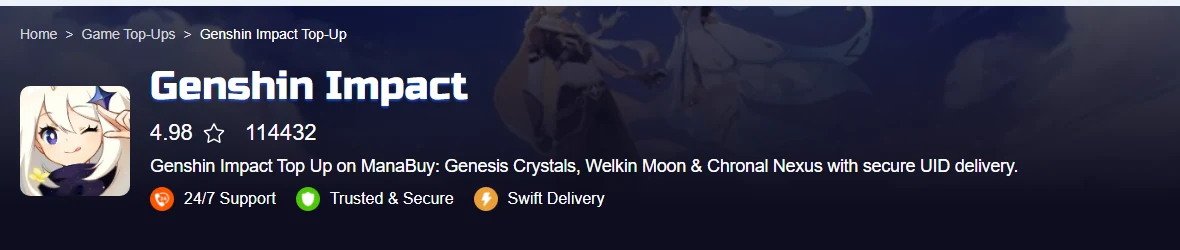
ManaBuy product-page view: the Genshin Impact top-up page highlights UID delivery, support, security, and delivery speed before the player chooses a package.
What Does "Legit" Mean for a Genshin Top-Up Site?
For Genshin Impact, "legit" should not mean "the cheapest page I found." It should mean the buying route is understandable, the account information requested is limited, and the product delivered matches what the player selected.
The official publisher-controlled route is the safest reference point for players who want maximum certainty. Third-party top-up pages need to be judged more carefully because they vary widely in checkout quality, product accuracy, support, and regional availability.
Use this test before trusting any Genshin top-up site:
Account information
Safer signRequires UID, server, and order contact details only.
Risk signAsks for your HoYoverse password or login code.
Product clarity
Safer signShows Genesis Crystals, Welkin, or another exact product before checkout.
Risk signUses vague labels like "cheap primos" without details.
Payment flow
Safer signShows payment options and order total before payment.
Risk signAdds hidden fees late or redirects through unclear pages.
Delivery wording
Safer signExplains UID/server delivery and what to check after payment.
Risk signPromises impossible instant results for every case.
Support
Safer signGives a clear order/support route.
Risk signNo order number, no support path, no policy language.
Price claims
Safer signUses current package listings.
Risk signUses old screenshots, fake discounts, or copied prices.
This is why "safe" and "legit" are not exactly the same question. A site can be a real business and still be risky for your order if it asks for too much account access, uses stale package information, or gives no help when delivery fails.
How to Compare Official and UID-Based Top-Up Routes
The official route is the cleanest answer for maximum certainty. A third-party route can still be useful when players want different payment methods, local currency options, or a simpler UID-based checkout, but it should be checked with stricter standards.
Official top-up route
Best forPlayers who want the publisher-controlled baseline.
WatchAvailability, payment methods, region or account limits.
UID-based third-party page
Best forPlayers who want a direct product page and supported payment options.
WatchUID/server accuracy, product name, support, and current package list.
Gift card or wallet route
Best forPlayers who prefer platform balance or store credit.
WatchRedemption rules, platform restrictions, and unused balance.
Login-sharing service
Best forUsually not recommended.
WatchPassword exposure, account security, and recovery risk.
For most players, the safest third-party pattern is simple: choose a Genshin-specific product page, submit only the information required for UID delivery, and keep your account password private.
The Biggest Safety Rule: Do Not Share Your Password
The strongest warning sign is a site asking for your HoYoverse account password, login code, email access, or device verification. A normal UID top-up flow should not need that level of access.
On ManaBuy's Genshin product page, the top-up form asks for UID and server details. That is the type of information a player should expect for UID delivery. It does not mean every order is impossible to delay, but it keeps the account-access risk much lower than giving a third party your login.
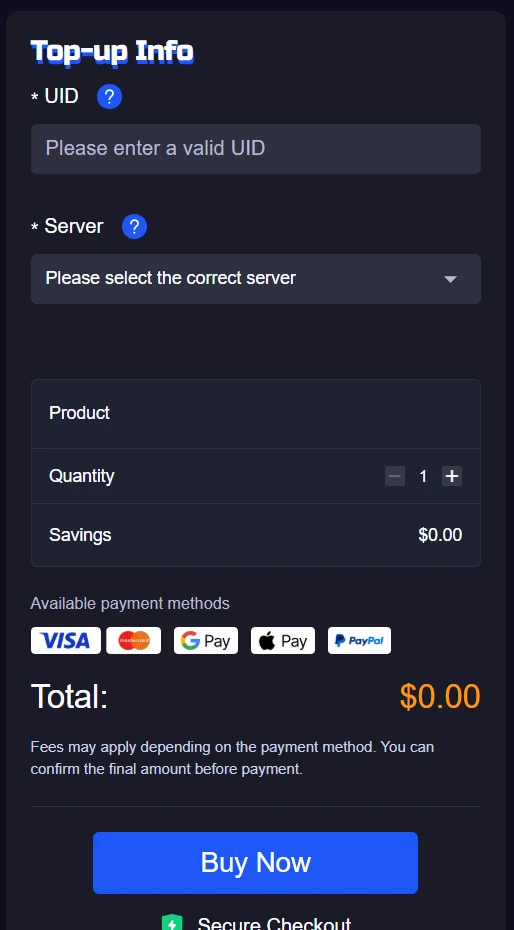
ManaBuy checkout view: the Top-up Info panel keeps UID and server selection in the same delivery flow, then lets the player review product, quantity, payment methods, and total before payment.
Before paying, check whether the site asks for anything beyond the order. If it asks for a password, one-time login code, email inbox access, or social account login, stop and reassess.
How to Check Your UID and Server Safely
Most failed top-up cases are not caused by the product itself. They come from wrong UID, wrong server, wrong product selection, or players copying details from memory.
Open Genshin Impact and check the UID shown in game. Then confirm the server you actually play on. If you have accounts on more than one region, do not assume the same UID works everywhere. Match the server shown in game with the server selected on the checkout page.
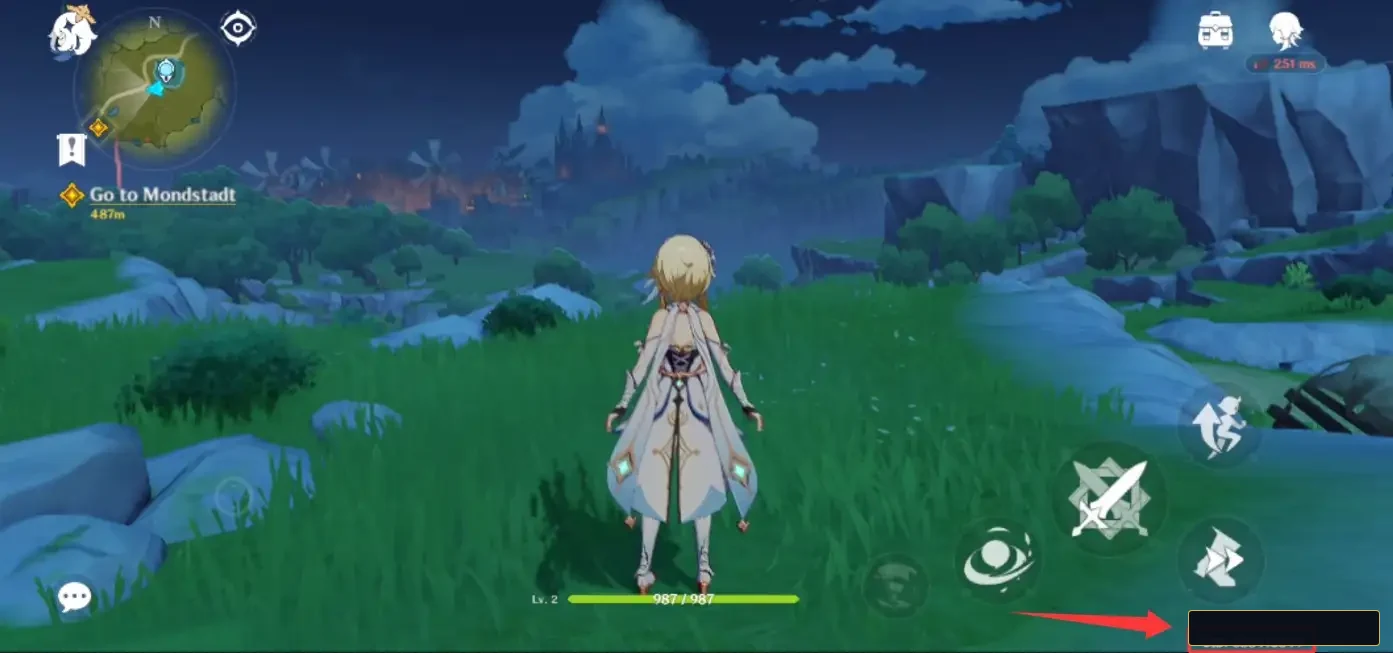
In-game UID view: copy the UID from the game screen and mask it when sharing screenshots with support or anyone else.
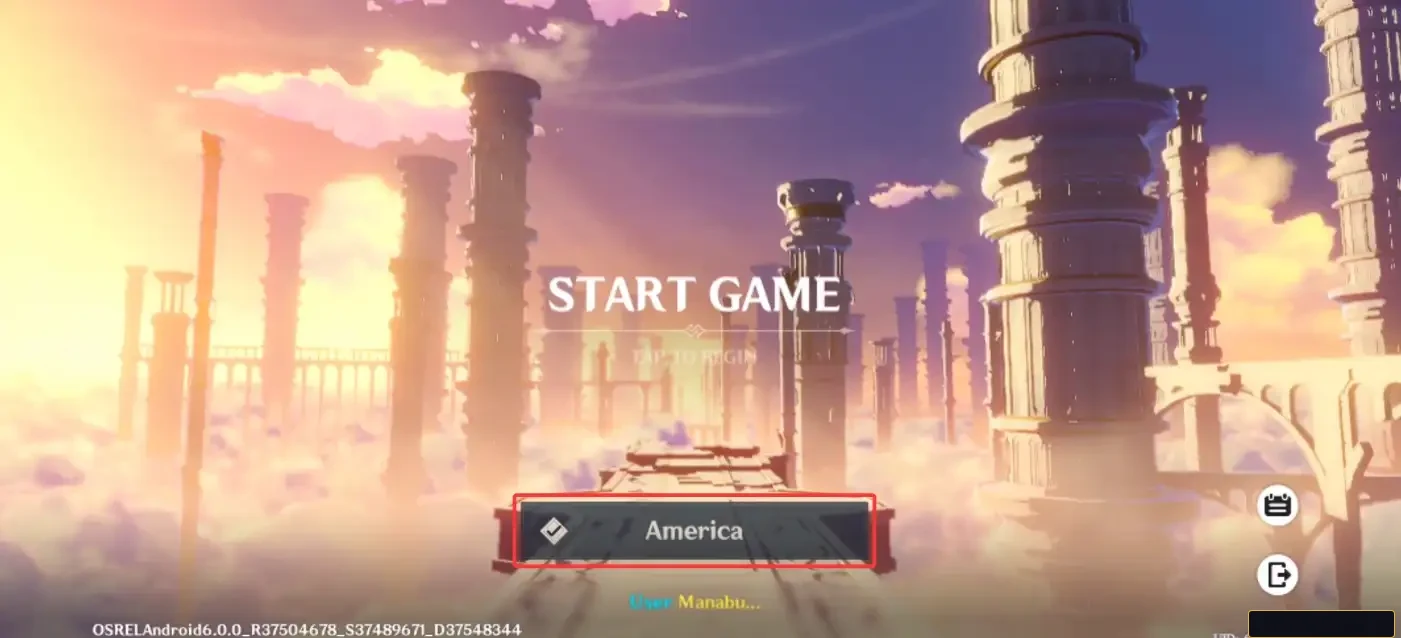
In-game server view: match the server in Genshin Impact with the server selected on the top-up page.
Use this short checklist:
- Copy your UID directly from the game.
- Confirm the server in the game before ordering.
- Check the product name before checkout.
- Use the same currency and region settings you intend to pay with.
- Save the order number after payment.
- Do not post your UID, email, or order number publicly.
If support asks for proof, send only the details needed for the order case. Avoid sharing full account screenshots when a cropped UID/server screenshot is enough.
Are Cheap Genshin Top-Up Sites Safe?
Cheap is not automatically unsafe, but extreme discounts should make you cautious. Genshin top-up products are tied to real payment routes, currency conversion, regional payment methods, and platform rules. A small difference may come from currency or local payment options. A discount that looks impossible should be treated as a risk signal.
Ask these questions before buying from a cheap top-up page:
Exact package shown?
Why it mattersVague package names make order disputes harder.
Prices and bonuses current?
Why it mattersOld screenshots can mislead buyers after package updates.
Recognizable checkout?
Why it mattersStrange redirects increase payment risk.
Only UID and server?
Why it mattersPassword requests create account-security exposure.
Order support exists?
Why it mattersYou need a route if delivery is delayed.
If you are comparing prices, compare the complete checkout total, not only the large number on the product card. Currency conversion, payment method availability, and local fees can change the real cost.
What Makes ManaBuy a Safer Genshin Top-Up Route?
ManaBuy's strongest fit for this topic is not "trust us because we say so." The stronger argument is visible product-page structure. The Genshin page is specific to Genshin Impact, lists recognizable Genshin products, explains UID-and-server delivery, and places the top-up form next to the buying flow instead of sending players through a vague generic checkout.
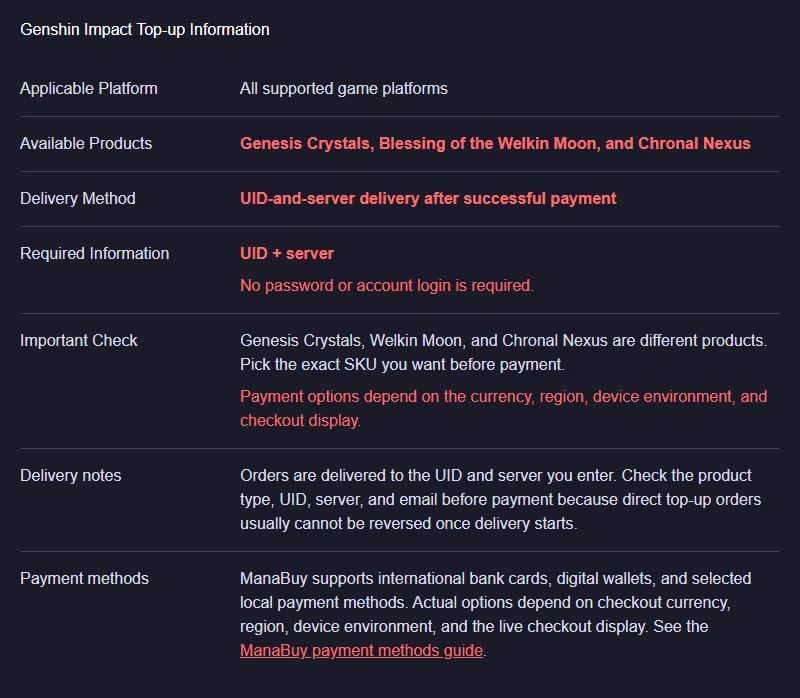
ManaBuy top-up information view: the product page states UID-and-server delivery, required information, product differences, and the no-password rule before checkout.
For a safety-focused buyer, that structure matters because it reduces ambiguity:
- You can see whether you are choosing Genesis Crystals, Welkin, or Chronal Nexus.
- You can review UID and server before payment.
- You do not need to share your HoYoverse password for a UID-based flow.
- You have a product-specific page instead of a generic payment form.
- You can keep the order number and contact support if delivery needs checking.
That does not mean a player should skip the review step. The order is still tied to the information submitted at checkout. A wrong UID or server can create a real delivery problem even on a legitimate page.
Red Flags Before You Buy Genesis Crystals
Avoid a Genshin top-up site if you see several of these problems at once:
- It asks for your HoYoverse password, login code, or email access.
- It cannot clearly name the product you are buying.
- It promises "zero risk" or "guaranteed cheapest" without explaining the checkout flow.
- It uses old package screenshots without a current product page.
- It hides the final payment total until the last step.
- It has no order lookup, support contact, or delivery explanation.
- It pushes you to rush before you have checked UID and server.
The safer mindset is boring but effective: no password sharing, exact package, correct UID, correct server, clean payment, and saved order details.
Safe Buying Flow for Genesis Crystals on ManaBuy
If you decide to use Genesis Crystals on ManaBuy, use this order:
- Open the Genshin Impact product page.
- Choose the exact product you want, such as Genesis Crystals, Welkin, or Chronal Nexus.
- Enter your UID from the game screen.
- Select the same server you use in Genshin Impact.
- Review the package, quantity, currency, UID, and server.
- Complete payment through the available checkout method.
- Check your in-game balance, pass status, or item result after delivery.
- Keep the order number until everything is confirmed.
Package check: use the live ManaBuy product page as the final reference before payment, because available packages, currency display, and checkout methods can change by region.






After you understand the steps, compare the available packages on the live product page and choose only the option that matches your current account plan.
What If Your Genshin Top-Up Does Not Arrive?
Do not panic immediately. First check whether payment was completed and whether the selected UID and server were correct. Then check the product type: Genesis Crystals, Blessing of the Welkin Moon, and Chronal Nexus do not behave exactly the same in the account.
If the order still looks delayed, prepare:
- order number;
- submitted UID;
- selected server;
- selected product;
- payment status;
- cropped in-game screenshot showing the current balance or relevant item status.
Do not send your password to support. A good support case needs order details, not account login access.
Genshin Top-Up Site Safety FAQ
Are Genshin top-up sites legit?
Some are legitimate businesses, but players should judge each site by its checkout flow, account information request, product clarity, payment security, and support path. The official publisher-controlled route is the safest baseline; third-party sites need extra checking.
Are Genshin top-up sites safe?
They are safer when they use UID-and-server delivery, do not ask for your password, show exact products before payment, and provide order support. They are riskier when they ask for login access or make unrealistic discount promises.
Is UID top-up safer than account login top-up?
In general, yes. UID top-up limits the account information you share. You still need to enter the correct UID and server, but you should not be handing over your HoYoverse password.
Can a wrong UID or server be fixed?
It depends on the order status and the delivery process. Direct top-up orders can be difficult to reverse once delivery starts, so the safest fix is prevention: copy the UID from the game and match the server before payment.
Should I use the official top-up center or ManaBuy?
Use the official route if you want the publisher-controlled baseline. Consider ManaBuy if you want a Genshin-specific product page with UID delivery and payment options that fit your situation. In both cases, review the package and account details before payment.
Is the cheapest Genshin top-up site always the best?
No. Cheap prices are only useful if the product, delivery route, payment flow, and support are trustworthy. A slightly cheaper order is not worth exposing your password or losing clarity on what you bought.
Final Recommendation
Genshin top-up sites can be legit and reasonably safe, but only when the buying flow is clear and account access stays limited. Treat the official route as the baseline, and judge any third-party route by password safety, UID/server delivery, current package details, payment transparency, and support. If you use ManaBuy Genshin top up, choose the exact product, enter the correct UID and server, and keep your order details until the Genesis Crystals or other selected product appears in game.



Copyright © FUTURE OUTLOOK TECHNOLOGY LIMITED.Company Registration No.: 77374965 All rights reserved.UNIT 135,1/F.,143 WAI YIP STREET,KWUN TONG HK